Made-to-measure curtains: how they are made
- Curtains are made to the measurements of each window: the fabric is checked, cut to the markings, given its heading tape and hem, then steam-pressed and checked.
- Making costs €8 per metre for sheers and €13 per metre for lined curtains, on drops up to 300 cm.
- From order confirmation to installation takes 3–4 weeks. The making carries a 12-month warranty.
Price from €8/m, as of October 2026
Sewn to your measurements, from a close inspection of the fabric to the final pressing and quality check.
How curtains are made: a video
A short video of the making, from inspecting the fabric to the final pressing and hanging.
VideoThe curtain-making process
How do made-to-measure curtains differ from ready-made ones?
Made to order
Nothing comes off the shelf: the fabric, the dimensions, the fall, the finish, the sewing and the pressing are all set for the order.
Accuracy
The measurements are checked three times before cutting and sewing.
Inspection
A final inspection after sewing, and another after pressing.
Pleats, lining and hem: how the curtain is made
Three decisions shape the look of a curtain more than any other: the heading tape, whether it is lined, and how the hem is finished. They are settled at the consultation, and the making follows the same standards on every window.
Wave heading
2× fullness: the fabric is twice the track length. The curtain hangs from gliders on a ceiling track, which keep the waves evenly spaced across the whole width.
Flex tape heading
1.5× fullness: the fabric is one and a half times the track length. It suits lined and heavier fabrics where tidy, shallower folds are wanted.
Pinch pleat heading
The pleats are sewn in groups of two or three, and the fabric is 2.5× the width of the pole. It is chosen most often for classic rooms and heavy fabrics.
Lining
A lining is sewn to the face fabric where more privacy, more darkness or a fuller fall is needed. It is turned in at the sides, so that it does not show from the room.
Hem
Light sheers get a lead weight tape sewn into the hem, heavier fabrics a double hem. The length is set from the shortest of three measurements taken to the floor.
Tall windows
When the drop is longer than the width of the fabric roll (290–335 cm), the fabric is turned to run in joined widths, with the seams placed in the pleats so that they do not show.
The curtain length and fullness guide shows how much fabric a window needs.
How a curtain is made, from the measurement check to hanging
Reviewing the order and checking the measurements
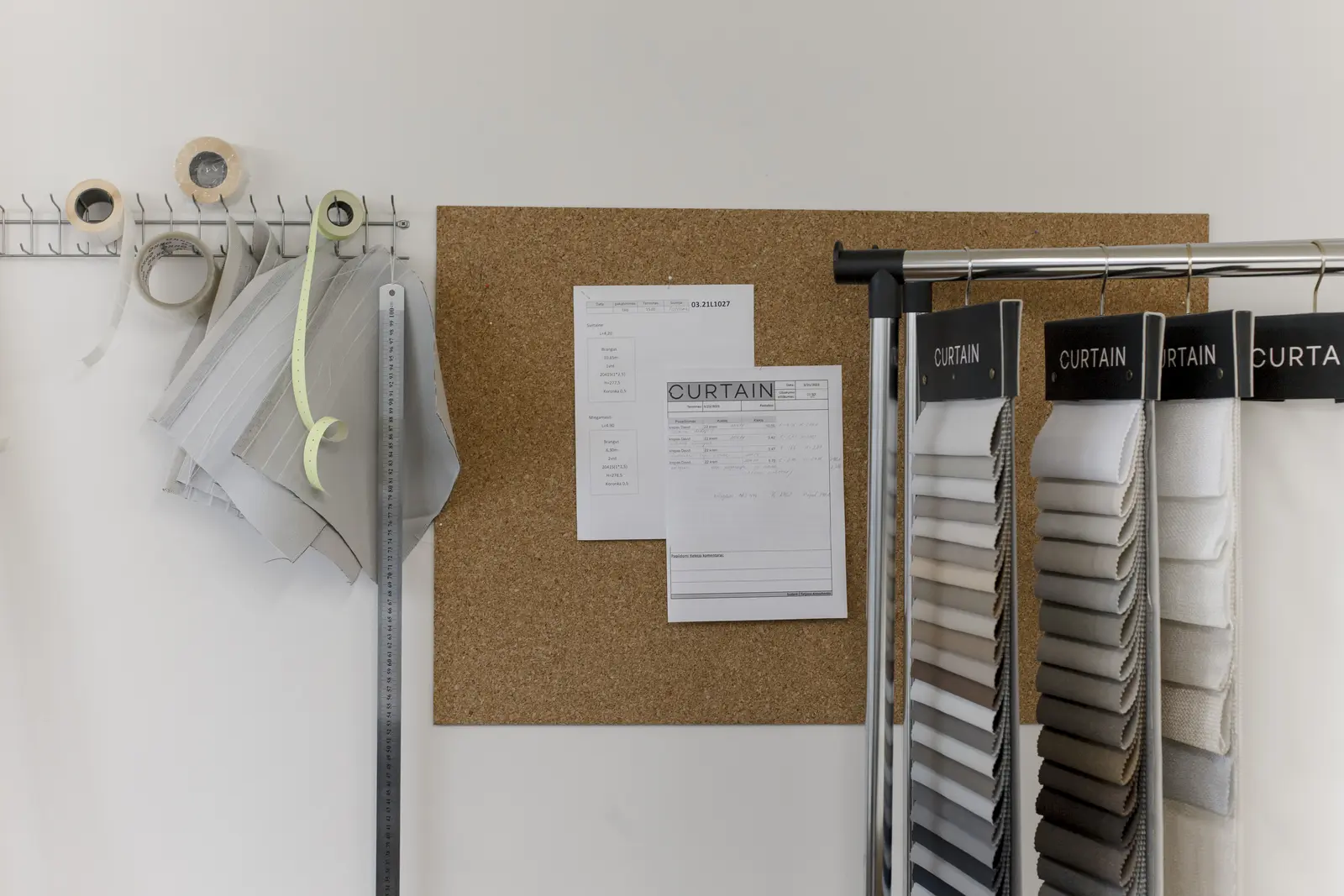
Before any work starts, the order is reviewed: the fabric, the model, the type of curtain, the fixing, the heights and widths, the seams and the hem.
The measurements are checked three times, against the designer's measurements or the figures the client sent. The window's geometry, the ceiling height, the position of the radiators and anything non-standard are checked too. Any question is raised before the fabric is cut: better to lose a day to checking than to spoil expensive fabric. The stage is short, and it prevents costly rework.
Checking the fabric before cutting
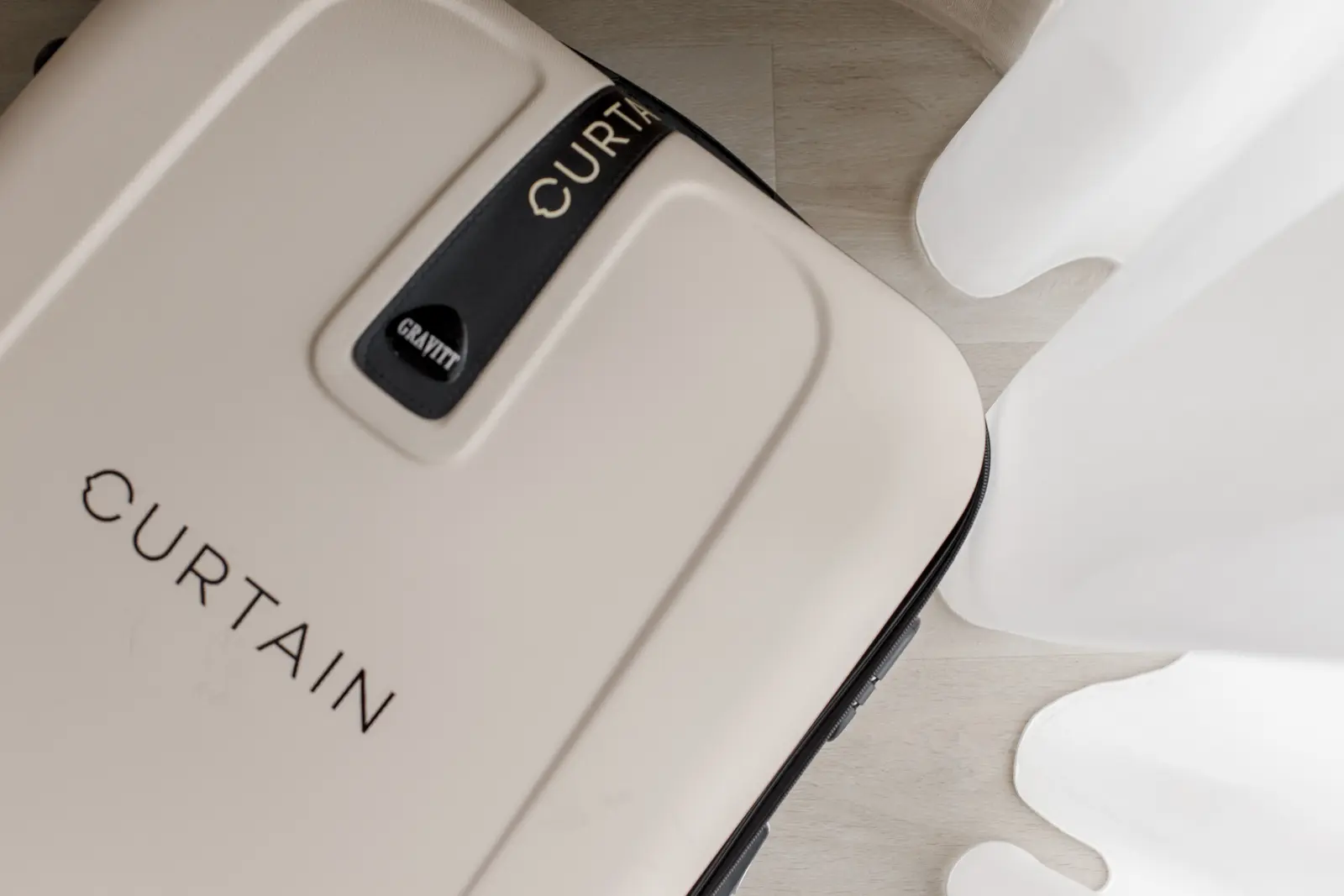
Every fabric is inspected for direction, pattern, fall and flaws from the mill. Fabric should arrive without defects, but even from reliable European makers it sometimes varies slightly in colour or pattern.
The cutting is then planned so that the finished curtain looks clean and in proportion. If a defect turns up, the supplier is contacted and the fabric is replaced rather than the flaw hidden. The inspection is done in daylight, because artificial light can hide differences in colour.
Cutting the fabric to the order
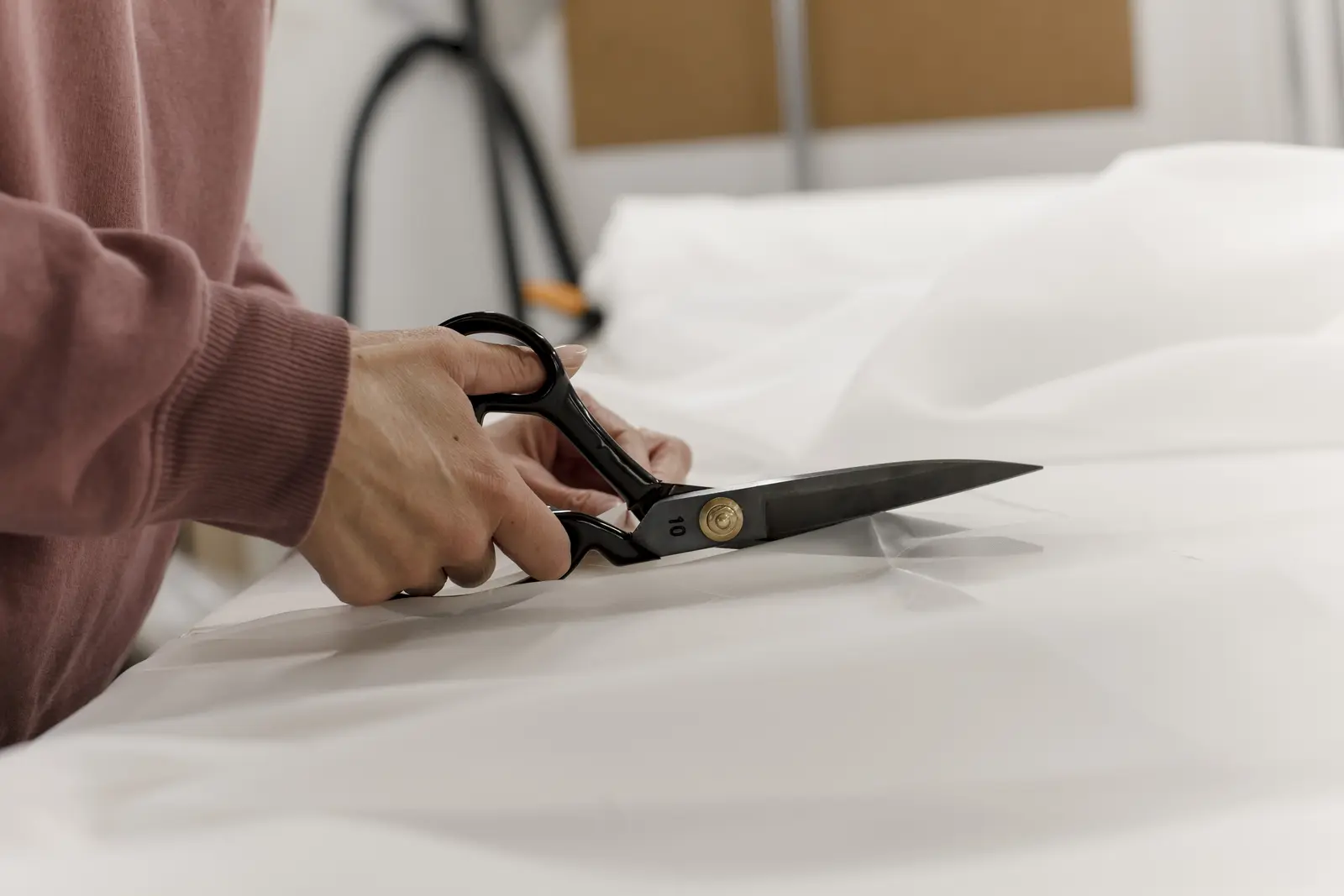
Fabric is cut only for a specific order, to exact markings that allow for the fall, the allowances, the pattern match and the chosen finish. It is first laid out on the work table and every line is marked: the top allowance for the track, the hem allowance, the side allowances and the pleat positions.
Nothing is cut by eye: a mistake made at the cutting stage shows on the window. On a patterned fabric, matching the pattern across the widths is one of the hardest stages and takes experience and patience, which is why this step gets full attention.
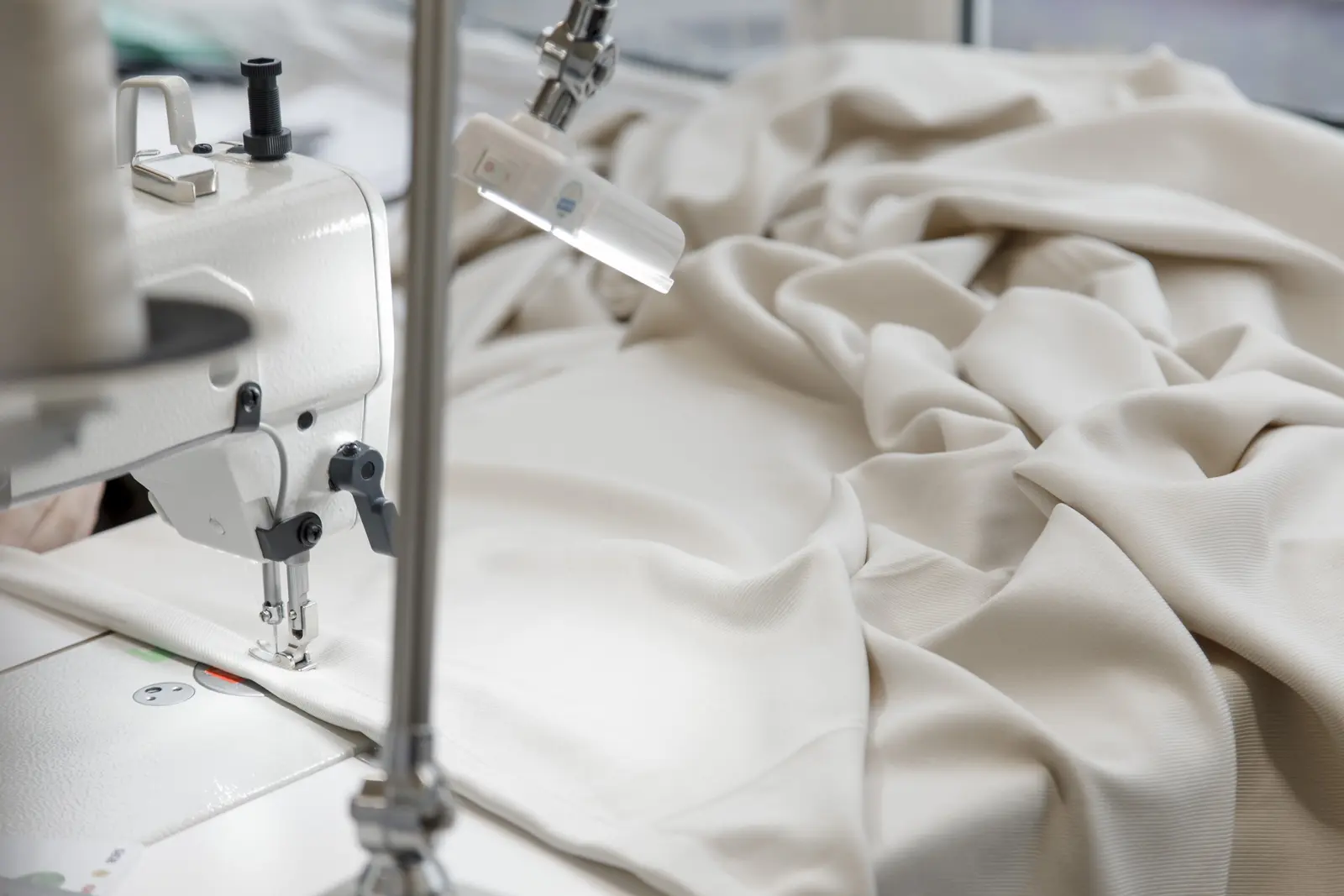
Sewing in Lithuania
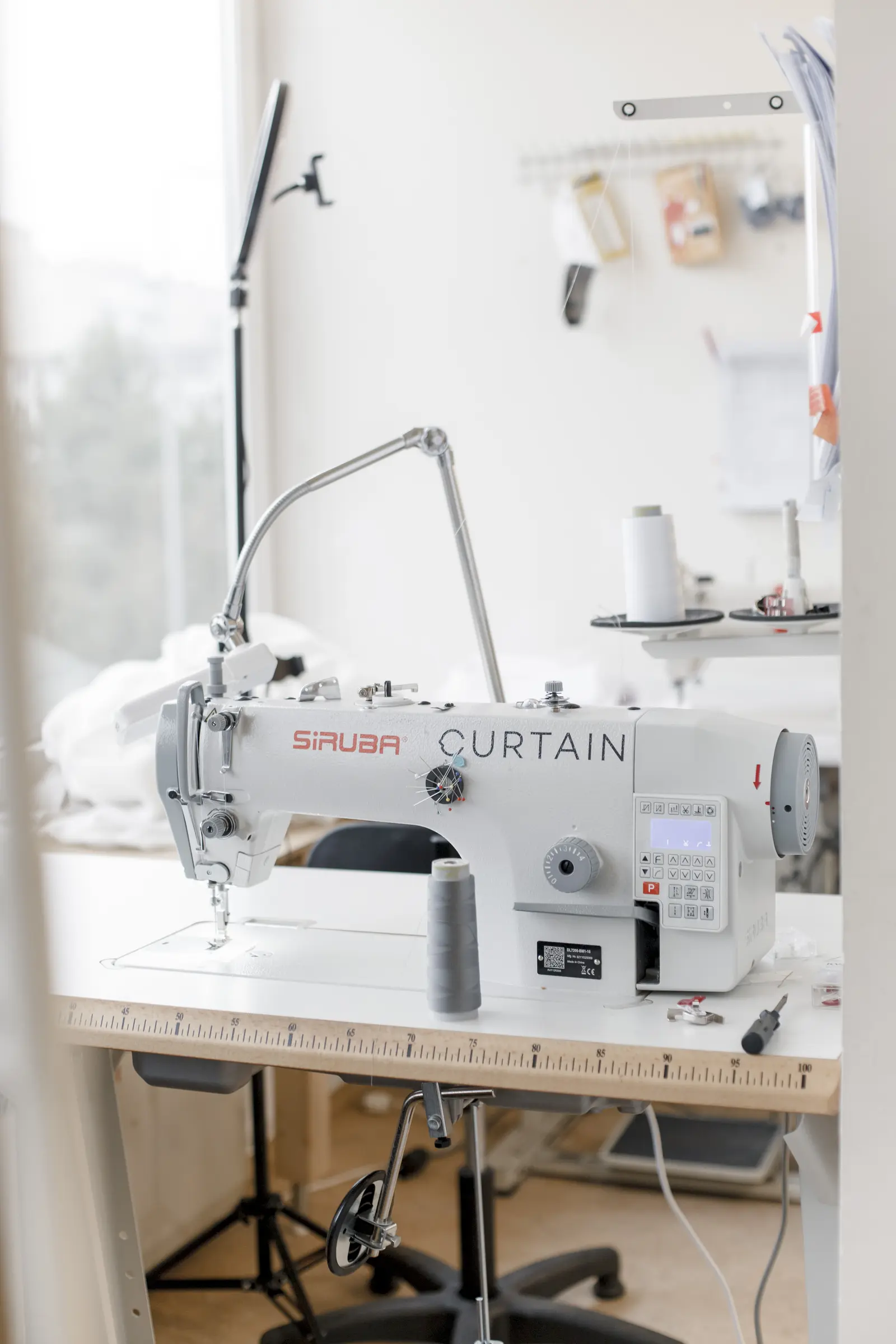
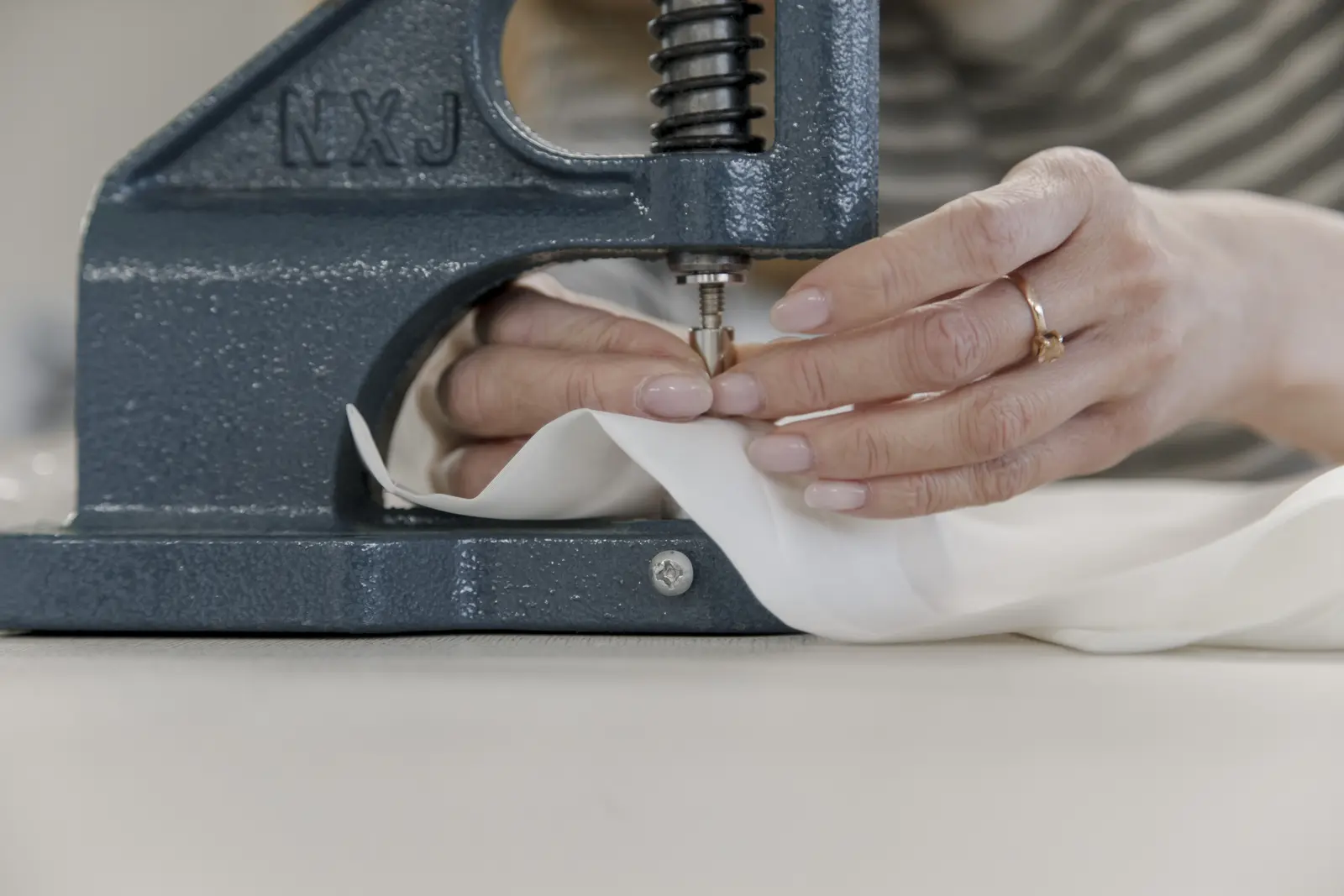
The machines and methods are proven, but careful work matters most: exact matching, firm seams, symmetry, neat corners and a clean finish. Each curtain is sewn as a separate order, not on a production line, to its own measurements and heading.
The heading tape is formed, the sides are closed with hidden seams, and the hem is sewn accurately and with the right weight, so that no seam shows from the front and the curtain falls evenly.
A check during sewing
Once the order takes shape, it is checked: are the planned dimensions being kept, and do the seams and finishing details sit as they should? Any deviation is caught and corrected during sewing, while that is still easy and cheap.
Found only once the curtain hangs at the window, the same mistake costs time, fabric and patience. So the check is required on every order, whatever its size.
Final pressing and preparation
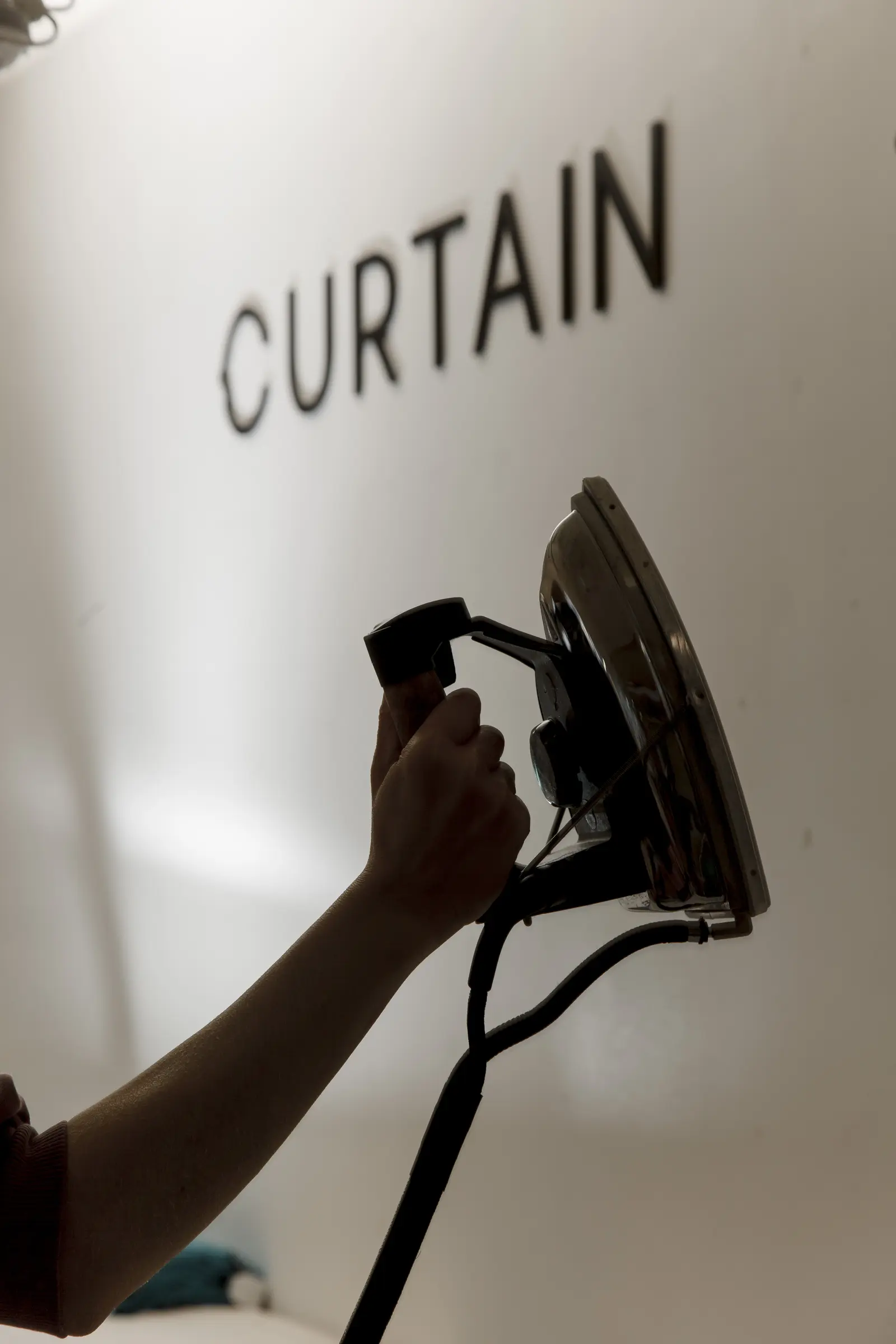
After sewing, the curtain is given its final pressing with a steam iron. This is where it takes its final shape and the pleats start to "remember" their position. Pressing removes the creases left by sewing and gives the fabric a supple fall that a home iron cannot achieve.
The curtain is then folded or put on a hanger, depending on how it will be delivered, and looked over once more before the final check.
The final check before handover
Before the order is sent or handed over, the curtain is checked once more against this list:
- whether it matches the measurements (length, width, allowances),
- whether there are any defects (seams, fabric, finish),
- whether the finish is clean and symmetrical,
- whether the order is ready to hang.
A second check after sewing catches what may have been missed during sewing, before the curtain reaches your home.
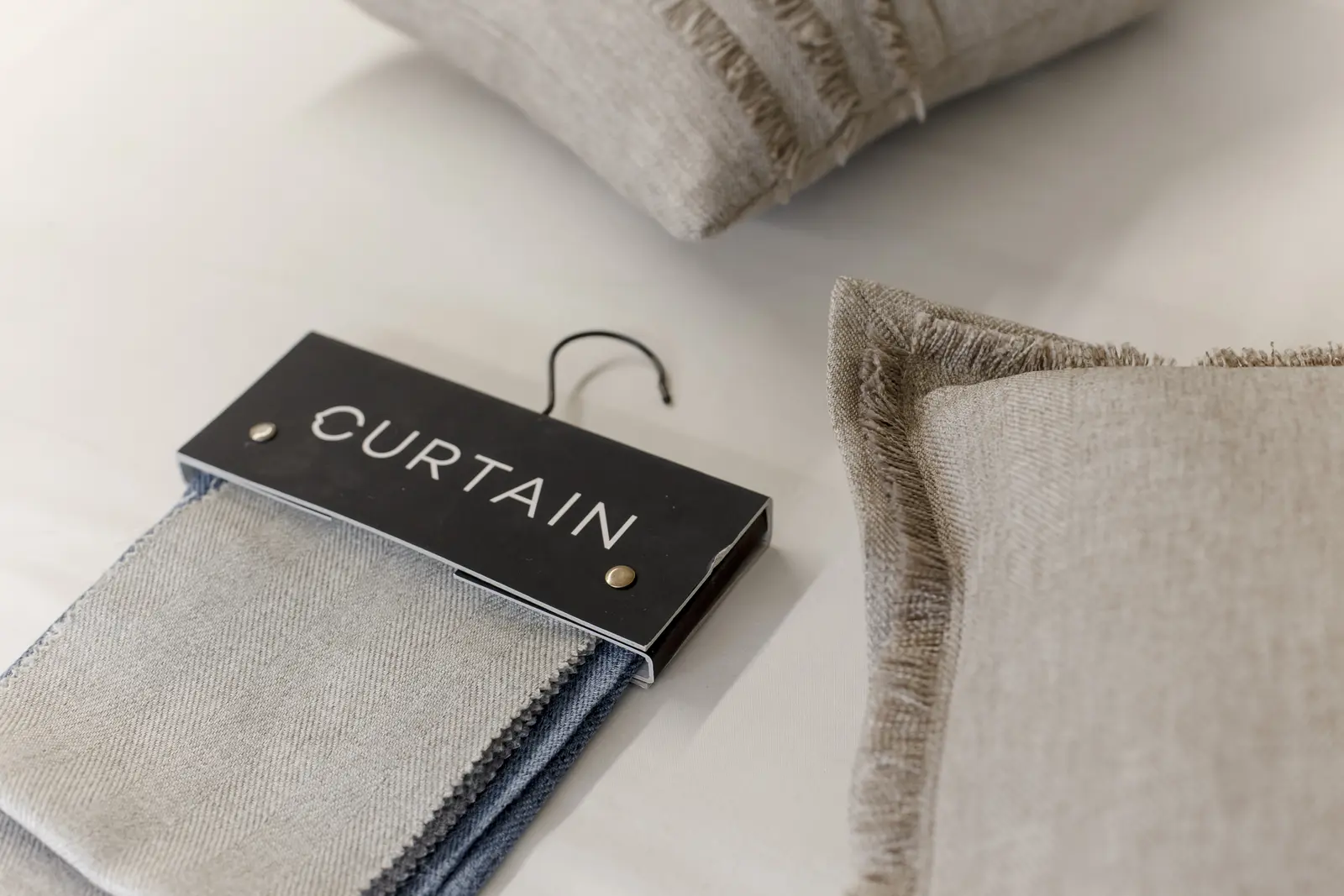
Hanging: as a service, or yourself
The curtains can be:
- hung as part of the fitting service (an extra service, unless the invoice or the agreement says otherwise),
- or hung by you.
Hanging is usually straightforward for anyone with basic tools and a little patience. As a service, the fitter brings all the equipment needed and leaves the room tidy; how long it takes depends on the number of windows.
If you would rather do it yourself, there is a detailed guide: "How to hang curtains at home"
All the guides are here → All guides
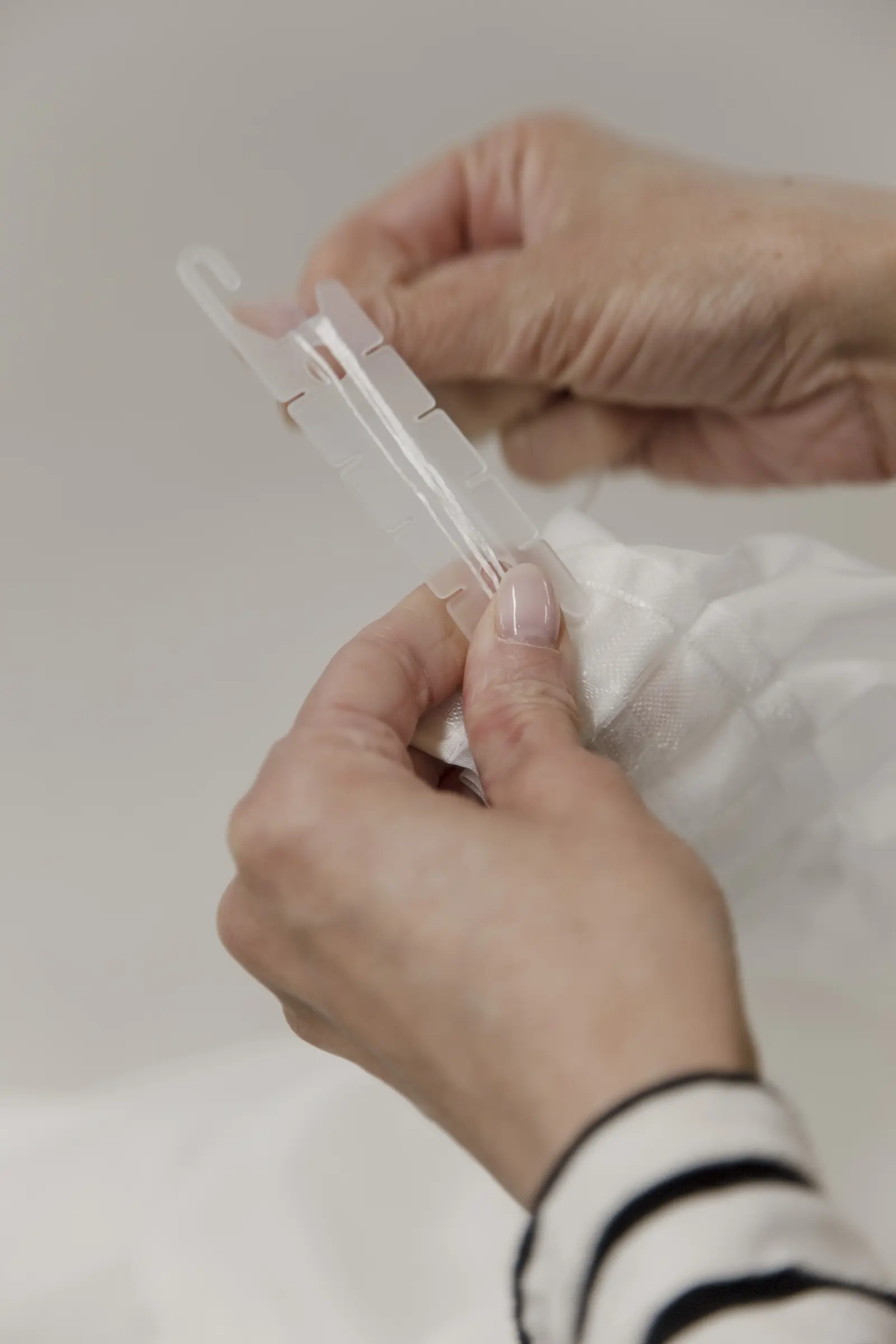
Making details: heading tape, loops, pressing
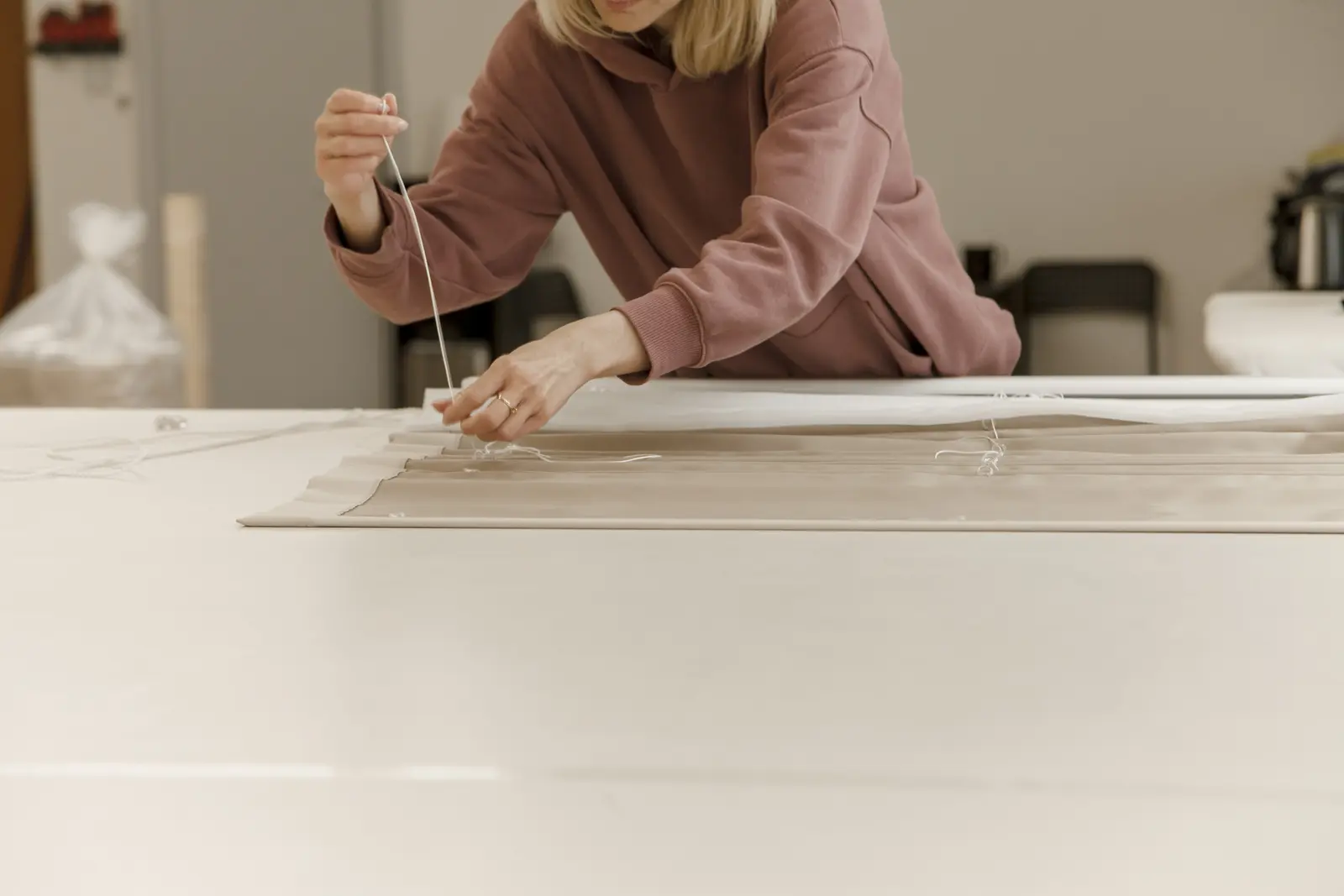
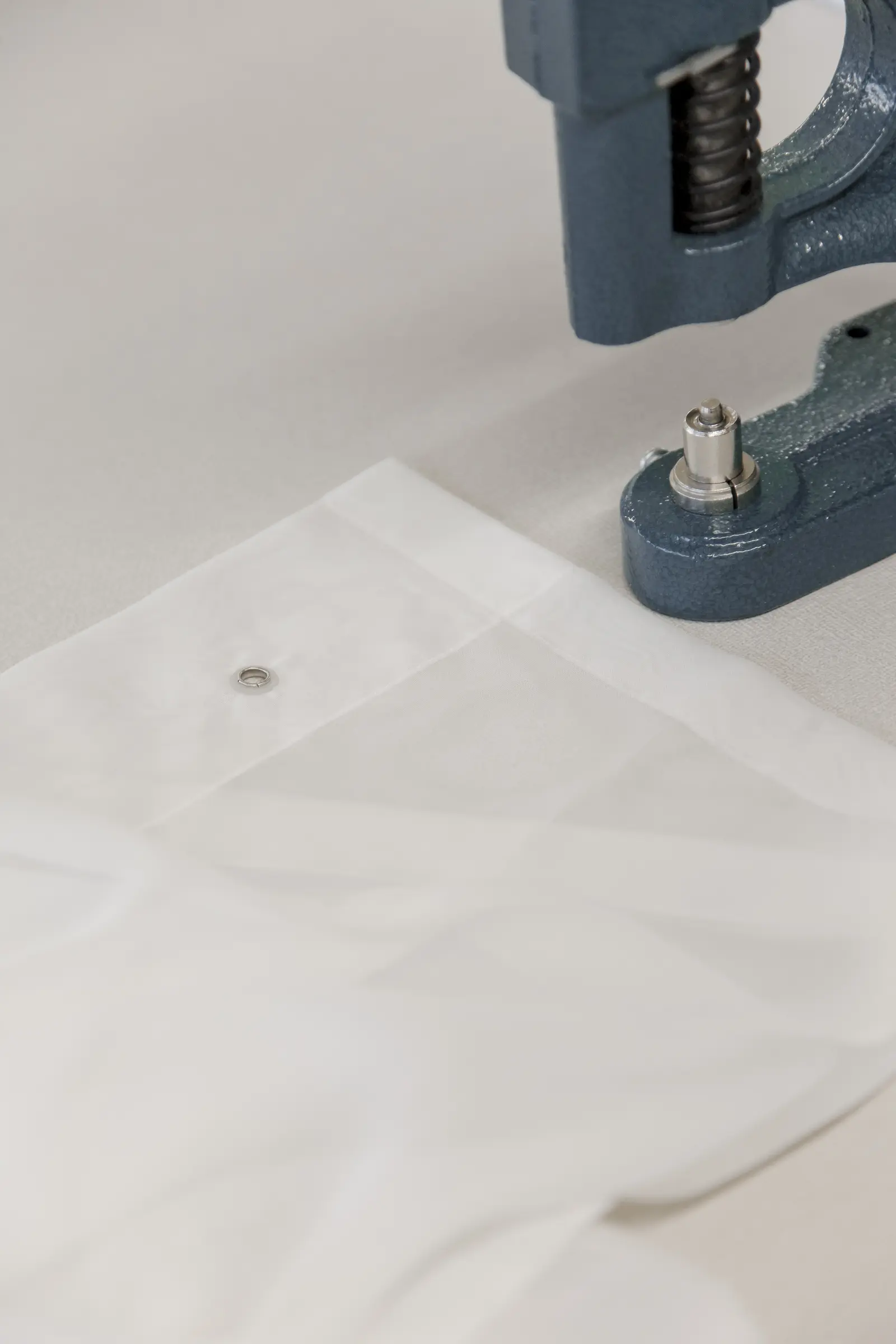
Draping: how the pleats are formed
Draping sets the folds in the fabric, and it decides how the finished curtain falls and looks. The video shows it in practice.
VideoDraping: forming the pleats
Draping decides whether a curtain falls evenly or bunches up and looks untidy. It is done by hand and cannot be automated: each fabric behaves differently and is handled accordingly.
How to recognise a well-made curtain
- A tidy fall and the right proportions: neither too short nor too long.
- A clean, even finish that looks well made.
- Correct construction throughout, from the fabric to the last seam.
Four quality checks
- Checking the measurements before cutting
- A check during sewing
- A final check after pressing
- Preparing for hanging
Where do the materials come from?
The fabrics come from European suppliers that meet our quality requirements, and are chosen to last.
Fabrics
Sheer, lined, blackout, linen-look and velvet fabrics from reliable European makers.
- Turkey: sheer and lined fabrics
- Spain: velvet and decorative fabrics
- Germany: blackout and technical fabrics
- France: linen fabrics
- Poland: budget and all-purpose fabrics
Curtain poles and tracks
Ceiling tracks, wall-fixed poles and electric tracks, each from a maker that specialises in them.
- Turkey: aluminium ceiling tracks
- Denmark: electric and motorised tracks
How much does curtain making cost?
| Curtains | Drop up to 300 cm |
|---|---|
| Sheer (see-through fabrics) | €8/m |
| Lined (dense and blackout fabrics) | €13/m |
Fabric, track and fitting are charged separately; fabrics start at €9.50 per metre. For a drop over 300 cm, the making price is given after measuring.
What warranty does the making carry?
Our warranty covers sewing and tracks for 12 months, and mechanisms and motors, electric ones included, for 24 months. Our warranty does not limit your rights under Lithuanian law: the seller is liable for any lack of conformity that existed at delivery and becomes apparent within two years, and this applies to made-to-measure items and to fitting we carried out.
- Fabrics — there is no separate fabric warranty; if a fabric fades, shrinks or distorts because of a defect that existed at delivery, your rights under the law apply (two years).
- Making — 12 months: if a seam comes undone or the finish fails in normal use, it is put right free of charge.
- Tracks and mechanisms — tracks and poles carry a 12-month warranty, and mechanisms and motors (electric ones included) 24 months.
- Fitting — if the fitting was done as part of the order and a fixing causes a problem, it is put right on a return visit.
Questions
Is everything made in Lithuania?
Yes. The curtains are sewn and given their final check in Lithuania.
What if I measured the windows myself?
They are checked for consistency before cutting, and if anything needs confirming we get in touch. That lowers the risk of a mistake.
Can you hang the curtains?
Yes, as an extra service, with the price and the terms agreed beforehand.
Can I hang them myself?
Yes. There is a step-by-step guide: How to hang curtains at home.