Curtain making
Made-to-measure curtain making
Every curtain is made to the measurements of one window, and nothing is mass-produced. Five heading styles, with ceiling and wall tracks.
Making from €8/m, fabric from €9.50/m · From order confirmation to installation: 3–4 weeks
What does made to measure mean here?
Each fabric is cut to the measurements of your window, the pleats are formed by hand and the curtains are checked before they are packed. Five heading styles are offered (Wave, Pinch pleat, S-fold, Ripple and Classic wave), with ceiling and wall tracks. Making costs from €8 per metre, plus the fabric.
Every project begins with a consultation. We discuss your interior, the windows, the light conditions, the style you want and examples (Pinterest, magazines, photographs of other projects).
Each stage has its own check: the fabric is inspected before cutting, the measurements are checked before sewing, and the finished curtains are checked before packing. There are no standard sizes and no copied designs: only your own window's measurements.
How are curtains made, step by step?
From order confirmation to the finished packet in your hands, the work goes through eight stages, each with a quality check.
1. Order review. We go through your project: the reference (Pinterest, magazines), the type of fabric, the heading style and the track. The measurements and the date are confirmed.
2. Fabric check. Before cutting, the quality of the fabric is checked: no flaws, the pattern right, the colour matching the shade chosen. Fabric with a factory flaw is rejected.
3. Cutting. The fabric is cut by hand to the measurements of your window, with 8–12 cm added at the bottom (for the hem) and 2 cm at the sides (for turning the edges).
4. Sewing. A precise industrial machine with exact stitch-length control. The side turn-backs, the edge finishes and the preparation of the heading are all done to the chosen style.
5. Setting the pleats. A special tool presses the loops and pleat inserts, so the folds come out even. This step is critical for the fuller headings (pinch pleat, S-fold).
6. Steam pressing. Industrial steam pressing keeps the structure of the fabric stable after washing. This step matters most for linen and light fabrics.
7. Quality check. Every seam, fold and edge and the overall look are checked before packing. A label with care instructions is attached.
8. Packing. The curtains are packed so that they do not crease in transport. Care instructions and the track set are included.
From order confirmation to installation takes 3–4 weeks; that covers all eight stages and the fitting visit.
Which five headings can I choose?
Each style needs a different amount of fabric. An example for a 3 m track: depending on the fullness, you need 4.5–7.5 m of fabric.
Wave: 2.0× fullness, so a 3 m track takes 6.0 m of fabric. A modern, minimalist look; suits sheer fabrics and ceiling tracks. Making: €8 per metre for a sheer fabric, €13 per metre for a lined one.
Pinch pleat: 2.5× fullness, so a 3 m track takes 7.5 m of fabric. A classic, tailored look; suits a bedroom and a formal living room. The making rate is the same (€8 or €13 per metre), but it takes the most fabric.
S-fold: 2.0× fullness, so a 3 m track takes 6.0 m of fabric. It hangs in deep, even folds and needs a track with S-fold gliders; it suits a main bedroom. Making: €8 per metre for a sheer fabric, €13 per metre for a lined one.
Ripple: 2.0× fullness, so a 3 m track takes 6.0 m of fabric. A soft, organic texture; suits linen and summer fabrics. Making: €8 or €13 per metre, depending on the fabric.
Classic wave: 1.8× fullness, so a 3 m track takes 5.4 m of fabric. A light, traditional variation; suits sheer fabrics. Making: €8 per metre, for a sheer fabric.
The heading is chosen at the consultation, to suit the weight of the fabric and the track.
Which tracks and poles are used?
The track matters as much as the fabric: each type has its own mechanism and look. Warranty: 12 months on sewing and tracks, 24 months on mechanisms and motors.
Recessed ceiling tracks: suit S-fold pleats and large rooms, where the track should not show.
Wall poles: decorative models with different finials, suited to a classic interior.
Aluminium ceiling tracks: basic and reinforced profiles, suited to mid-budget projects.
Turkish ranges (made in Turkey): wall poles with a round tube from €14 per metre or a square one from €15 per metre, in five finishes, for a decorative look at a lower price.
A worked example: a 200 × 260 cm living room window
For a standard 200 × 260 cm living room window the full estimate works out as follows. Fabric: Voile (sheer, €9.50/m) × 6.55 m (pinch pleats, 2.5× fullness plus 0.30 m for the side hems) = €62.23. Making: €8/m × 6.55 m = €52.40. Hanging: €4/m × 6.55 m = €26.20. A 2.5 m wall pole with brackets, end caps and fitting: €129.
The total is about €270. A richer option for the same window (Heritage, a dim-out fabric, 5.30 m in S-fold at 2.0×, making at €13/m, and a 2.5 m ceiling track with fitting) costs about €396. For the exact price for your window, use the calculator or book a measuring visit. Measuring is free in Vilnius.
What is settled in writing before I order?
The price and the dates are stated in writing before anything is ordered: the quote lists the fabric in metres, the heading, the track, the fitting and the total price.
Clear dates: From order confirmation to installation, curtains, roman blinds and other blinds take 3–4 weeks, and tracks 1–2 weeks. If anything changes (the availability of a fabric, the date), you are told at once.
If the chosen fabric is not available, you are offered alternatives, such as a similar fabric.
What are the five most common mistakes when ordering curtains made?
These five mistakes cost an extra €50–200 or take 30–50% off the look of the curtains. All of them can be avoided at a consultation.
1. Too little fullness. With 1.2× or 1.3× fullness curtains look flat and cheap. Once they are hung, fabric cannot be "added": the only cure is to make them again. Fix: the minimum is 1.5× (a simple tape heading), and for a fuller look 2.0–2.5×. Fullness is discussed at the measuring visit.
2. Forgetting the quantity of fabric when choosing. Customers often choose a fabric for its looks without thinking about the quantity, and after the calculation the fabric turns out 30% dearer than expected. Fix: at the start of the consultation we explain that every €1 per metre on the fabric price means 1.5–2.5 times that for the whole window, and we calculate it straight away.
3. A fabric that does not suit the heading. A heavy blackout fabric with wave pleats gives a poor result (the fabric is too heavy for a wave), and a thin voile does not hold pinch pleats. Fix: Wave for sheer fabrics only; Pinch pleat for medium weight (200–300 g/m²); S-fold for fuller fabrics; Ripple for natural, thin fabrics.
4. A track that does not suit the heading. S-fold needs a track with special gliders; basic tracks may not hold the S-fold shape. Fix: S-fold only on a track with S-fold gliders; Wave on any track with sliding gliders; Pinch pleat with standard hooks.
5. Too little time. Customers plan a move or a refit with only a few days to spare, but the time from order confirmation to installation is 3–4 weeks, and a rarer fabric can take longer. Fix: when a project starts we always ask about the date; if it is tight, fabrics that need no wait are suggested and the date is agreed before ordering.
Questions
How much does curtain making cost in Vilnius?
The making price depends on the fabric: €8 per metre for sheer fabrics (Voile, Net sheer) and €13 per metre for lined and blackout fabrics, for curtains up to 300 cm high. The heading (S-fold, pinch pleat) does not change the making rate, but it changes how much fabric is needed. A full quote for a standard 200 × 260 cm window with a 2.5 m ceiling track (fabric, making, hanging, and the track with its fitting) runs from about €211 (Voile, wave pleats) to about €396 (Heritage, S-fold).
How long does curtain making take?
From order confirmation to installation, curtains, roman blinds and other blinds take 3–4 weeks, and tracks 1–2 weeks. That time covers ordering and preparing the fabric, cutting, sewing, forming the pleats, the quality check and arranging the fitting visit. A fabric with a rarer texture sometimes arrives later from the supplier; the date is then given before you order, and if anything changes you are told at once.
Which heading styles do you offer?
Five headings. Wave (2.0× fullness, a modern minimalist look) suits sheer fabrics and ceiling tracks. Pinch pleat (2.5×, classic) is the traditional bedroom choice. S-fold (2.0×, a deep flowing fall) needs a track with S-fold gliders. Ripple (2.0×, a soft texture) suits linen and summer fabrics. Classic wave (1.8×, a light variation) suits sheer fabrics.
Which tracks and poles do you work with?
Electric tracks have Brel motors and cost from €170 per metre. The other tracks are chosen by type: aluminium ceiling tracks from €9 per metre, and wall poles with a round or square tube from €14 per metre. For each project the track is chosen to suit the weight of the fabric, the heading and the look you want.
How is made-to-measure making different from ready-made curtains?
Every project begins with a consultation, where we discuss your interior, the windows, the light, the style you want and examples (Pinterest, magazines). Each fabric is cut to the measurements of your window, not to standard sizes, the pleats are formed by hand, and the curtains are checked before they are packed. Ready-made curtains come in standard sizes only.
Do you make curtains for windows of unusual shapes?
Yes. Curtains can be made for sloping (attic) windows, bay windows, curved windows, trapezoid windows and non-standard heights (up to 380 cm). Each one needs measuring on site, where the measurer makes an exact template. The making price for a non-standard window is worked out after measuring and stated in the quote.
Can I collect the curtains and fit them myself?
Yes. You can order the making and a track without fitting, and then you do not pay for the fitting (€9 per metre for a ceiling track) or the hanging. We recommend professional fitting, though, because curtains hung wrongly can fall or damage the fabric. Our guide to hanging curtains yourself is a good place to start. Heavy blackout fabrics (over 2 kg) need professional fitting, since plastic plugs are not suitable.
What happens if the fabric I chose is not available?
You are told at once and offered alternatives, such as a similar fabric. The date and the price are not changed without telling you.
Ideas for your home
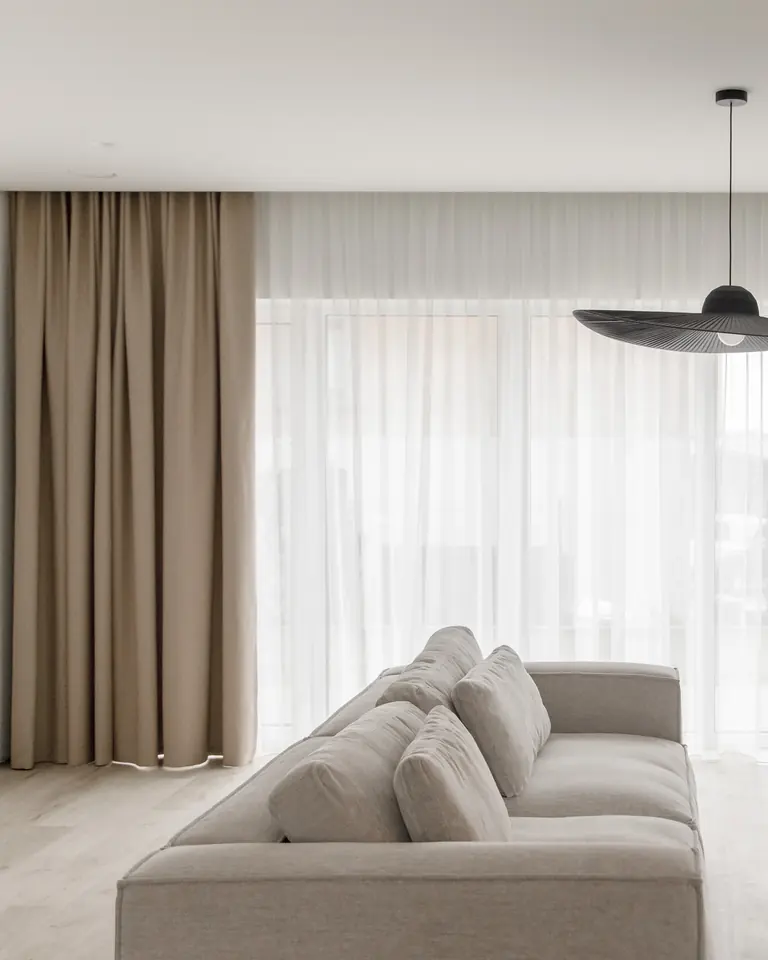
Flat, living room. A white sheer across the whole window wall and sand-coloured curtains from ceiling to floor. 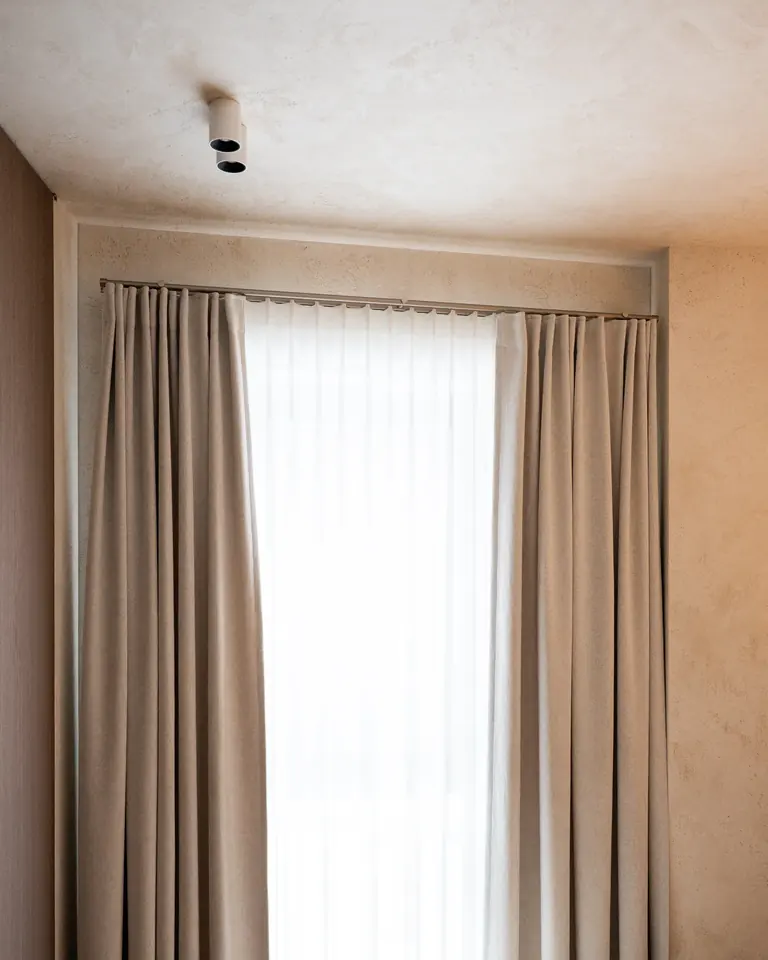
House, window recess. Sand-coloured curtains and a white sheer on a ceiling track. 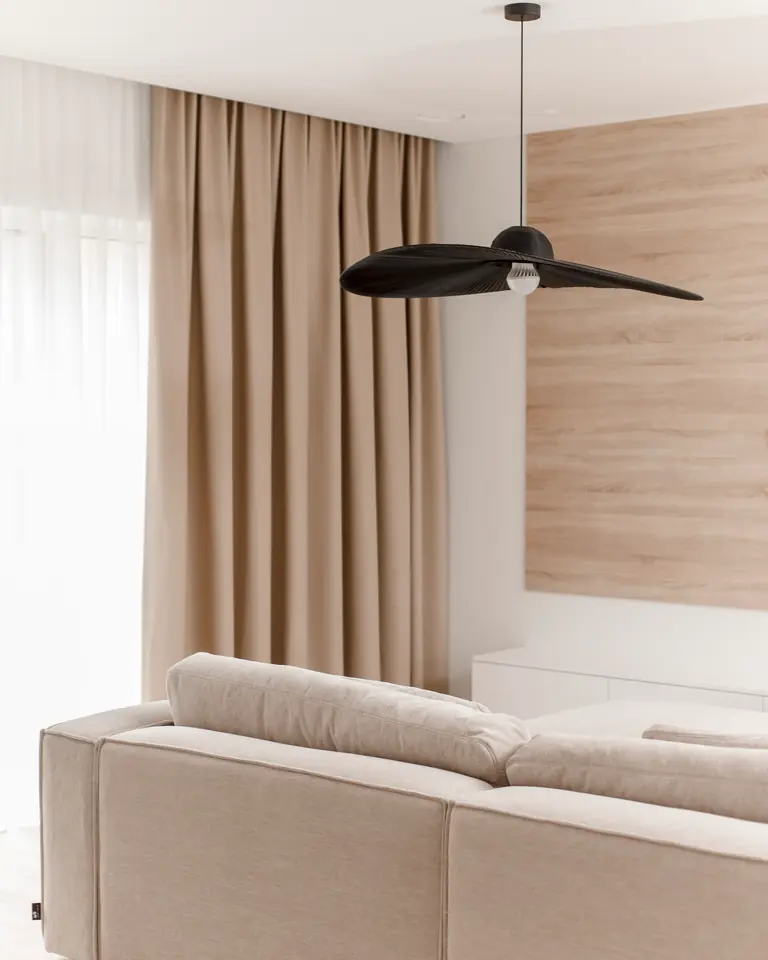
Flat, living room. Sand-coloured curtains and a white sheer from ceiling to floor. 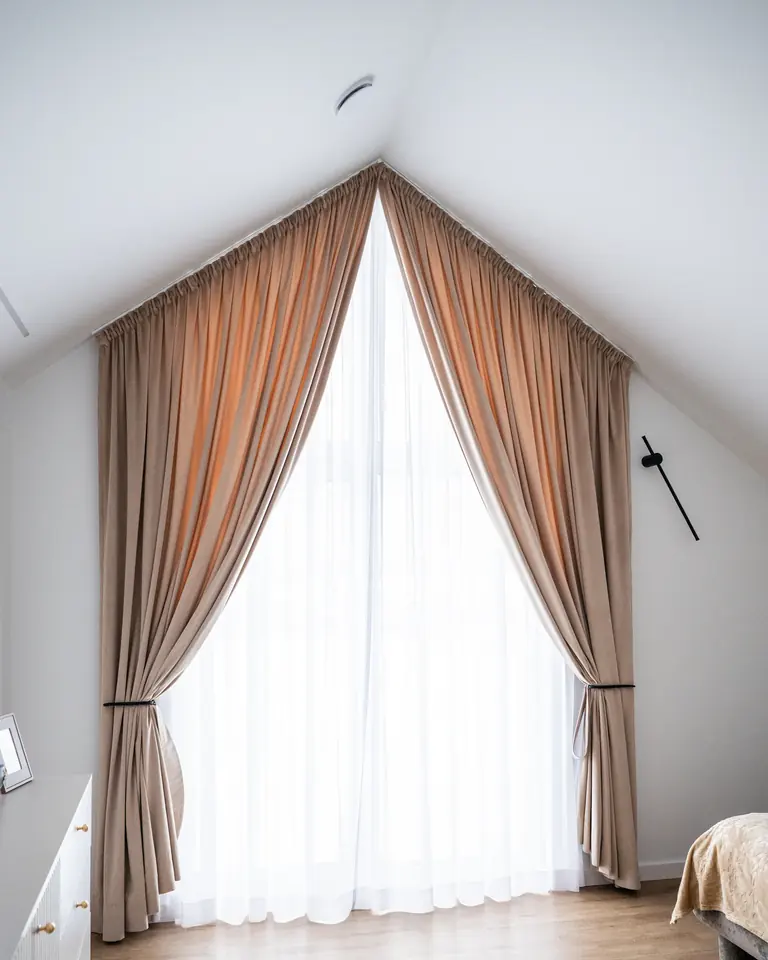
House, bedroom under a pitched roof. Peach curtains with tie-backs and a white sheer. 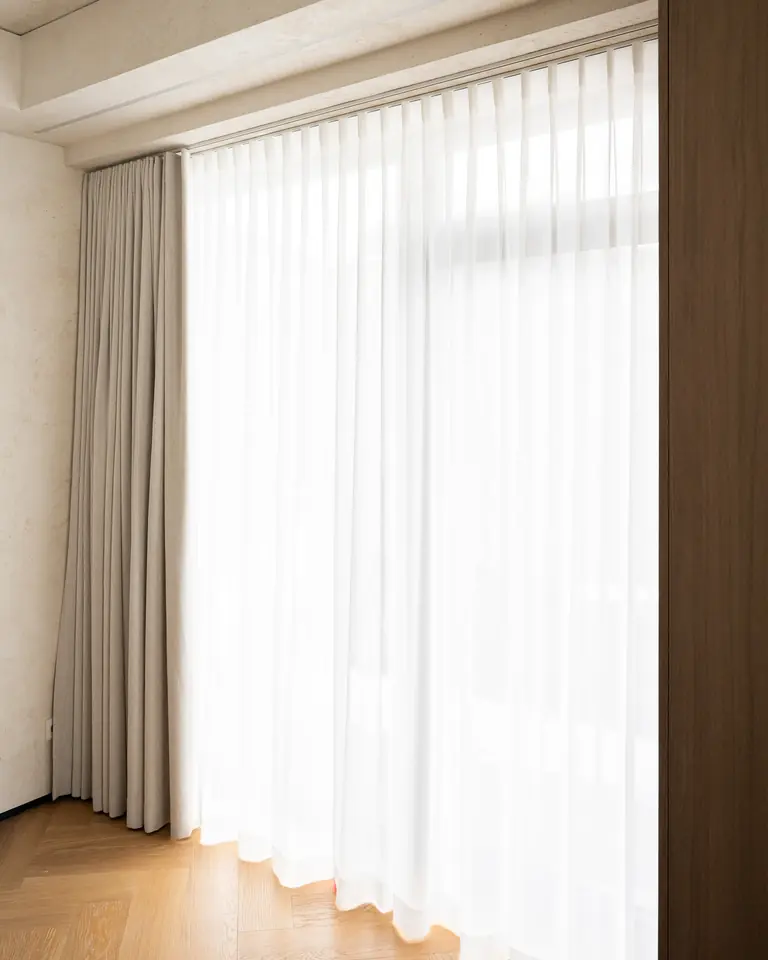
House, room with oak floors. A sheer in wave pleats and a pale curtain in a ceiling recess. 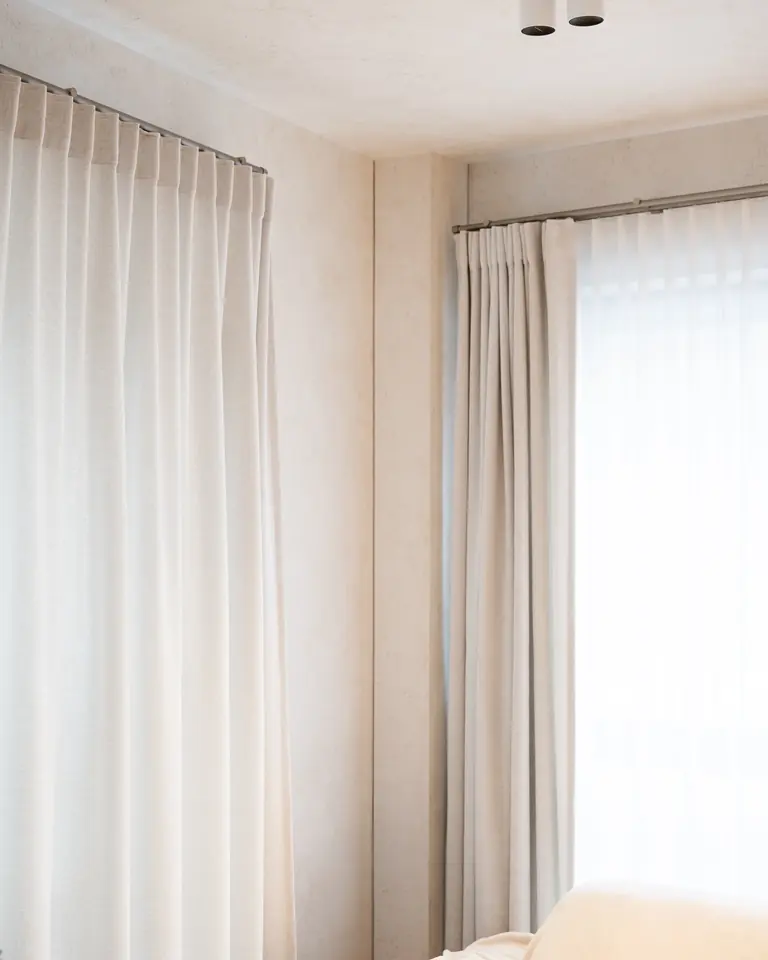
House, corner room. White sheers in wave pleats on ceiling tracks.
Start with a measuring visit
Before the making, the designer visits your home, measures the windows, discusses the interior and brings fabric samples. The measuring visit commits you to nothing. Measuring is free in Vilnius. In Kaunas and Klaipėda it is free on orders of €200 or more. Elsewhere in Lithuania the visit is paid, and the price is agreed beforehand.