Roman blinds
Day and night roman blinds
Double roman blinds: a voile for the day and a blackout fabric for the night, on one mechanism.
Double roman blinds from €120 · An average project costs €190–350
How do double roman blinds work?
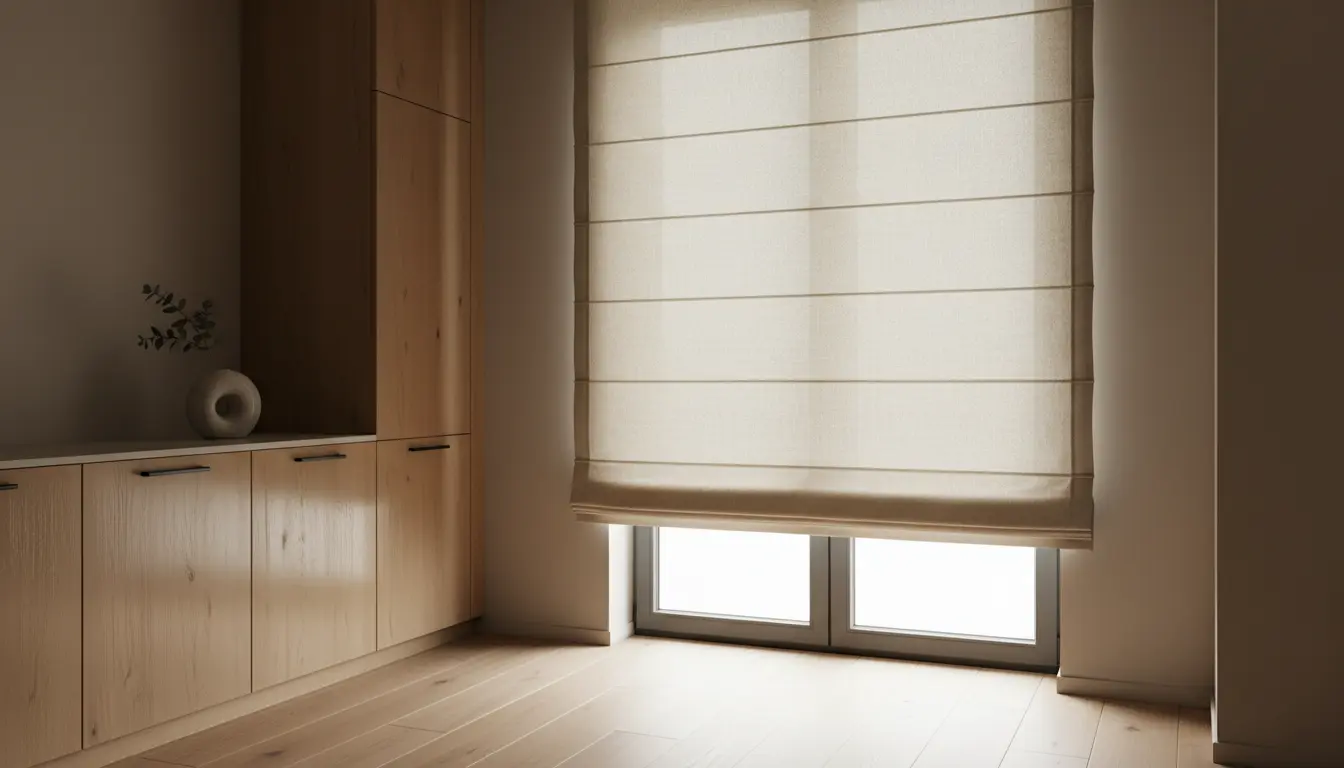
A day and night roman blind has two fabrics on one headrail: a transparent voile at the front and a dense blackout fabric behind it. Lowering one raises the other. This solves the problem of a classic roman blind, which leaves the window bare once it is raised. Prices start at €120, and a blind of this kind is built to last 10–15 years (up to 25,000 cycles). From order confirmation to installation takes 3–4 weeks.
The dense layer darkens the room at night, and the voile filters the light softly by day. The two mechanisms are separate, so the layers can be combined as you need.
Day layer: a light voile or net, which filters the light, gives privacy by day and still lets you see the outline of what is outside. Night layer: a dense blackout fabric, which stops the light passing through it at night, for sleep or for watching films. Double mechanism: two separate mechanisms in one concealed headrail, so lowering the blackout raises the voile, which saves space and time.
Which operation should I choose?
The options run from a classic chain to control by phone.
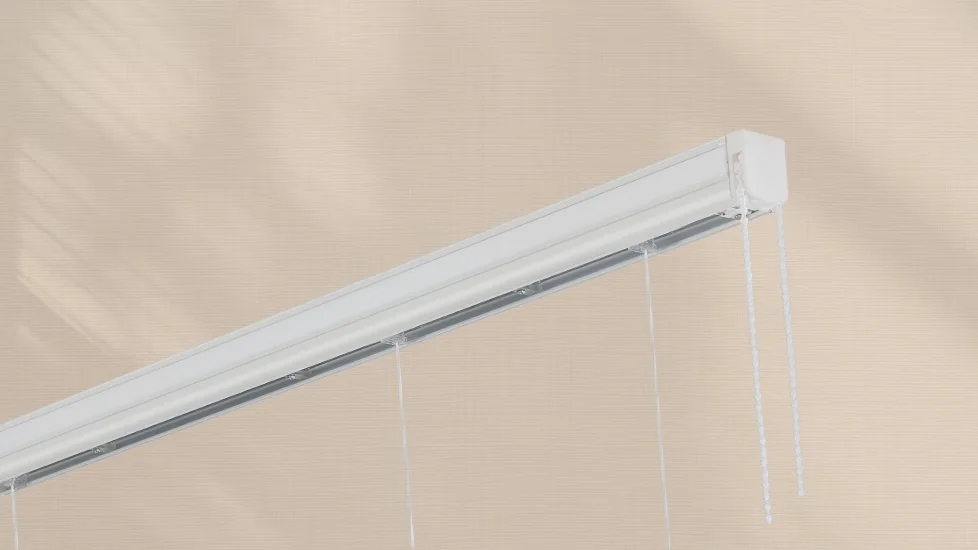
Chain: voile and blackout fabrics, manual operation, suits a kitchen or bedroom. Electric: any fabrics, automatic operation (remote, app), suits a child's room or an office. Cassette: voile fabrics, manual operation, suits bay windows and old buildings.
Roman blinds with a sheer or with curtains
In Vilnius flats double roman blinds are often paired with other window dressings. In a kitchen they are made in easy-to-clean fabrics; in a bedroom they often hang with lined curtains.
Roman blind with a sheer (voile): a dense roman blind with a transparent sheer hides a radiator under the window and protects against sun and neighbours' eyes. It is a light, airy combination, suited to sunny south-facing sides. A typical fit for Antakalnis and Žvėrynas, where windows face the Neris or the Green Lakes.
Roman blind with curtains: transparent roman blinds with light curtains make a room look larger. The curtains frame the window, and the blind controls the light precisely. They suit the north side, where more light is needed. A typical fit for Naujamiestis and Pilaitė, in small flats where a sense of space matters.
With a sheer: it gives privacy and light; styles are modern and loft; a typical use is covering a radiator in a flat in Žvėrynas. With curtains: it makes the room look larger; styles are Scandinavian and classic; a typical use is a small flat in Naujamiestis.
What are the main advantages?
A concealed headrail fully covers the mechanism, for a minimal look. Over 300 colours and textures from makers in Europe and Turkey. Fabrics with a memory effect keep their shape. A dust-repellent finish makes them easy to look after.
Durability: 10–15 years, up to 25,000 cycles. Operation by chain or electric (the electric version suits children's rooms). UV protection and some control of the room's temperature. Economy: two blinds in one.
Which blind suits which part of Vilnius?
The recommendation depends on the district, from the historic Old Town to the modern offices of Šnipiškės.
Naujamiestis and Žvėrynas: flats with large windows onto the Neris or Vingis Park. Double roman blinds control the morning sun and give privacy. Senamiestis, the Old Town: a cassette version for bay windows keeps the look of a historic building and still works well. Antakalnis: windows onto the Green Lakes, where a roman blind with a sheer adds privacy without weight.
Pilaitė and Karoliniškės: small flats, where a roman blind with curtains makes the room look larger. In offices, the blinds give a professional look. Šnipiškės: modern offices, where electric control by remote or app saves time.
How are day and night roman blinds fitted?
They are fitted on the wall, on the ceiling, in the recess or on the window frame, including a non-invasive option for rented flats.
In the recess: the most compact fitting. The blind sits directly in the window opening, so accurate measuring matters. On the wall: best for blocking the most light. The blind overlaps the window by 5–10 cm on each side.
On the ceiling: suits tall rooms. It makes the window look taller and gives a minimal look. On the window frame: a non-invasive fitting, suited to rented flats, with no drilling into walls.
What do day and night roman blinds cost in 2026?
The price of each blind is worked out from a photo of the window and confirmed at measuring.
Standard roman blinds (100 × 150 cm) start at €70. Double day and night roman blinds (100 × 150 cm) start at €120. Motorised roman blinds with app control start at €200.
Measuring is free in Vilnius. In Kaunas and Klaipėda it is free on orders of €200 or more. Elsewhere in Lithuania the visit is paid, and the price is agreed beforehand.
How do I order?
A simple process, from a photo to fitted blinds, taking 3–4 weeks from order confirmation.
1. Send a photo of your window and the room. 2. Consultation: write to [email protected] in English and we reply by e-mail to talk through what you need. 3. An exact price, after we have looked at the photo. 4. Measuring: the designer comes to your home. 5. Making and fitting, within 3–4 weeks of order confirmation.
How does the double mechanism affect recess depth?
A day and night roman blind has two entirely separate layers of fabric, each with its own mechanism, in one window. The front layer is a light, transparent day fabric that filters the light and protects against eyes. The back layer is a dense blackout night fabric, for fully darkening the room.
Because of the double mechanism, the profile is 15–20 cm thick. If you plan to fit inside a recess, measure its depth first: the clearance for the control often becomes the obstacle. If the recess is too shallow, fit the blind on the wall or the ceiling.
A price example for a 150 × 200 cm window: day fabric (voile, €9.50 per metre), about €14; night blackout fabric (€11 per metre), about €17; double mechanism, about €95; making, about €64. In all, about €190.
For wide windows (from 150 cm) the weight grows in proportion. In that case consider motorised operation, or two separate blinds side by side, one for the day and one for the night, each with its own mechanism.
Questions
How do day and night roman blinds work?
Two separate layers of fabric sit on one mechanism: a light, sheer fabric for the day and a dense blackout fabric for the night. Each layer rises in even folds and can be held at any height, so the light can be adjusted at any time of day. One blind softens the daylight and darkens the room fully at night.
How do day and night roman blinds differ from ordinary roman blinds?
They have two separate layers of fabric on one mechanism: a day layer (sheer or semi-sheer) and a night layer (blackout). One window gets two ways of controlling the light, with no extra track or fitting.
How do day and night roman blinds differ from day and night roller blinds?
A day and night roman blind has two entirely separate fabrics. A day and night roller blind uses one striped fabric with bands of different transparency. The roman blind gives a true blackout effect at night, because the night fabric is a separate, dense layer, and the folds give a softer look than a flat roller.
Can a room be fully darkened with day and night roman blinds?
As far as any blind can: the dense blackout fabric stops the light passing through it. Fit the blind on the wall with an overlap of 5–10 cm on each side, so that light does not creep in at the edges.
Where can day and night roman blinds be fitted?
On the wall, inside the recess, on the ceiling or directly on the window frame, so they suit most kinds of window. They suit every room: living room, bedroom, kitchen or office. Measure the window carefully before fitting: roman blinds on offer in Lithuania go up to 230 cm wide and 350 cm high.
Are day and night roman blinds operated by cord or remote?
Either: the double mechanism lets each fabric be worked separately, by chain (cord) or by remote control. A chain is simpler and cheaper, a remote more convenient.
How much do day and night roman blinds cost?
More than ordinary roman blinds, because the double mechanism is more complex. Day fabrics cost €9.50–16.50 per metre and night blackout fabrics €11–43 per metre. The mechanism is about €95 and the making about €64. For an average 150 × 200 cm window the whole blind costs about €190.
How much do the headrails and mechanisms for day and night roman blinds cost?
A double mechanism costs about €95 a unit in Lithuania. Standard headrails and mechanisms cost €5–95, depending on type and operation. Motorised blinds with a remote cost more, but suit wide windows, where a cord becomes awkward to work.
How do I look after day and night roman blinds?
Care is simple because of the dust-repellent finish: wipe with a dry cloth or vacuum with a soft attachment. The fabrics resist deformation and keep their shape. Air the room regularly too.
Can day and night roman blinds be automated?
Yes, they are available with an electric motor. They can be operated by remote control or phone app, or joined to a smart-home system (Alexa, Google Home, HomeKit). The electric version suits children's rooms and offices.
How long do double roman blinds last?
A good double roman blind lasts 10–15 years, and the mechanism is rated for up to 25,000 openings and closings. The fabrics have a memory effect and keep their shape.
Which rooms suit day and night roman blinds?
A bedroom (blackout for the night), a living room (for watching films), a child's room (for an afternoon nap), a kitchen and a home office. They suit minimalist and Scandinavian interiors in particular.
Can day and night roman blinds be combined with a sheer or with curtains?
Yes, both are common. A roman blind with a sheer is a light combination that hides a radiator and protects against sun. A roman blind with curtains makes the room look larger and frames the window. Both are widely used in modern flats.
Ideas for your home
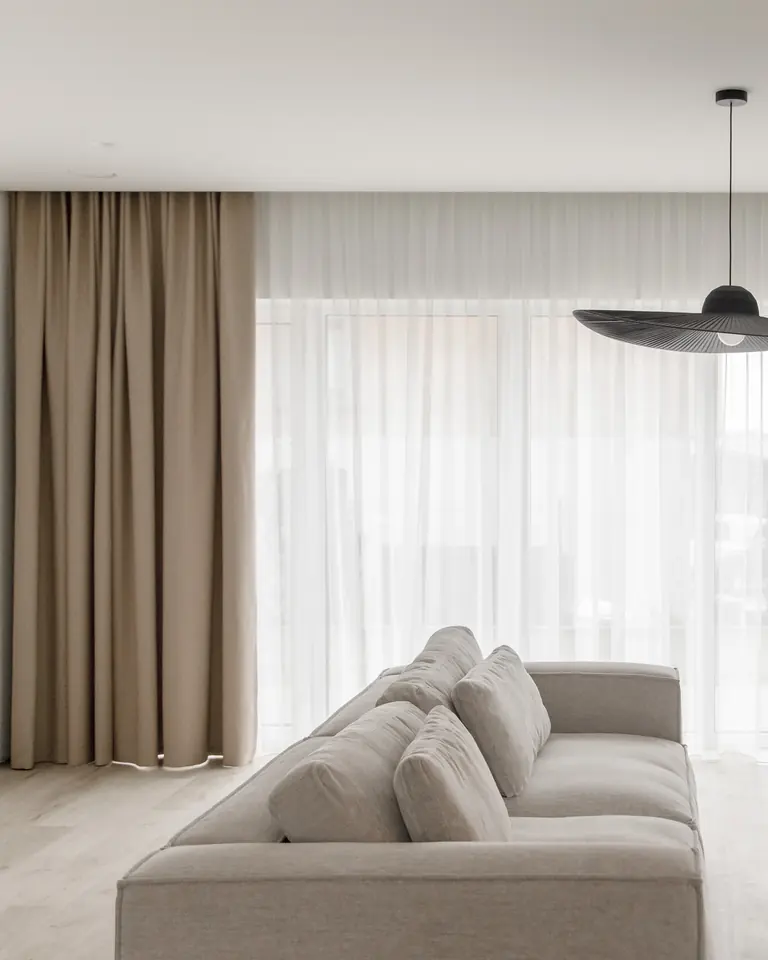
Flat, living room. A white sheer across the whole window wall and sand-coloured curtains from ceiling to floor. 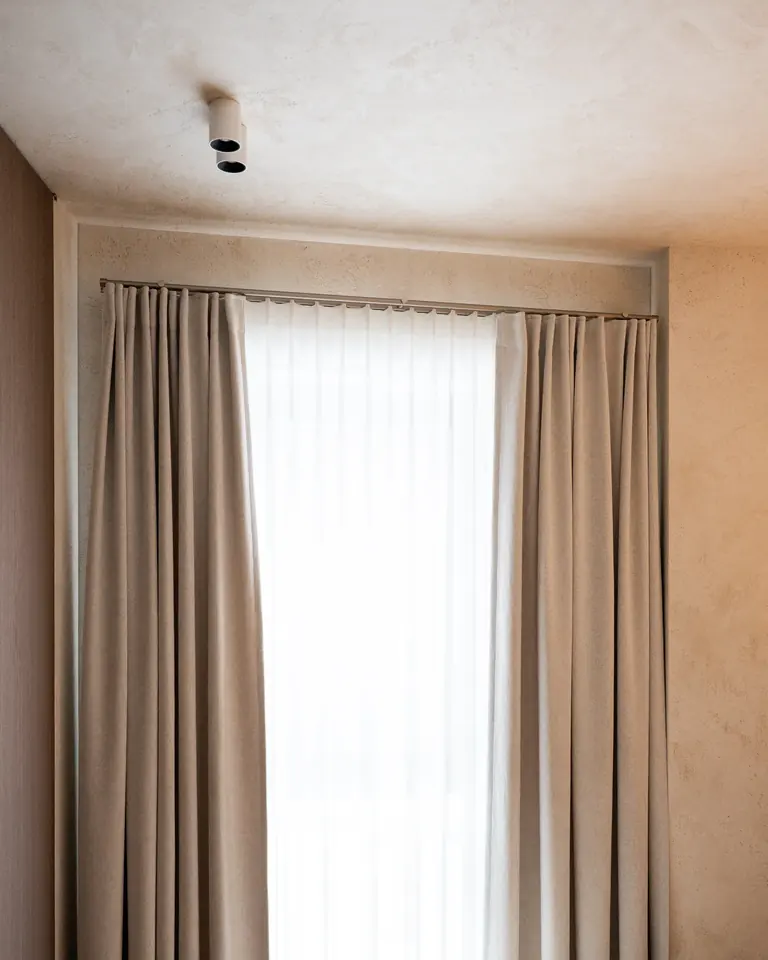
House, window recess. Sand-coloured curtains and a white sheer on a ceiling track. 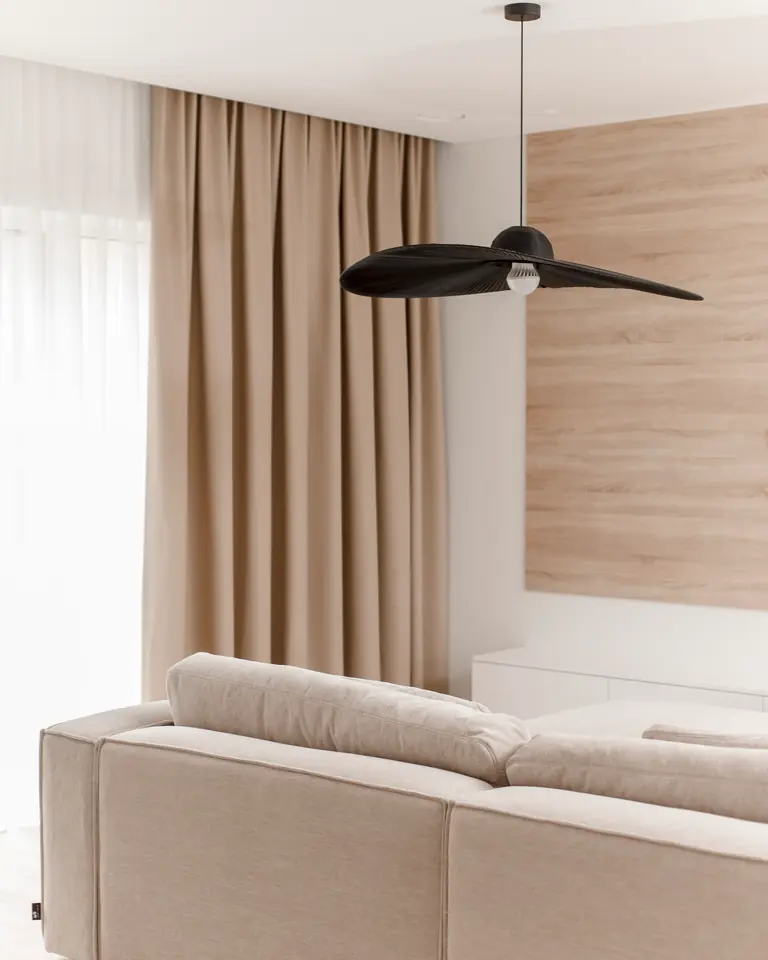
Flat, living room. Sand-coloured curtains and a white sheer from ceiling to floor. 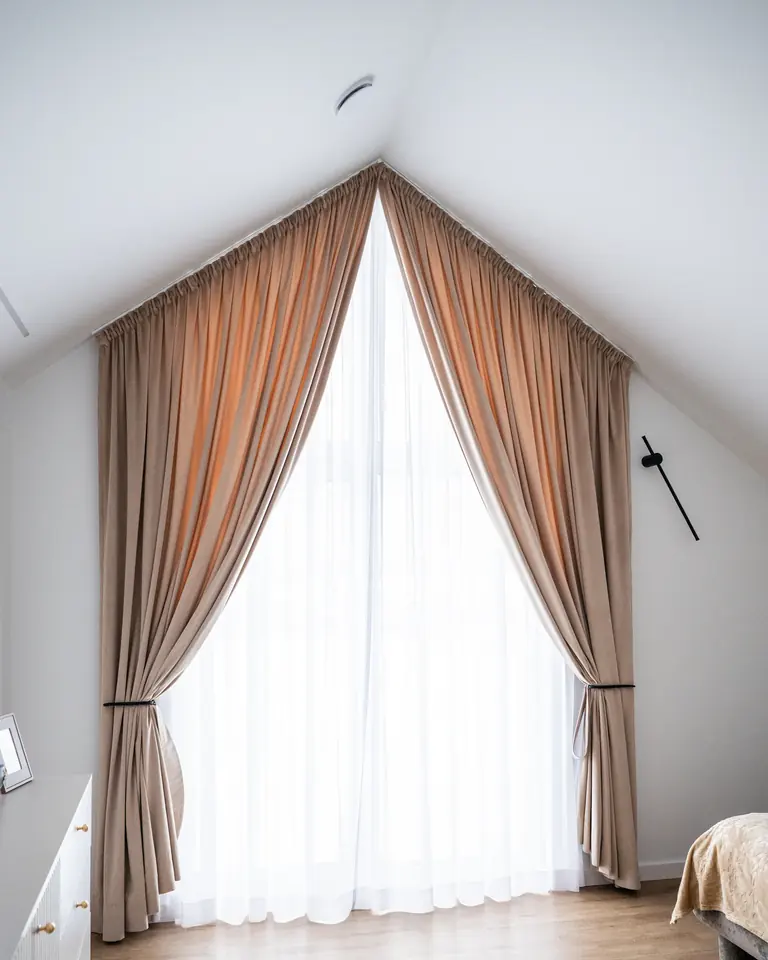
House, bedroom under a pitched roof. Peach curtains with tie-backs and a white sheer. 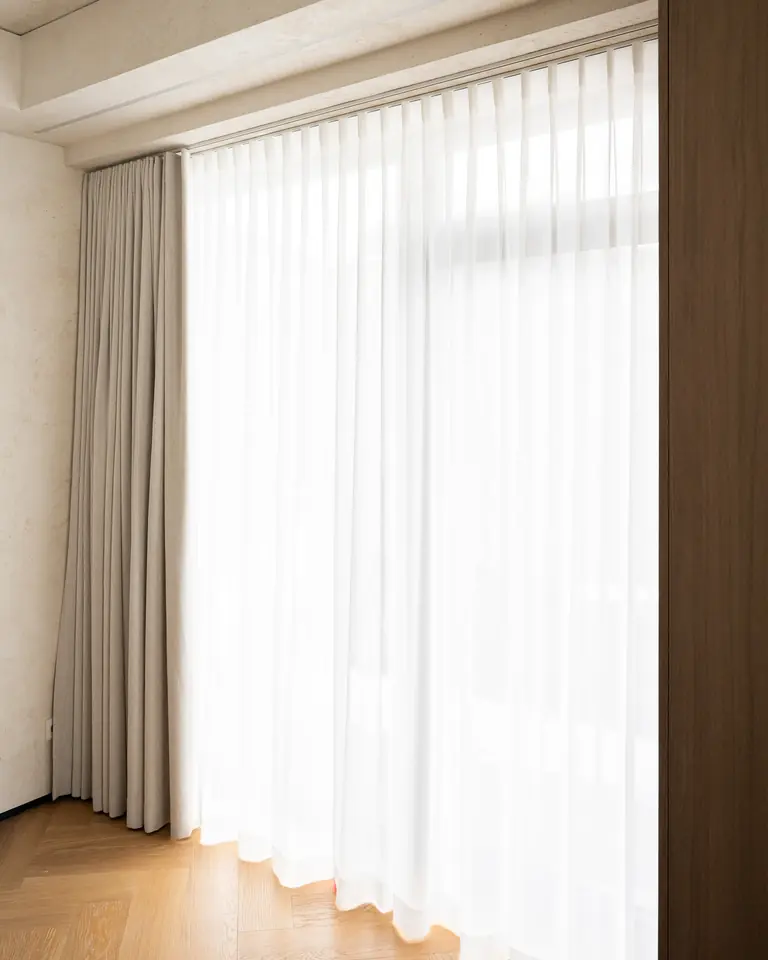
House, room with oak floors. A sheer in wave pleats and a pale curtain in a ceiling recess. 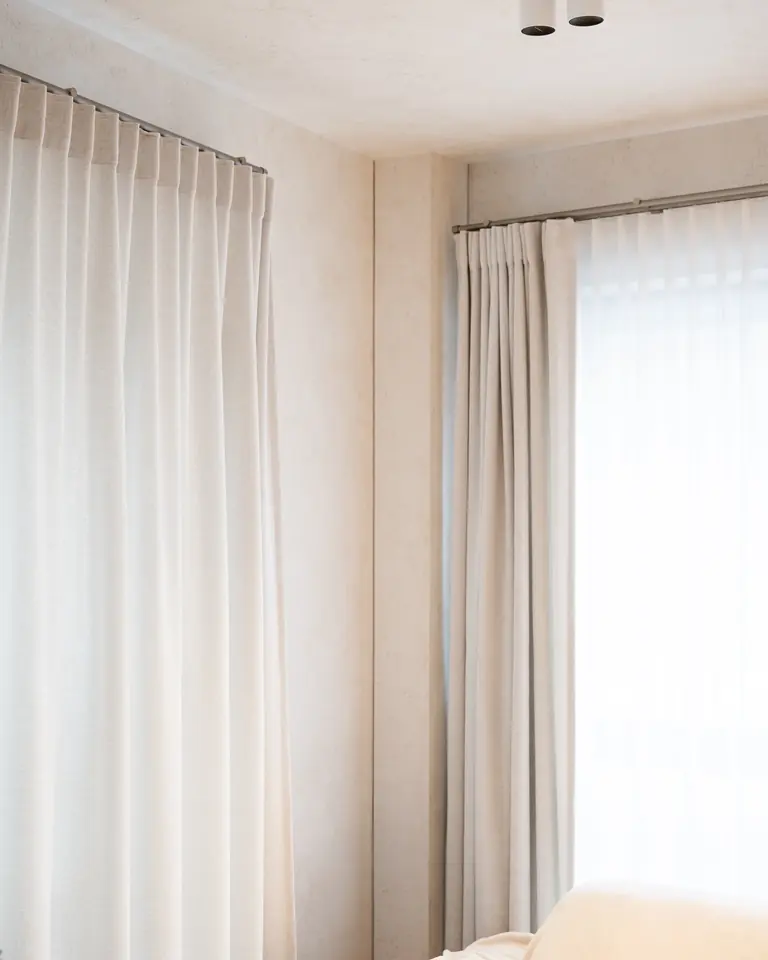
House, corner room. White sheers in wave pleats on ceiling tracks.
Get in touch
Write to [email protected] in English; we reply by e-mail. Our warranty: 12 months on sewing, 24 months on mechanisms.