Roman blinds
Roman blinds for kitchens
Roman blinds are compact, hang clear of the worktop and are easy to raise and to clean. Where a kitchen needs both light control and darkening, a day and night roman blind does both.
€50–100 for a small kitchen window
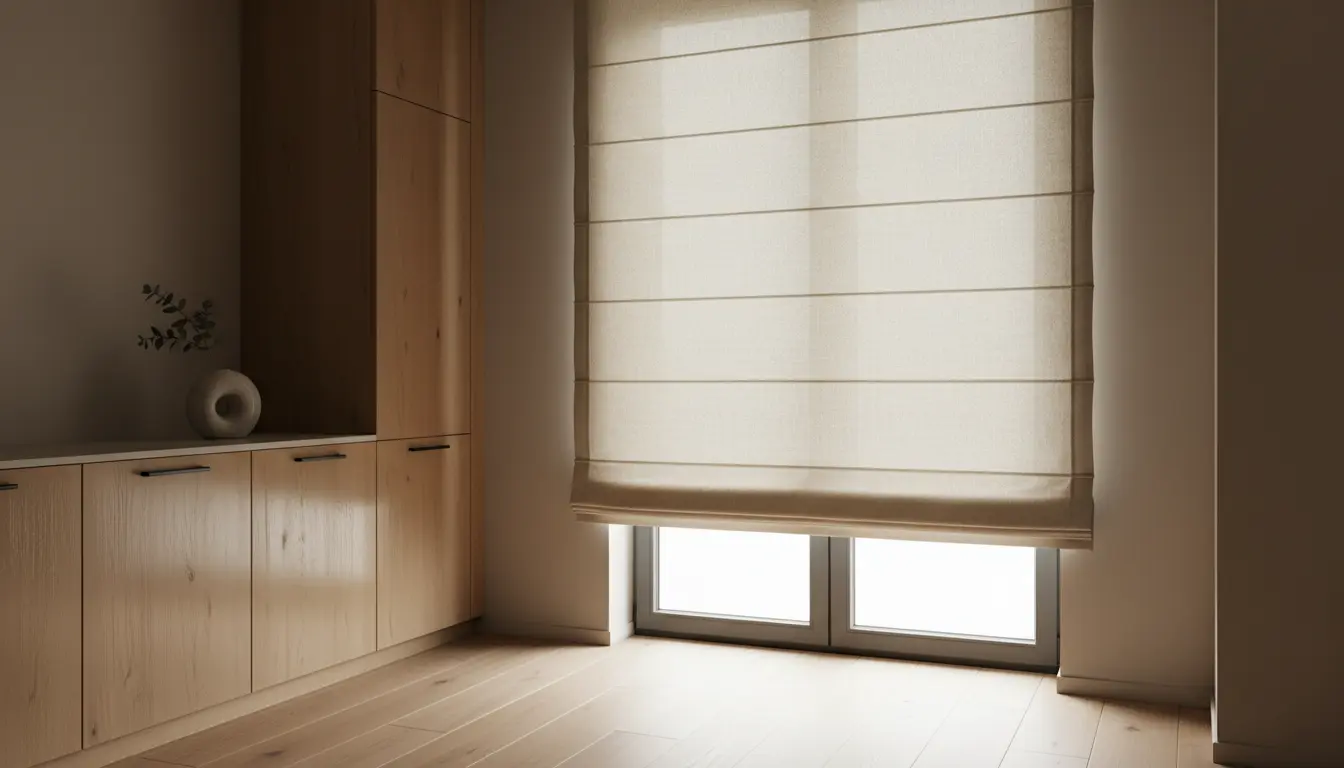
Why do roman blinds suit a kitchen?
A roman blind is compact and stays clear of the worktop and the sink. Kitchen blinds are made in fabrics that clean easily: polyester, polyester-cotton blends and Teflon-treated fabrics. A small kitchen window costs €50–100, and from order confirmation to installation takes 3–4 weeks.
Compact: clear of the worktop, the sink and the hob, which is safe and hygienic. Easy to clean: the blind comes down for washing and is wiped with a damp cloth in between. Hard-wearing: kitchen fabrics resist damp, grease and smells.
Which fabrics work in a kitchen?
Polyester cleans easily and dries quickly. A mixed fabric blends cotton and polyester. A Teflon-treated fabric repels water and dirt. Avoid pure cotton, which absorbs smells.
Roman blinds, roller blinds or curtains for a kitchen?
In a kitchen, roman blinds have the edge on compactness and ease of cleaning.
Against the worktop: roman and roller blinds stay clear of it; long curtains touch it. Cleaning: roman blinds come down for washing, roller blinds are wiped with a cloth, curtains have to be washed. Damp: roman blinds resist it in a suitable fabric, roller blinds resist it (PVC), curtains poorly. Look: soft folds for roman blinds, a minimal line for roller blinds, a classic look for curtains. Price: roman blinds from €50 each, roller blinds from €35 each, curtains from €100 a window. Suited to: roman blinds, small and medium windows; roller blinds, small windows; curtains, large windows.
Most kitchens are better served by roman blinds or compact roller blinds. Classic curtains suit only a large kitchen window with no worktop or food-preparation area beneath it.
How well do they cope with steam and grease?
A kitchen fabric is always exposed to steam and grease, and an unsuitable one starts to yellow and hold smells within a few months. What we recommend, from experience:
Fabrics that suit: 100% polyester, which does not absorb grease and dries quickly; a Teflon-treated fabric, which repels water and dirt; and a mixed fabric (polyester and cotton), a compromise between looks and care.
What to avoid: pure cotton, which soon absorbs smells and grease; linen, which looks good but needs dry cleaning; and light fabrics beside a gas hob, which soon yellow.
How often to clean: wipe the blind with a damp cloth every 2 weeks and machine wash it every 2–3 months. With a Teflon-treated fabric the interval stretches to 4–6 months.
How are kitchen roman blinds fitted?
Inside the recess: the compact option, with the blind fitted straight into the window recess. On the wall above the window: this makes the window look larger. On the frame: fixed directly to the window frame, which suits a kitchen where space is short.
What do roman blinds for a kitchen cost in 2026?
The price depends on the window size, the fabric and the mechanism. These figures are from the 2026 price list for kitchen roman blinds.
Small window (60 × 90 cm), polyester (economy), chain mechanism: €50–90. Medium window (90 × 140 cm), polyester or mixed, chain: €120–180. Medium window (90 × 140 cm), Teflon-treated, chain: €180–260. Large window (150 × 180 cm), Teflon with UV protection, chain: €230–320. Medium window, day and night (voile and blackout), double mechanism: €280–400. Electric blind, Teflon-treated, electric motor: priced in the quote.
The price includes the fabric, the making, the mechanism and a standard headrail. Measuring is free in Vilnius. In Kaunas and Klaipėda it is free on orders of €200 or more. Elsewhere in Lithuania the visit is paid, and the price is agreed beforehand. Charged separately: fitting at €12 per fixing (at least 2 fixings), and replacement parts as needed.
Roman blinds for a kitchen: what are the advantages and drawbacks?
Where roman blinds do well in a kitchen, and where they do not.
Advantages: they stay clear of the worktop, the sink and the hob, which is hygienic; the fabric comes down and machine washes at 30 °C; they are compact and do not stop the window opening; a Teflon-treated fabric repels water and grease; the folds suit modern and classic kitchens; and a recess fit leaves the sill free.
Drawbacks: they cost more than standard roller blinds (from €50 against €35); they do not suit windows over 200 cm wide; with a gas hob they need regular cleaning, and light fabrics beside it can yellow; a chain mechanism is not suitable in a home with small children (choose an electric or cordless one); and pure cotton and linen are out, because they absorb smells.
If the drawbacks weigh more, consider compact roller blinds, or read when roman blinds suit best.
What suits kitchens in different parts of Vilnius?
Kitchens differ from one district to the next, from the direction the window faces to the size of the room.
The Old Town (Senamiestis): narrow recesses and non-standard windows, where a frame fixing saves space. Žvėrynas and Antakalnis: south-facing windows, where a Teflon-treated fabric protects against UV and heat. Naujamiestis: modern flats with open-plan kitchens, where the colour can match the living room. Pilaitė and Pašilaičiai: standard windows, where polyester keeps the cost down.
Questions
Why do roman blinds suit a kitchen?
They are compact and stay clear of the worktop and the sink, they raise out of the way while you cook, and they pick up less grease than long curtains.
Which fabrics should I choose for a kitchen roman blind?
Fabrics that clean easily: polyester, polyester-cotton blends or a Teflon-treated fabric. Avoid pure cotton, which absorbs smells and dirt more quickly.
Are roman blinds practical in a kitchen?
Yes. They stay clear of the cooking area, are easy to raise, can be taken down for washing, and do not stop the window from opening.
How do I clean a kitchen roman blind?
Take it down and machine wash it, if the fabric allows (check the label). Between washes, wipe the dust off with a damp cloth or use a vacuum cleaner.
How much do roman blinds for a kitchen cost?
As a guide, €50–100 each for a small kitchen window; the price depends on the window size and the fabric. The exact price follows the consultation.
Ideas for your home
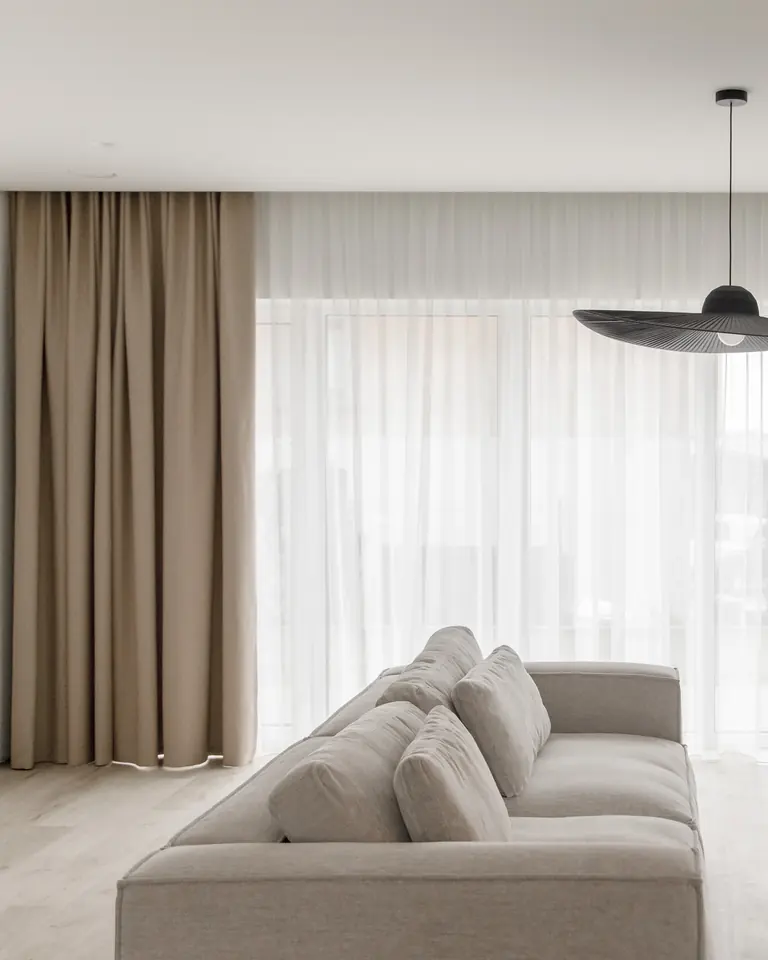
Flat, living room. A white sheer across the whole window wall and sand-coloured curtains from ceiling to floor. 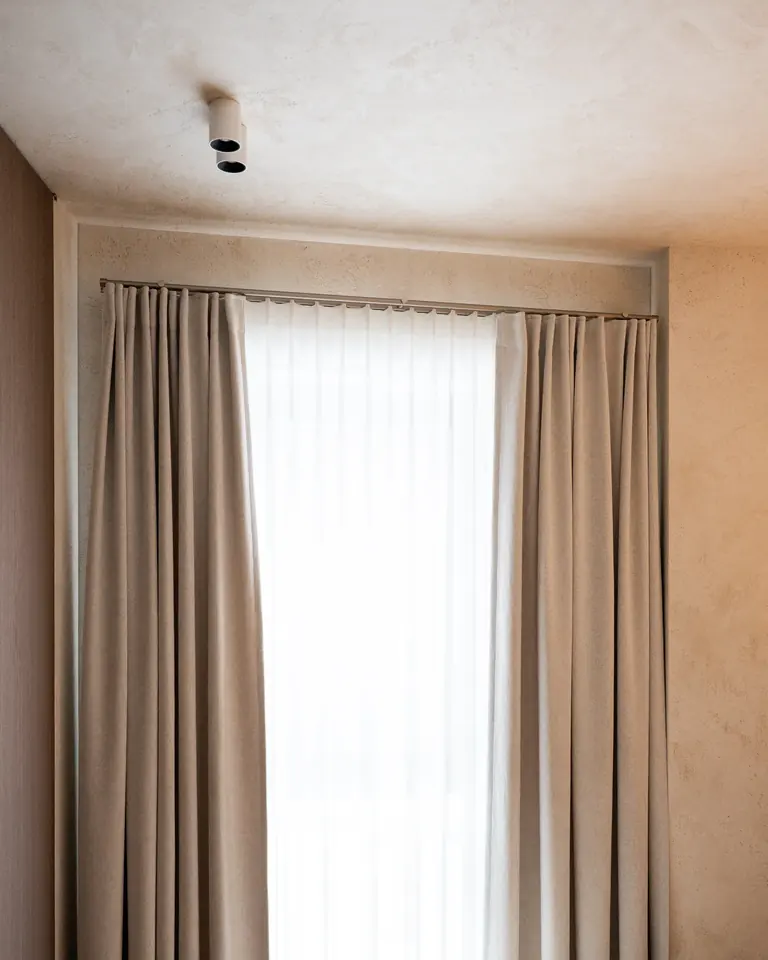
House, window recess. Sand-coloured curtains and a white sheer on a ceiling track. 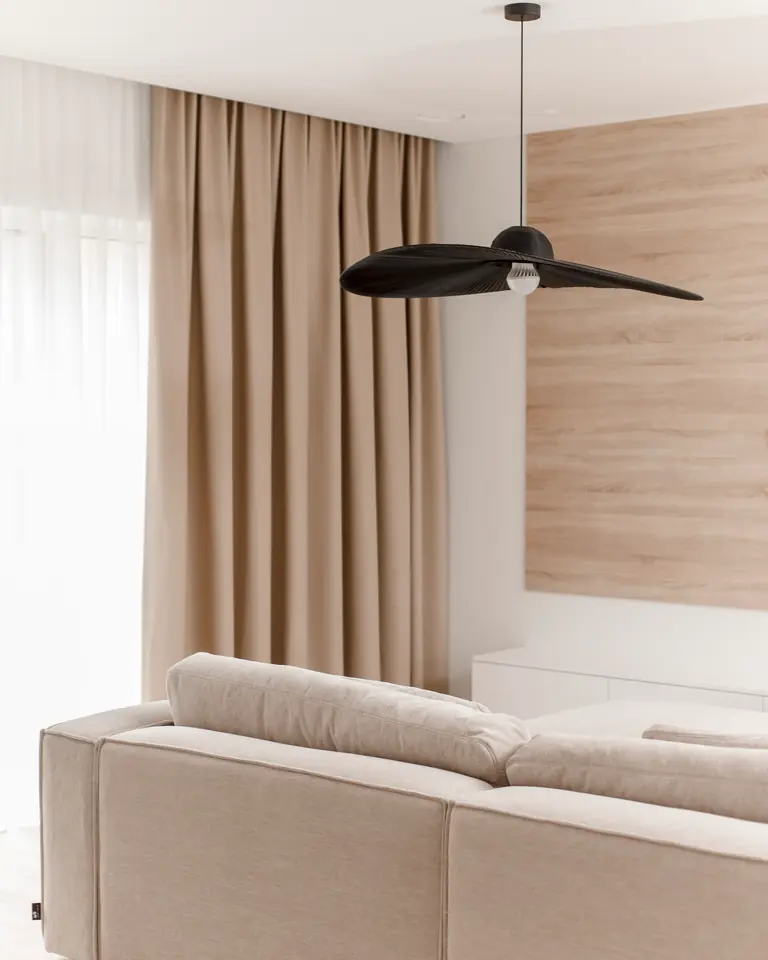
Flat, living room. Sand-coloured curtains and a white sheer from ceiling to floor. 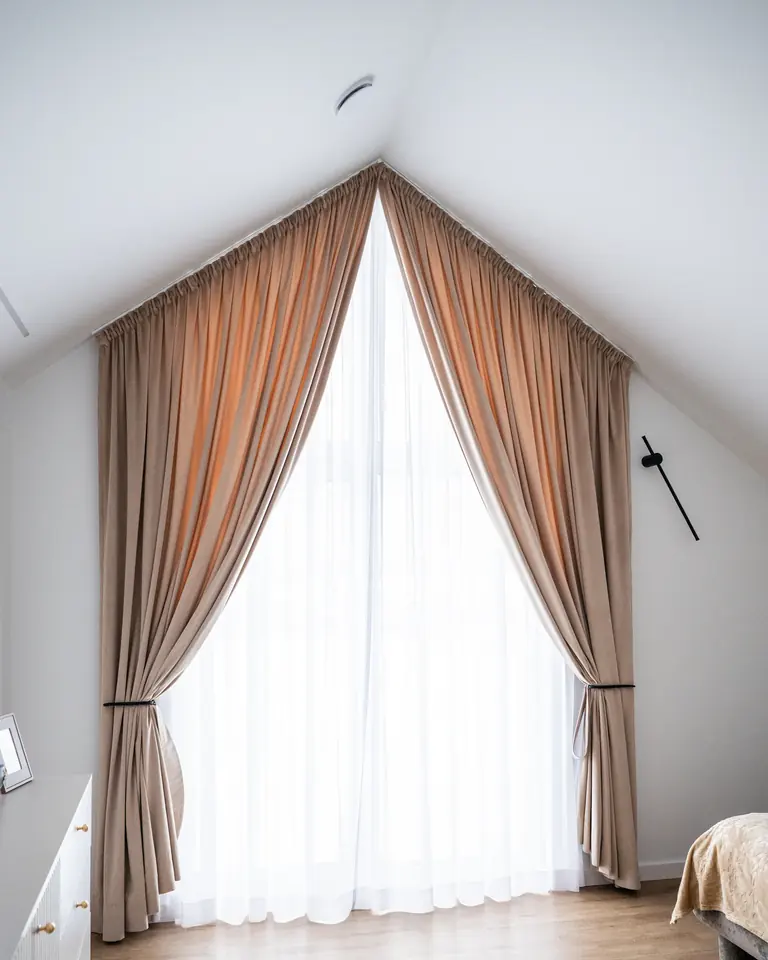
House, bedroom under a pitched roof. Peach curtains with tie-backs and a white sheer. 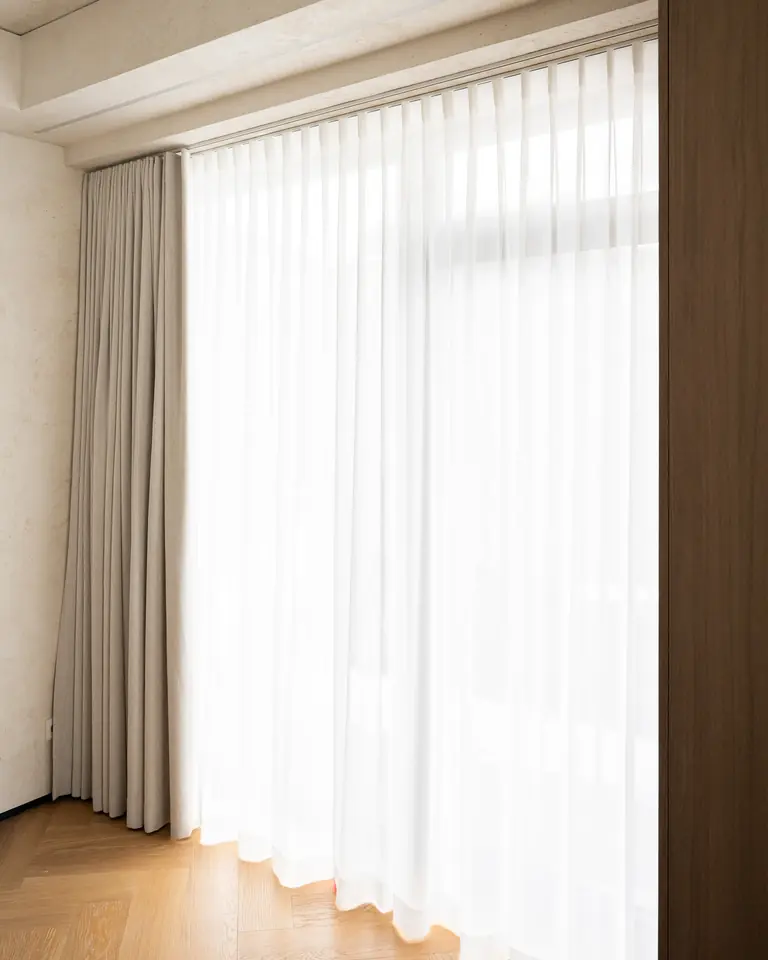
House, room with oak floors. A sheer in wave pleats and a pale curtain in a ceiling recess. 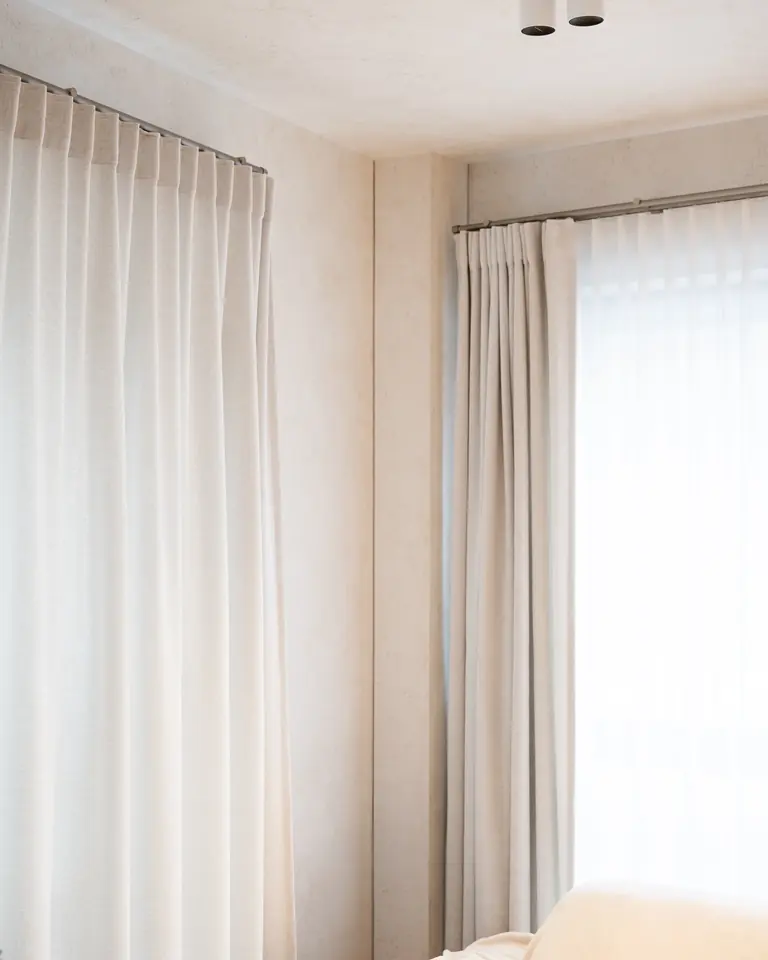
House, corner room. White sheers in wave pleats on ceiling tracks.
Measuring and fitting
Roman blinds for your kitchen are measured and fitted anywhere in Lithuania.