Author: Jegor Janockin
Reviewed by: Curtain.lt editorial team
Last updated:
Types of window dressings: how they differ and how to choose
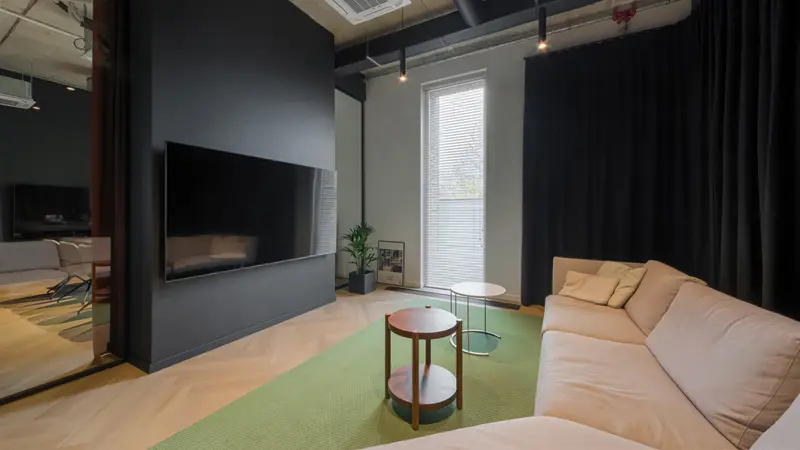
A window dressing does a job and is also a visible part of the room. This guide covers the five main types, curtains, roman blinds, roller blinds, blinds and the poles and tracks that carry them, and shows how they differ and how to choose between them by what you need from the window, the room and the budget.
The main types of window dressing
Window dressings fall into five main groups: curtains, roman blinds, roller blinds, blinds, and poles and tracks.
1. Curtains
Curtains are the classic window dressing, hung on a pole or a track. There are two main kinds: sheer (light, letting the light through) and lined (blocking the light, made for sleep).
- Sheer curtains filter the light and give privacy, but do not darken the room
- Lined curtains block light and suit a bedroom
- Blackout curtains hold back 95–100% of the light (depending on the fabric and colour), for when you need full darkness
- A sheer and a lined curtain together cover the most situations
When to choose curtains
Curtains suit people who want a warm, traditional room. They are easy to change with the season.
Made-to-measure curtains
Sheer, lined and blackout curtains are made to your window measurements. Measuring is free in Vilnius. In Kaunas and Klaipėda it is free on orders of €200 or more. Elsewhere in Lithuania the visit is paid, and the price is agreed beforehand.
Made-to-measure curtains2. Roman blinds
A roman blind is a piece of fabric that folds into parallel horizontal pleats. When it is raised it makes a neat stack at the top of the window. It combines the advantages of curtains and roller blinds.
- Compact: they do not reach the floor, so they suit a kitchen
- Easy to clean: less dust than traditional curtains
- Suit both classic and modern rooms
- Sheer and blackout versions are available
Made-to-measure roman blinds
Compact roman blinds from €200 suit a kitchen, an office and small rooms. Sheer and day and night versions are available.
Made-to-measure roman blinds3. Roller blinds
A roller blind is a single piece of fabric that winds onto a tube. It is one of the most modern window dressings and is popular in minimalist rooms.
- Plain roller blinds: the simplest option, with the fabric wound onto a tube
- Day and night (zebra) blinds: alternating sheer and solid stripes to adjust the light
- Blackout roller blinds: block the light completely
- Cassette roller blinds: a decorative cassette hides the mechanism
The advantage of roller blinds
Roller blinds take up the least room and are the easiest to clean. They suit small rooms and modern interiors.
Made-to-measure roller blinds
Blackout, day and night and cassette roller blinds are made to your window measurements.
Made-to-measure roller blinds4. Blinds
Blinds are rows of slats that turn to adjust precisely how much light comes into a room. There are horizontal (venetian) and vertical blinds.
- Horizontal (venetian) blinds: aluminium, wooden or PVC, for offices and homes
- Vertical blinds: hanging louvres, suited to large windows and terrace doors
- Wooden blinds: a natural-looking option
- Pleated blinds: folded like a concertina, suited to sloping windows
Wooden blinds and damp
Wooden blinds do not suit damp rooms (bathrooms, kitchens). In such places choose aluminium or PVC blinds.
Made-to-measure blinds
Wooden, vertical and pleated blinds: precise light control and a minimalist look for your windows.
Made-to-measure blinds5. Curtain poles and tracks
Poles and tracks carry the curtains rather than dress the window. The choice decides the final look and how well the curtains work.
- Ceiling tracks: hidden in the ceiling, for a minimalist look
- Wall-fixed poles: the classic pole design, with finials
- Bendable tracks: flexible profiles for bay windows and windows of unusual shape
- Electric tracks: with a motor, controlled by remote or phone
Curtain poles and tracks
Ceiling, wall-fixed and electric poles and tracks: choosing, measuring and professional fitting.
Curtain poles and tracksHow to choose by function
- 1Privacy: sheer curtains, or screen roller blinds (they let light in but stop people seeing in).
- 2Sleep (blackout): lined curtains, blackout roller blinds, cassette roller blinds.
- 3Light control: blinds (the slats turn), day and night roller blinds.
- 4Heat insulation: heavy lined curtains, lined roman blinds.
- 5Sun protection: screen roller blinds, blinds with UV protection.
How to choose by room
What suits each room:
- Bedroom: blackout curtains or roller blinds, plus sheers.
- Living room: curtains in a fabric you like, or roman blinds.
- Kitchen: roman blinds or roller blinds (compact and easy to clean).
- Bathroom: moisture-resistant roller blinds or aluminium blinds.
- Child's room: no cords (for safety); motorised options.
- Office: blinds or screen roller blinds.
- Terrace: outdoor roller blinds, resistant to UV and rain.
Common mistakes for first-time buyers
- 1A pole that is too narrow: the curtains need room to open, so the pole should be 40–60 cm longer than the window is wide (20–30 cm on each side).
- 2The wrong length: curtains should reach the floor or hang 1–2 cm above it.
- 3Too little fabric: depending on the heading, folds need 1.5–2.5 times as much fabric as the pole is long.
- 4A colour mistake: curtains that are too dark or too bright can make the room feel smaller.
- 5Not allowing for the way of fitting: ceiling and wall-fixed poles need different preparation.
How do you compare options by budget and upkeep?
When choosing a window dressing, compare the running costs and care as well as the look. Curtains usually do the most for warmth and sound, but they need a pole, making and more fabric. Roller blinds take up less room and are usually easier to look after, but they do not always give the same soft look to a room. Roman blinds sit between the two: more compact than classic curtains, softer than roller blinds.
The cheapest product is not always the most economical. If a room needs privacy by day and darkness in the evening, plan two layers at once rather than correct the choice with a second purchase a few months later. In the same way, in a small kitchen a roman blind or roller blind often wins, because it solves the shortage of space straight away.
When is a consultation worth it, and when is a general guide enough?
If you only need to understand the main differences between curtains, roller blinds, roman blinds and blinds, this guide is enough for a good start. But if a room has several types of window, high ceilings or difficult light, or you have a firm idea of the look, a consultation saves far more time. Then the choice is tested against your space, your furniture, the direction the windows face and how you use the room every day, rather than in the abstract.
When should one room have two window dressings?
One window dressing does not always meet every need. In a living room a combination often wins: sheer curtains for light and softness, with a roller blind or lined curtains added for privacy in the evening. In a bedroom a roman blind or blackout roller blind can do the job, with a sheer curtain to finish the look and soften the room by day. Such a combination costs more, but it often gives the best balance of function and look.
So ask "what will do the whole job?" rather than "what is cheapest today?" If you choose only a roller blind and in a few months find the room looks too bare, you will buy the extra layer anyway. Planning both layers in advance makes the result more consistent and the budget clearer from the start. This matters most for people moving into a new home or fitting a room out in stages: a little more planning at the beginning almost always saves more money later.
The order to choose in
First decide which functions matter most, then narrow it to one or two types, and only then check the price and the way of fitting. That makes it much easier not to get lost among too many options.
Where to read next
- Layering sheer and lined curtains → when you need which
- Day and night roller blinds → with or without a cassette
- Curtain track types compared → ceiling or wall-fixed: when each makes sense
- Wooden blinds → where they suit, and where an alternative is better
- Curtain length and fullness → how to choose the length and the folds
See the curtain options
If you lean most towards textile, go on to the main curtain categories and fabric types.
See curtainsCompare roller blinds with the other options
If compactness and easy care matter most, look at the most popular roller blinds on their own page.
See roller blindsStill undecided?
Arrange a consultation and we will help you work out which window dressing suits you.
Arrange a consultationThe next step
If this guide has answered your questions, move on to a specific product or check your budget.