Blinds
Blinds made to measure
Horizontal, vertical, wooden and pleated blinds for your windows. Blinds are measured, made and fitted across Lithuania.
Blinds from €35 per m²
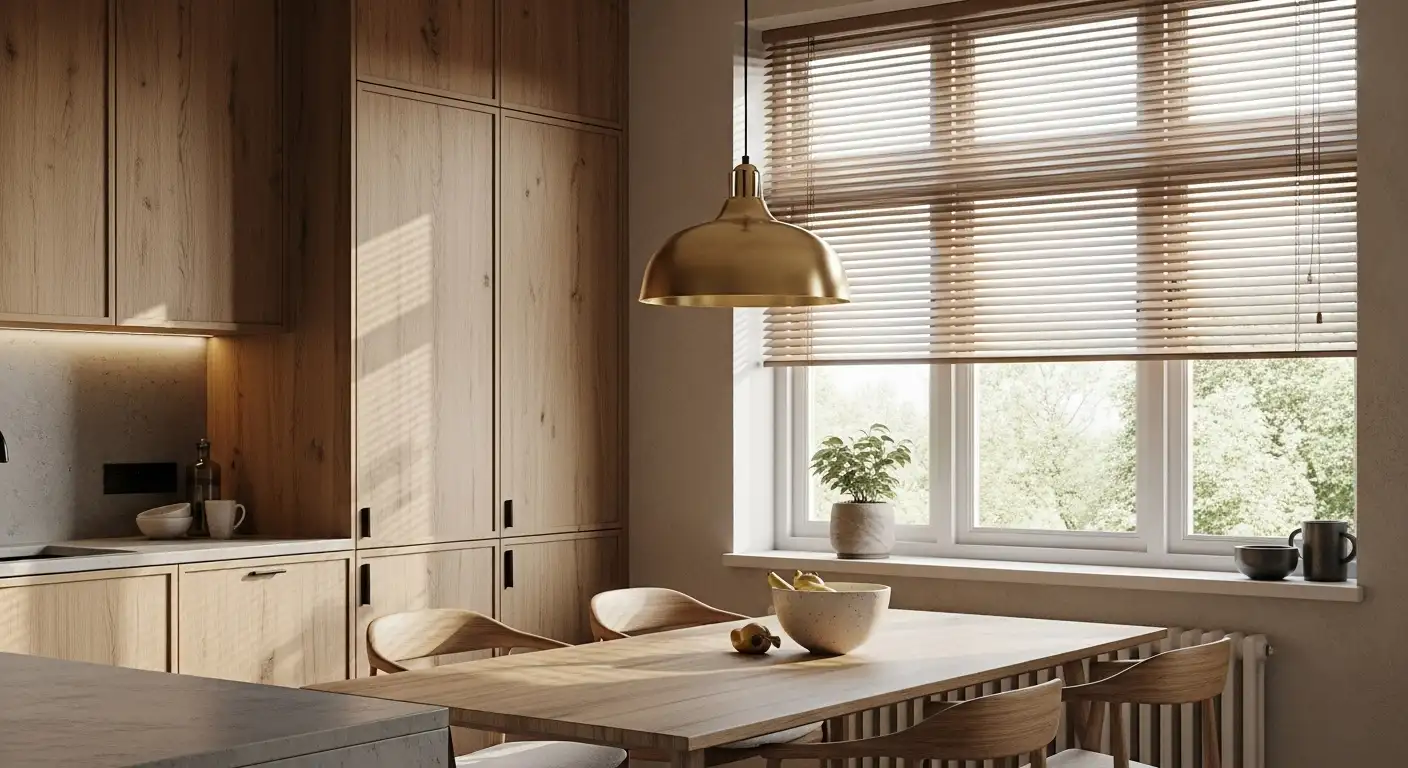
What are blinds?
Blinds are window dressings with slats that turn or slide, which let you set the light and the privacy exactly. Horizontal (venetian), vertical, wooden and pleated blinds are all made to measure.
A blind is a window dressing with slats that turn (horizontal) or fabric strips that slide (vertical). It sets the light and the privacy precisely, is compact and suits homes and offices alike. Vertical blinds cost from €35 per m² and wooden ones from €56 per m².
Which blinds suit which room?
The room decides the type of blind.
Home: living room, bedroom, child's room. Choose the blinds by what the room needs and its style.
Office: a businesslike setting with practical control of the light. Vertical and horizontal blinds are the usual choices.
Damp rooms: bathroom, kitchen. Aluminium and PVC blinds resist damp and are easy to clean.
Can blinds be automated?
Yes: electric blinds with a remote control. They can be joined to a smart-home system or operated from a phone app. You can set them to open automatically at sunrise or on your own schedule.
The most popular smart-home platforms are supported: Apple HomeKit, Google Home and Amazon Alexa.
Why choose blinds?
Blinds set the light and the privacy precisely, come in four types (horizontal, vertical, wooden and pleated) in aluminium, wood, PVC and fabric, and take up no room. They are easy to look after and long-lasting, suit many kinds of window, and can be automated if needed.
Measuring and fitting
Blinds are measured and fitted in Vilnius, Kaunas, Klaipėda and across Lithuania. Measuring is free in Vilnius. In Kaunas and Klaipėda it is free on orders of €200 or more. Elsewhere in Lithuania the visit is paid, and the price is agreed beforehand.
How do I look after and clean blinds?
Regular care extends the life of blinds and keeps them clean.
Clean horizontal aluminium blinds with a damp cloth every 2–4 weeks, with a mild detergent without abrasive particles, and once a year take them down and soak them.
Clean wooden blinds only with a dry or slightly damp cloth, and avoid excess water, because the wood can swell. Occasionally treat them with a wood care oil.
Clean vertical and pleated blinds with a vacuum cleaner with a soft attachment. Fabric louvres can be washed gently by hand, but avoid strong cleaners, which can change the colour.
What should I know about fitting blinds?
Whether to fit them yourself or have them fitted depends on the type of window and the blind's mechanism.
Fitting them yourself (DIY): horizontal blinds go into the recess on the brackets supplied, and the louvres of vertical blinds hang straight on the headrail. Measure accurately before ordering.
Have electric blinds (because of the wiring) and blinds for non-standard windows (bay windows, roof windows) fitted professionally.
How do I choose blinds? A quick guide
The type of blind depends on the size of the window, what the room is for and how much privacy is needed.
For large windows and patio doors vertical blinds suit: the fabric draws to the side, and it is easy to walk through. For the effect of natural wood choose wooden blinds, with natural tones and good insulation. For sloping windows and roof windows there are pleated blinds, which sit close to the glass at any angle. For a bathroom and a kitchen, aluminium or PVC blinds suit: they resist damp and wipe clean. For an office and for precise control of the light, horizontal aluminium blinds are best: they last, and adjust precisely.
What do blinds cost in 2026? The main guide prices
The exact price depends on the size of the window, the material and the slat width. Below are typical prices by type of blind for a standard 1.2 × 1.5 m window.
Wooden (25 mm): from €56 per m² (about €101 for a 1.2 × 1.5 m window), for a living room, an office and a bedroom. Wooden (50–65 mm): from €72 per m² (about €130–153), for large windows and electric operation. Vertical with PVC louvres: from €35 per m² (about €63), for terrace doors and offices. Vertical with fabric louvres: from €39 per m² (about €70), for panoramic windows. Aluminium horizontal: from €15 per m² (€35–55), for kitchens and bathrooms, as they resist damp. Pleated: from €50 per m² (about €90), for roof windows and trapezoid windows.
The price includes the slats, the operating mechanism and standard brackets. Fitting is €15 per blind.
What are the advantages and drawbacks of each type of blind?
An honest comparison: where each type does well, and where the others do better.
Wooden blinds: advantages are the look of natural wood and a warm tone, better insulation than aluminium, a long life in a dry room and 4 slat widths (25, 35, 50 and 65 mm). Drawbacks are that they do not suit a bathroom or a kitchen (damp warps them), they cost more than aluminium (from €56 per m²), and they are more demanding to look after, because they must avoid damp.
Vertical blinds: advantages are that they suit large windows and terrace doors, are easy to walk past, come in fabric, PVC or aluminium and cost less than wooden ones (from €35 per m²). Drawbacks are that they take up about 10 cm of width when drawn (stack-back), give less privacy than horizontal ones, and louvres that touch the floor collect dust.
Pleated blinds: advantages are that they are the only type of blind for roof windows, suit trapezoid and round windows, have top-down / bottom-up operation (partial closing) and are compact. Drawbacks are that they cost more than standard aluminium ones, the fabric collects dust and needs a vacuum cleaner, and they do not withstand heavy damp (except special fabrics).
Types of blind
Choose by the type of window, the purpose of the room and the style of the design. Besides the types below, classic horizontal blinds with turning slats are also made, in aluminium, wood or PVC.
Vertical blinds
For large windowsfrom €35/m²
Vertically hanging louvres for large windows and patio doors. Fabric, PVC or aluminium.
- — Suit large windows
- — Easy to walk past
- — Fabric, PVC or aluminium
Wooden blinds
Naturalfrom €56/m²
Natural wood for your home. Bamboo or basswood, in natural shades.
- — Natural wood tones
- — A classic look
- — Good insulation
Pleated blinds
For roof windowsfrom €50/m²
A concertina-folded fabric for sloping windows and roof windows. Day and blackout versions.
- — Suit sloping windows
- — Fold compactly
- — Day and blackout
Questions
How do horizontal and vertical blinds differ?
Horizontal (venetian) blinds have slats that turn horizontally, and suit smaller windows and offices. Vertical blinds have louvres that hang vertically, and suit large windows, patio doors and panoramic windows.
Do blinds suit damp rooms?
Yes. Aluminium and PVC blinds suit bathrooms and kitchens well. They resist damp, are easy to clean and do not go mouldy. Wooden blinds do not suit damp rooms.
What makes wooden blinds special?
Wooden blinds give natural warmth. They are made of natural wood or bamboo, so no two grains are alike. They suit a living room, a bedroom and an office. They set the light and give privacy.
What are pleated blinds?
A pleated blind is a fabric folded like a concertina into a compact stack. It suits sloping windows, roof windows and arched windows, where traditional blinds do not fit.
Can blinds be automated?
Yes. Electric blinds with a remote control are available. They can be joined to smart-home systems (Apple HomeKit, Google Home, Alexa), operated from a phone app, or set on a timer.
How much do blinds cost?
The price depends on the type, the material and the size of the window. As a guide: aluminium from €25–50 per m², wooden from €56 per m² (PVC wood-effect from €48 per m²), vertical from €35 per m², pleated from €50 per m². Fitting is €15 per blind. The exact price is given after the consultation.
Which blinds suit a sloping window or a roof window?
Pleated blinds, with special guide rails that hold them against the glass at any angle. Standard horizontal blinds or roller blinds do not suit such windows.
How long do blinds last?
The life depends on the material, the room and how heavily the blind is used: aluminium and PVC slats do not mind damp, wooden ones last longest in a dry room, and pleated fabric is kept well by distance from a radiator. Correct cleaning and care of the mechanisms extend the life, and our warranty on mechanisms is 24 months.
Ideas for your home
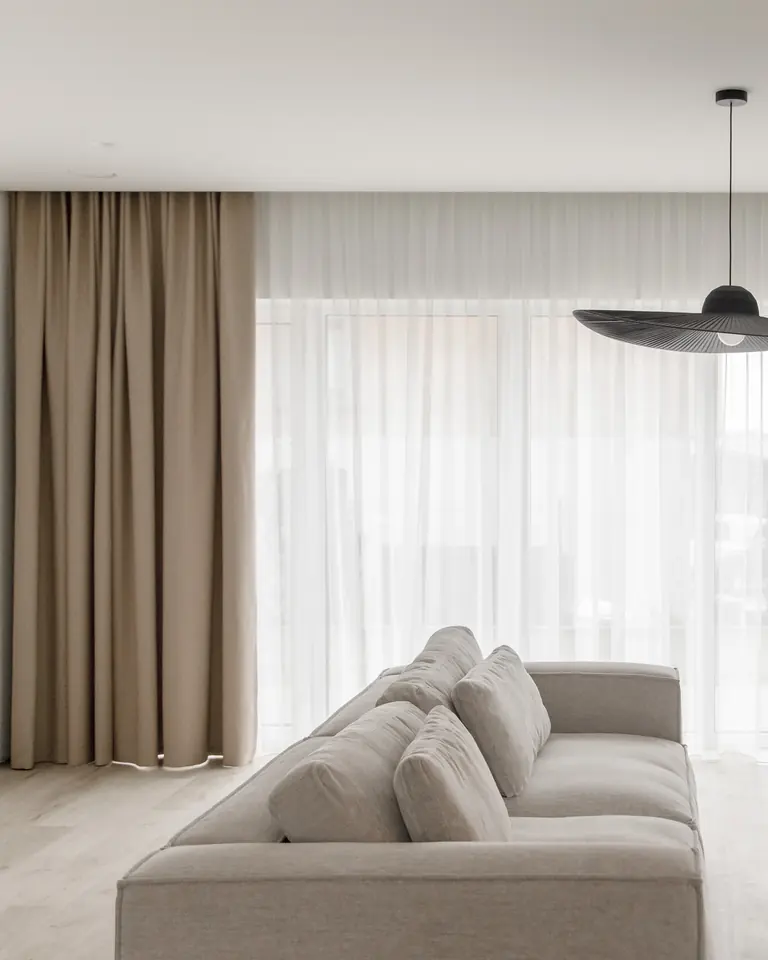
Flat, living room. A white sheer across the whole window wall and sand-coloured curtains from ceiling to floor. 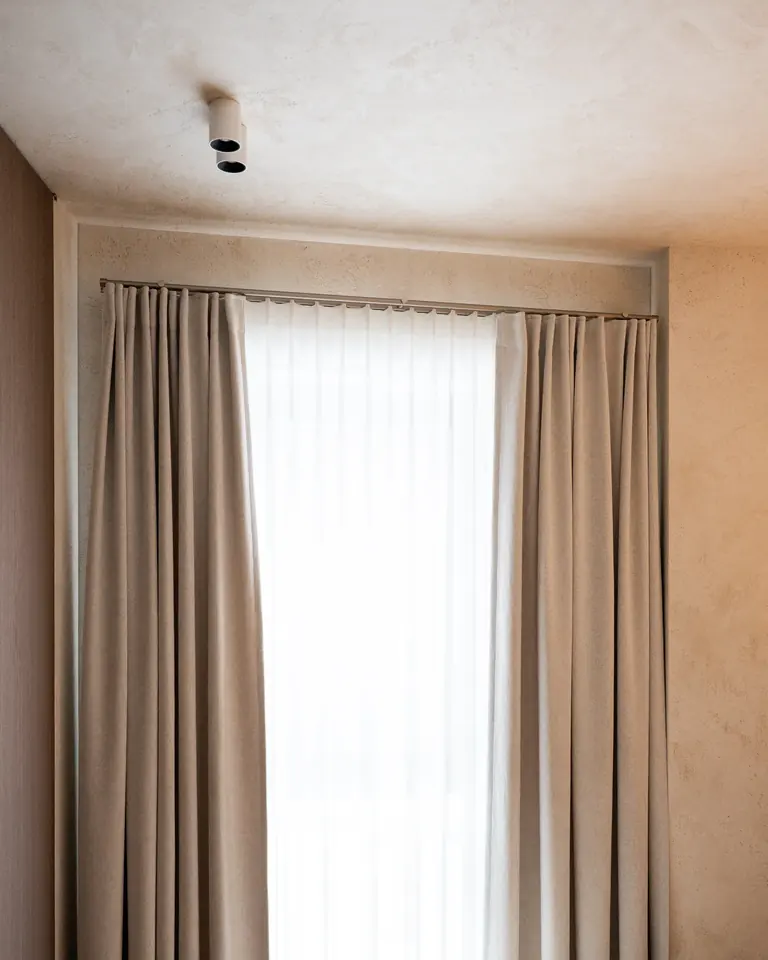
House, window recess. Sand-coloured curtains and a white sheer on a ceiling track. 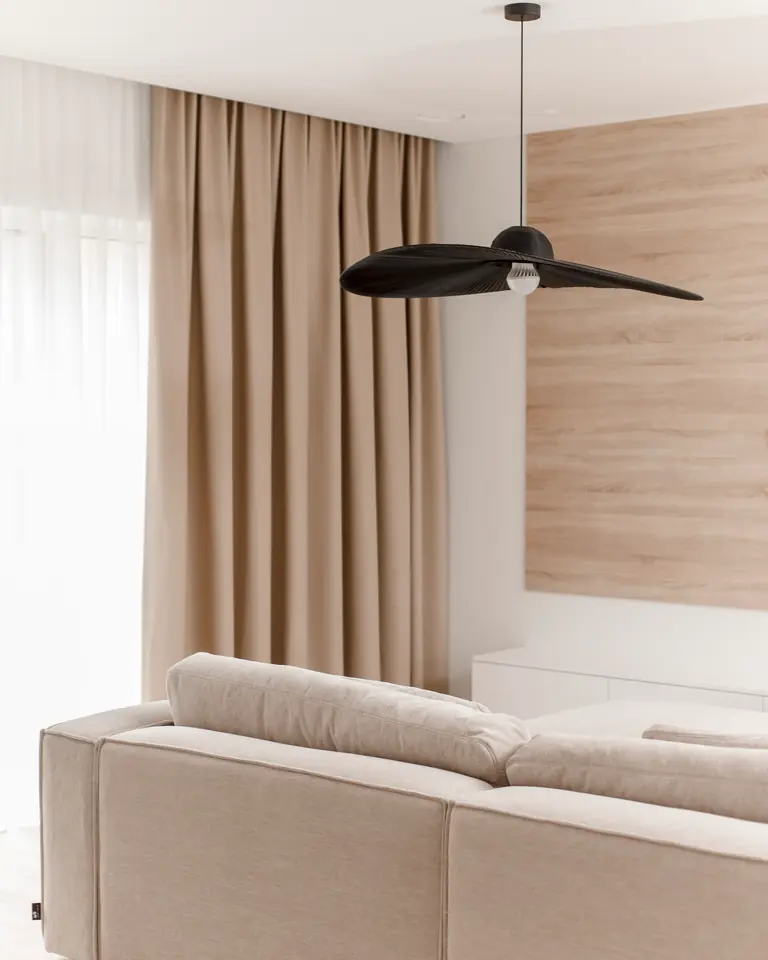
Flat, living room. Sand-coloured curtains and a white sheer from ceiling to floor. 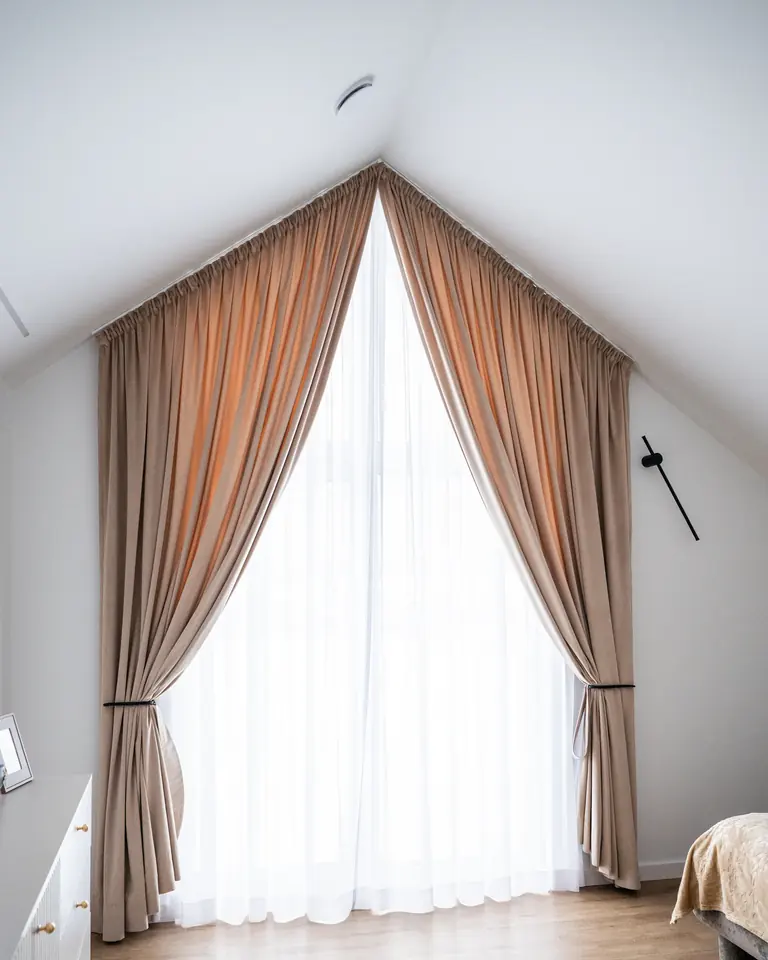
House, bedroom under a pitched roof. Peach curtains with tie-backs and a white sheer. 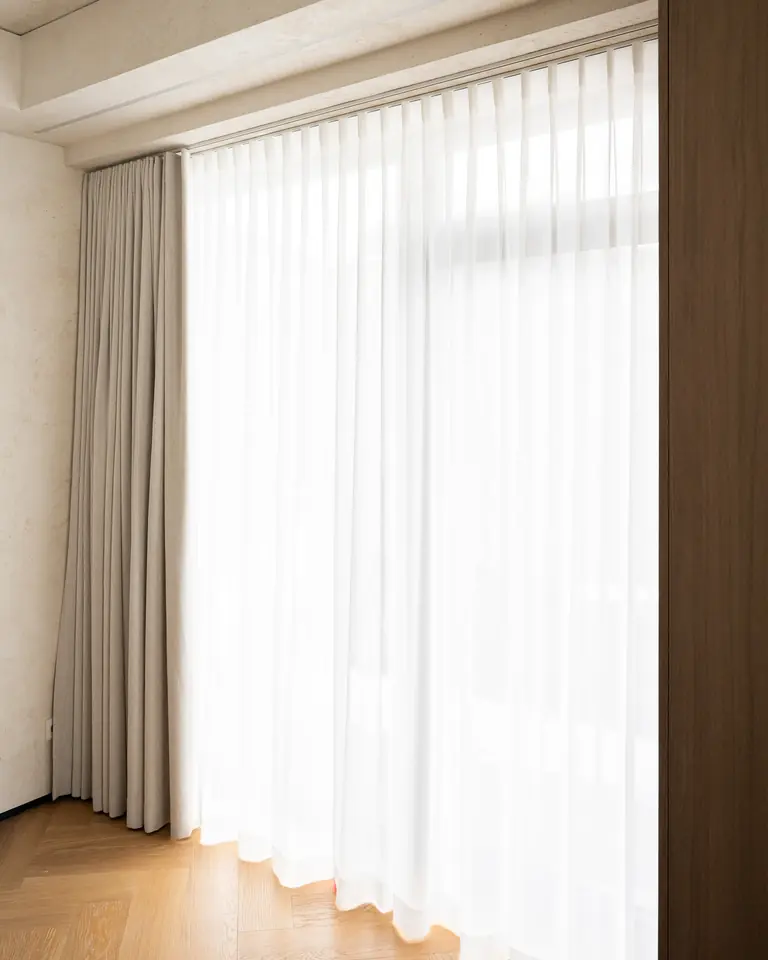
House, room with oak floors. A sheer in wave pleats and a pale curtain in a ceiling recess. 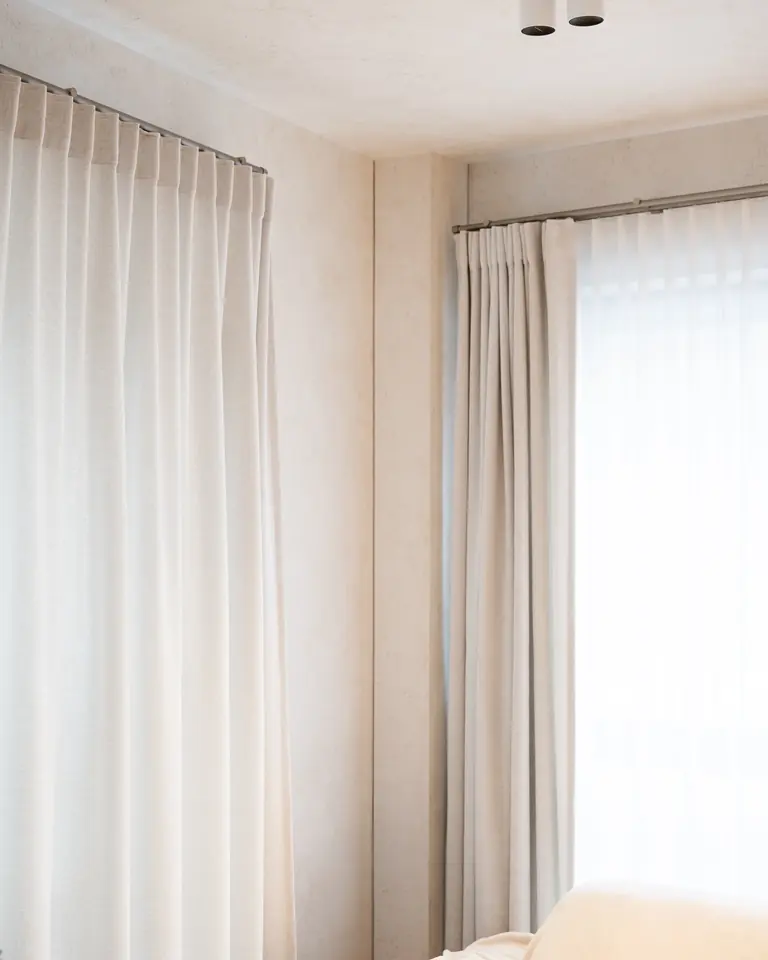
House, corner room. White sheers in wave pleats on ceiling tracks.