Blinds
Vertical blinds
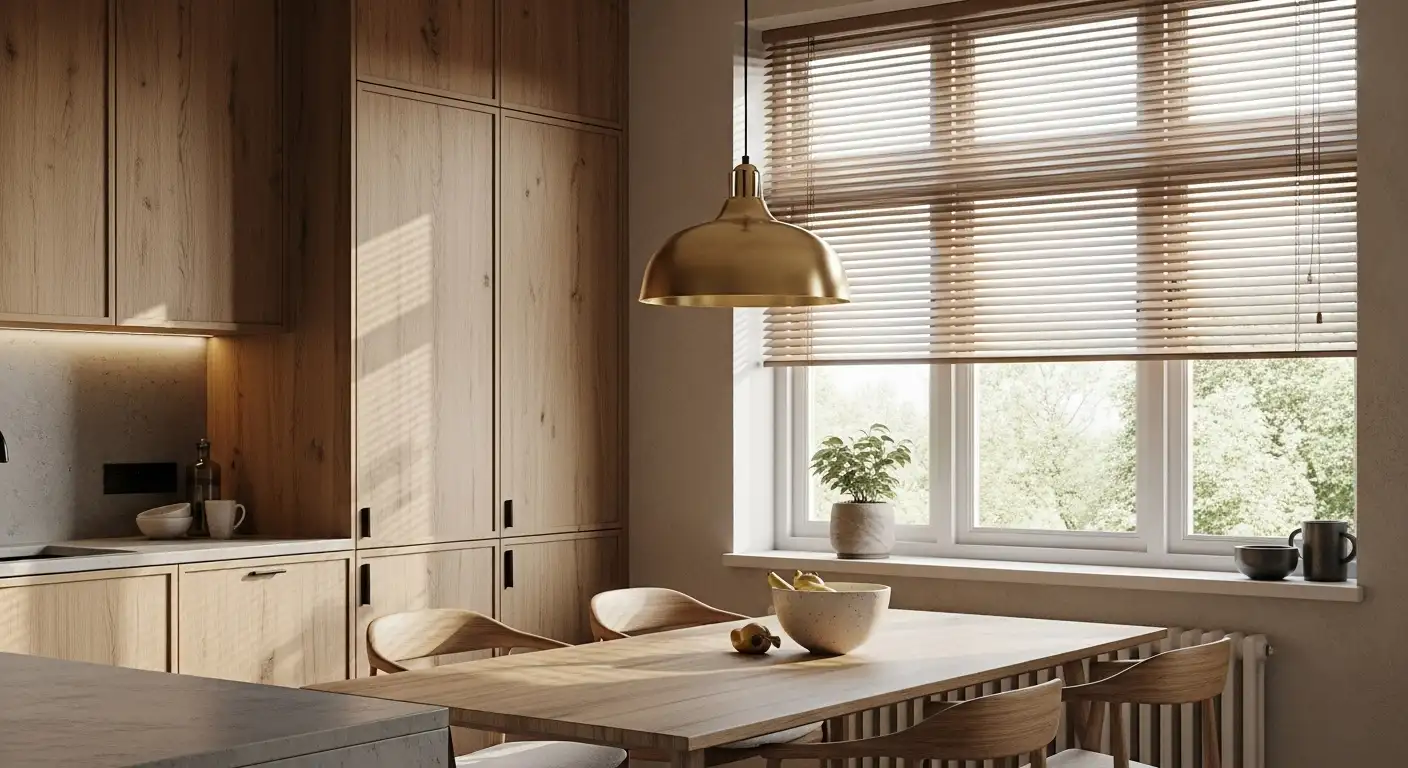
Louvres that hang vertically make it easy to set the light and the privacy. They suit patio doors, panoramic windows and offices. If you want a more natural look, wooden blinds are the alternative.
Why choose vertical blinds?
For large windows: they suit large windows and glass walls up to 4+ metres. Easy passage: they draw to the side, so they do not get in the way of a patio door. Offices: they look businesslike and stand up to use in commercial premises.
Which materials can I choose?
Fabric: warm and soft, in many colours. Suits a living room and a bedroom.
PVC: resists damp and is easy to clean. Suits a kitchen, a bathroom and an office.
Aluminium: modern, durable and businesslike. Suits offices and commercial premises.
How are vertical blinds operated?
Rotating the louvres sets the amount of light. Drawing slides the blind open to the left or the right. A centre opening draws it to both sides. Electric operation is by remote control.
What are the advantages?
They suit even the largest windows, leave a door free to walk through, set the light precisely, come in many colours, are easy to look after and can be motorised.
Measuring and fitting
Vertical blinds are measured and fitted anywhere in Lithuania. Measuring is free in Vilnius. In Kaunas and Klaipėda it is free on orders of €200 or more. Elsewhere in Lithuania the visit is paid, and the price is agreed beforehand.
Should I choose 89 mm or 127 mm louvres?
The width of the louvres is not only a matter of looks: it also affects the price and how well the blind suits windows of different sizes.
89 mm louvres give a more modern, lighter look and suit more compact windows, up to 240 cm high. There are more louvres, so they hang more closely, and the price is a little higher (more parts). 127 mm louvres give a calmer, broader look and suit windows over 250 cm high and over 200 cm wide. There are fewer louvres, so the blind looks quieter, and the price is usually lower.
A practical rule: for a window wider than 200 cm or taller than 250 cm, choose 127 mm. For more compact windows, and for a more modern look, choose 89 mm. A fuller comparison with prices is in our vertical blinds guide and our 2026 price guide.
What is stack-back, and how much room do drawn louvres take?
Stack-back is the width that the folded louvres take on the headrail when the blind is fully drawn to one side. It is often overlooked when buying, and beside patio doors and balcony openings the stacked louvres can block the way through. In those cases consider pleated blinds, which fold compactly and take up no space at the side.
The formula: stack-back ≈ the number of louvres × 3–4 mm per louvre. An example: a window 300 cm wide with 89 mm louvres → about 34 louvres → 10–14 cm of stack-back beside the opening.
There must be at least 15–20 cm of free wall beside the opening, so that the drawn louvres do not block the way through. If there is no free wall, choose a split draw (opening to both sides), or plan a recess for the louvres in advance.
What do vertical blinds cost in 2026?
The price depends on the louvre width, the material and the size of the window. The exact price is given after measuring.
Standard fabric (89 and 127 mm louvres): €39 per m², for compact windows, offices and patio doors. PVC or vinyl louvres: from €35 per m², for kitchens, bathrooms and damp rooms. Blackout and textured fabrics: €55 per m², for bedrooms and home cinemas. For example, a 2 × 2 m patio door in standard fabric costs about €156. Electric operation for windows that are hard to reach is priced in the quote.
Headrails and mechanisms: €5–95. Fitting: from €15.
How do vertical blinds compare with other kinds of blind?
The comparison below covers window size, doors, light control, light blocking, damp rooms and price.
For large windows (over 200 cm), vertical blinds suit well, horizontal (wooden) blinds do not (too heavy), and pleated blinds suit to a limited degree. For patio and balcony doors vertical blinds suit best, and horizontal and pleated ones do not suit. For compact windows vertical blinds are possible but not the first choice; horizontal and pleated ones suit well. Light control: vertical, rotating + drawing; horizontal, tilting only; pleated, up and down. Light blocking: vertical 70–100%, horizontal 80–95%, pleated 85–99%. For damp rooms, vertical blinds suit (PVC), wooden blinds do not, and pleated blinds suit (impregnated). Price: vertical from €35 per m², horizontal (wooden) from €56 per m², pleated from €50 per m².
Looking for natural wood? See the wooden blinds page. For non-standard windows, pleated blinds.
Which rooms suit vertical blinds?
Office: a businesslike look and easy light control. PVC or aluminium louvres stand up to heavy use. They suit open-plan offices with large windows.
Terraces and balconies: they draw open to the side along with the door, so they do not block the way through. A split draw lets one side be opened on its own. Work out the stack-back first.
Living room: fabric louvres come in many colours. 127 mm louvres on panoramic windows give a solid, calm look. They go with lined curtains.
Bedroom: blackout fabrics block up to 100% of the light that reaches the fabric. 127 mm louvres give more privacy. Electric operation is convenient for use in the dark.
How do I look after and clean vertical blinds?
With regular care vertical blinds last 10–15 years. How to clean depends on the material of the louvres.
Fabric louvres: a vacuum cleaner with a soft attachment. For local marks, a damp cloth with mild soap. Do not wash in a machine: the fabric will warp.
PVC louvres: warm water with mild soap. A disinfectant liquid may be used. They resist damp, so they can be cleaned after renovation or building dust.
Aluminium louvres: a damp microfibre cloth. Avoid abrasive cleaners, which damage the anodised surface. Chemical cleaning is suitable.
Questions
How do I wash vertical blind louvres?
Fabric vertical blinds cannot be machine washed: the fabric shrinks and warps. For marks, use a damp cloth or a special fabric cleaner. For PVC and vinyl louvres, warm water with mild soap suits, avoiding bleach and ammonia.
Do vertical blinds suit a home?
Yes. Vertical blinds suit panoramic windows and sliding doors in homes, because they open to the side along with the door. They are especially practical where the window is wider than 200 cm or taller than 250 cm. For smaller standard windows, roller blinds or venetian blinds suit better.
What is stack-back, and how is it calculated?
Stack-back is the width the louvres take when the blind is fully open to one side. The approximate formula: the number of louvres × 3–4 mm. For example, a window 300 cm wide with 89 mm louvres gives a stack-back of about 10–14 cm, so there must be at least 15–20 cm of free wall beside the opening.
How much do vertical blinds cost in Lithuania?
Our vertical blinds cost from €35 per m² (PVC louvres), with standard fabric at €39 per m². Blackout and textured fabrics, which darken the room most, cost €55 per m². Fitting is €15 per blind. Work out the price for your window in the blind calculator.
How much do blackout vertical blinds cost?
Vertical blinds in blackout and textured fabrics cost €55 per m², the calculator's price. Some light passes between the louvres and at the edges, so for full darkness combine them with night curtains. The final price depends on the material, the maker and extras such as motorised operation.
Which louvre width should I choose, 89 mm or 127 mm?
89 mm louvres suit more compact windows (up to 240 cm high) and give a more modern, lighter look. 127 mm louvres suit windows wider than 200 cm or taller than 250 cm: they hold their shape better and look more solid. 89 mm louvres can cost a little more to make, because there are more parts.
How are vertical blinds operated?
By hand, pulling a chain or a cord, or by electric (motorised) operation through a remote control or a phone. Motorised operation raises the price considerably, but is especially convenient for large windows or ones that are hard to reach. Modern systems work with home-automation platforms.
How do I measure a window for vertical blinds?
Measure the width at three points, at the top, in the middle and at the bottom, and take the smallest width. Measure the height at several points if the floor is uneven, and take the lowest point. The louvres should end 1–2 cm above the floor. Before ordering, always check the free wall beside the opening for the stack-back.
Do vertical blinds suit balcony doors?
Yes. Vertical blinds suit sliding balcony doors well, because they open to the side along with the door and do not get in the way. Work out the stack-back in advance: there must be at least 15–20 cm of free wall beside the opening, so that the drawn louvres do not block it.
How long do vertical blinds last?
With regular care, removing dust with a soft cloth and cleaning marks properly, vertical blinds last 10–15 years. Life depends on the quality of the material, correct fitting and regular care. PVC and vinyl louvres generally resist damp and suit kitchens and bathrooms.
Ideas for your home
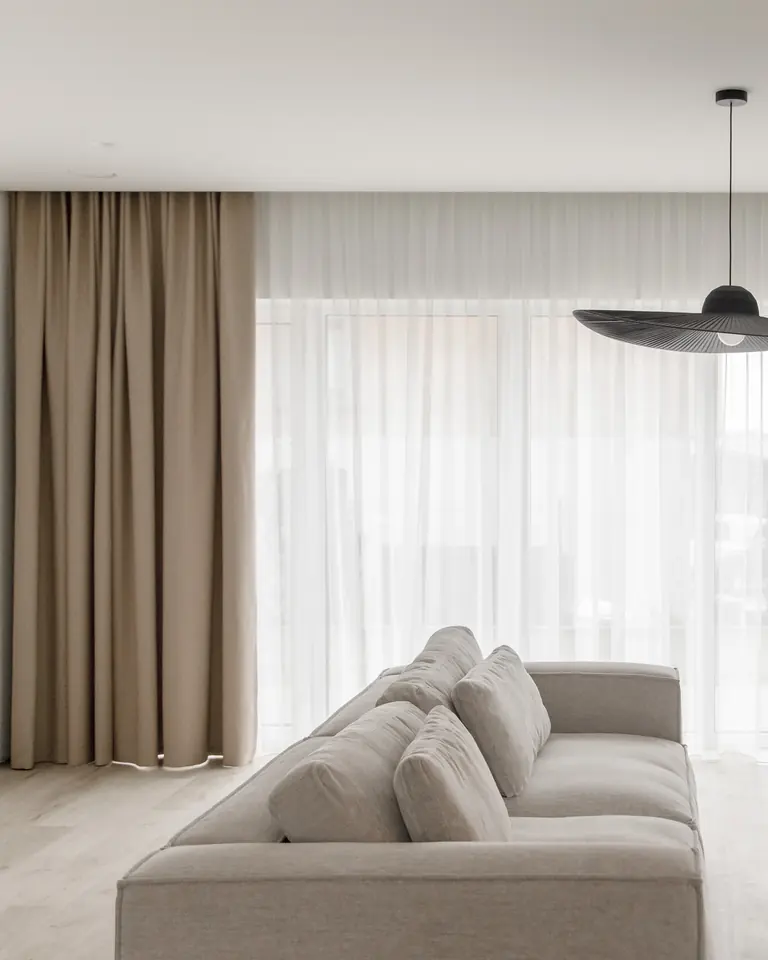
Flat, living room. A white sheer across the whole window wall and sand-coloured curtains from ceiling to floor. 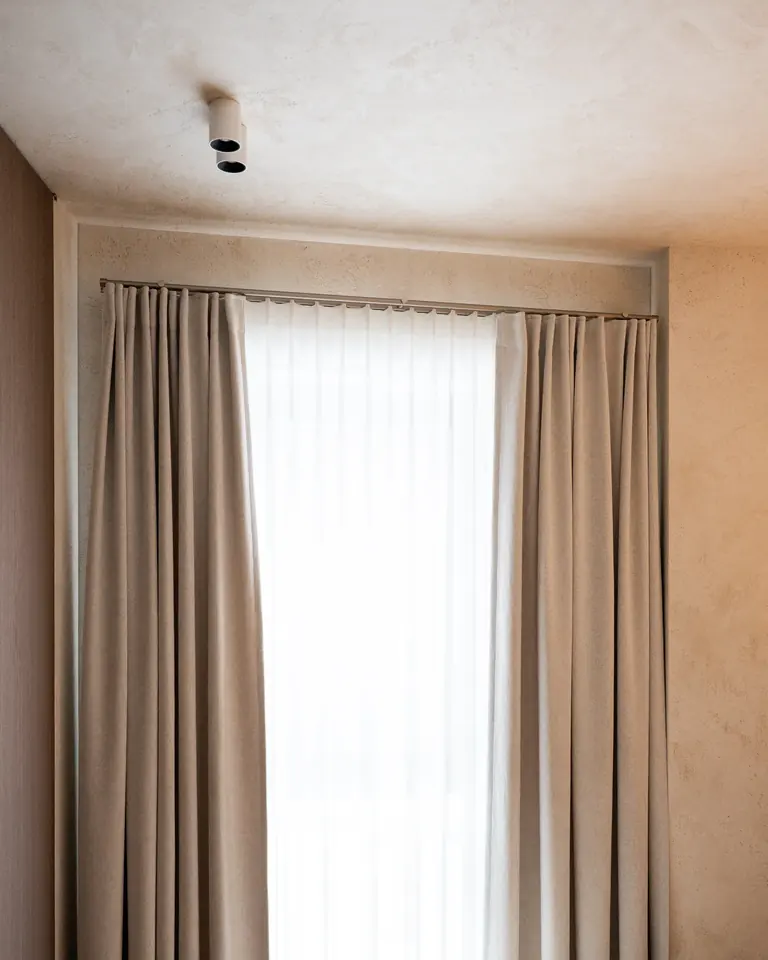
House, window recess. Sand-coloured curtains and a white sheer on a ceiling track. 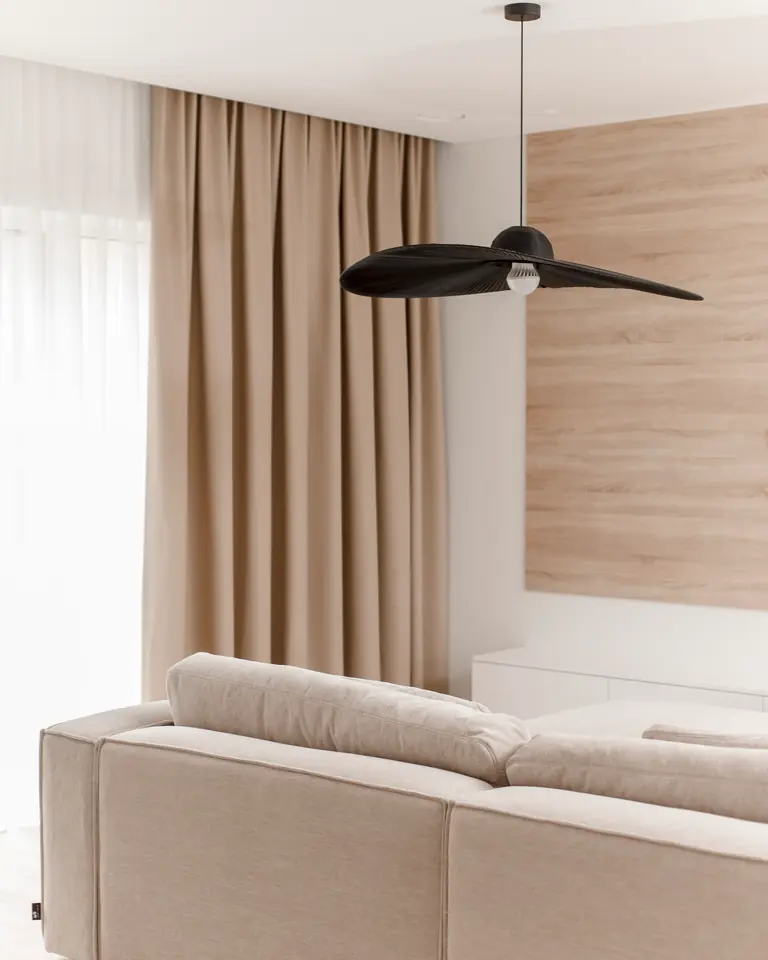
Flat, living room. Sand-coloured curtains and a white sheer from ceiling to floor. 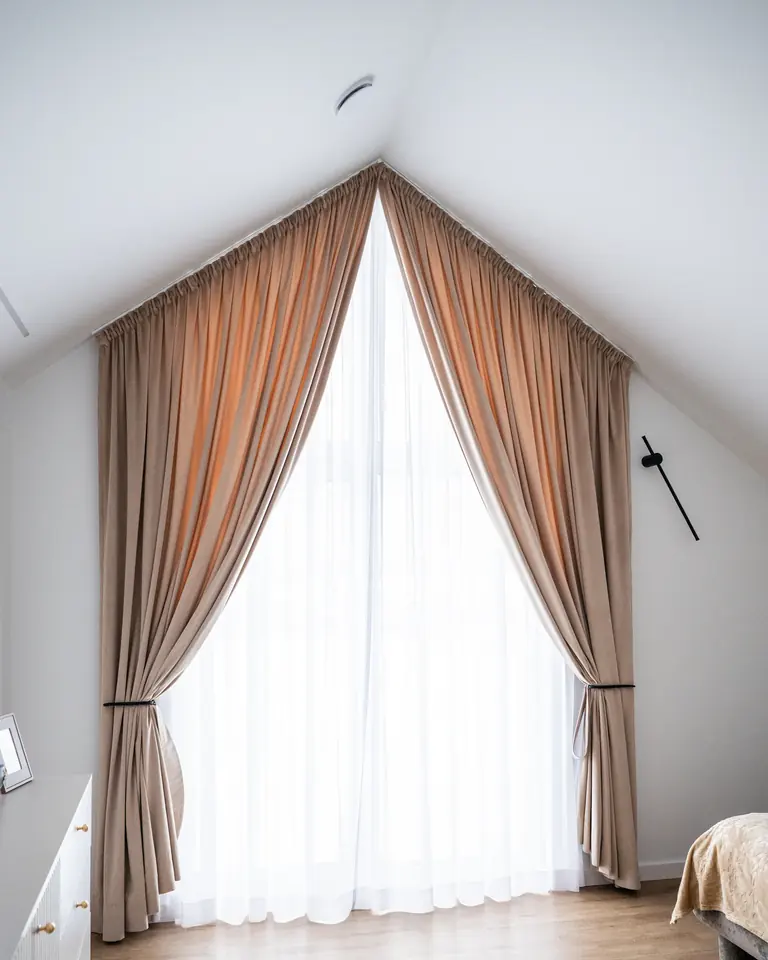
House, bedroom under a pitched roof. Peach curtains with tie-backs and a white sheer. 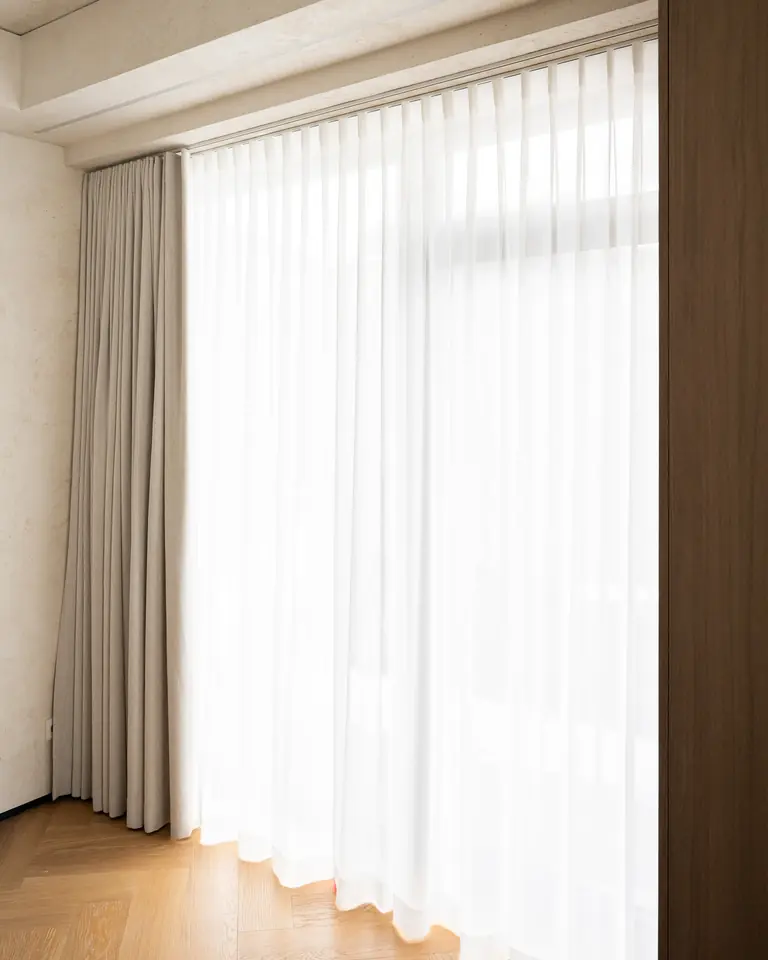
House, room with oak floors. A sheer in wave pleats and a pale curtain in a ceiling recess. 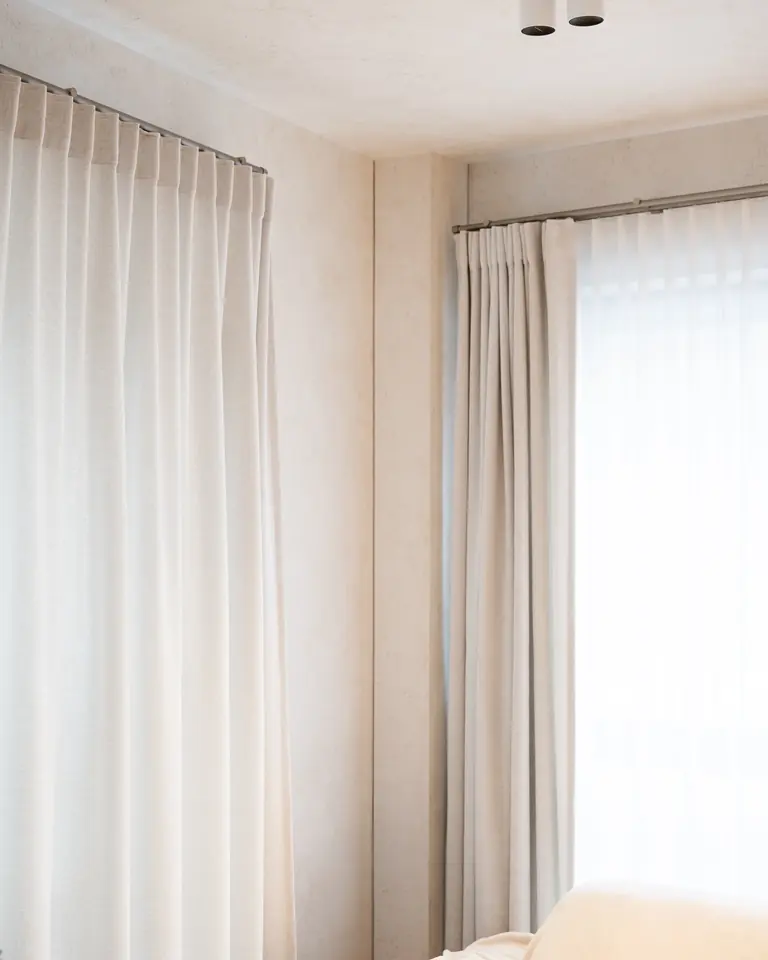
House, corner room. White sheers in wave pleats on ceiling tracks.