Roman blinds
Motorised roman blinds
Roman blinds with a quiet motor and a remote control. Control the light by voice, by phone or on a schedule.
Motorised roman blinds from €200
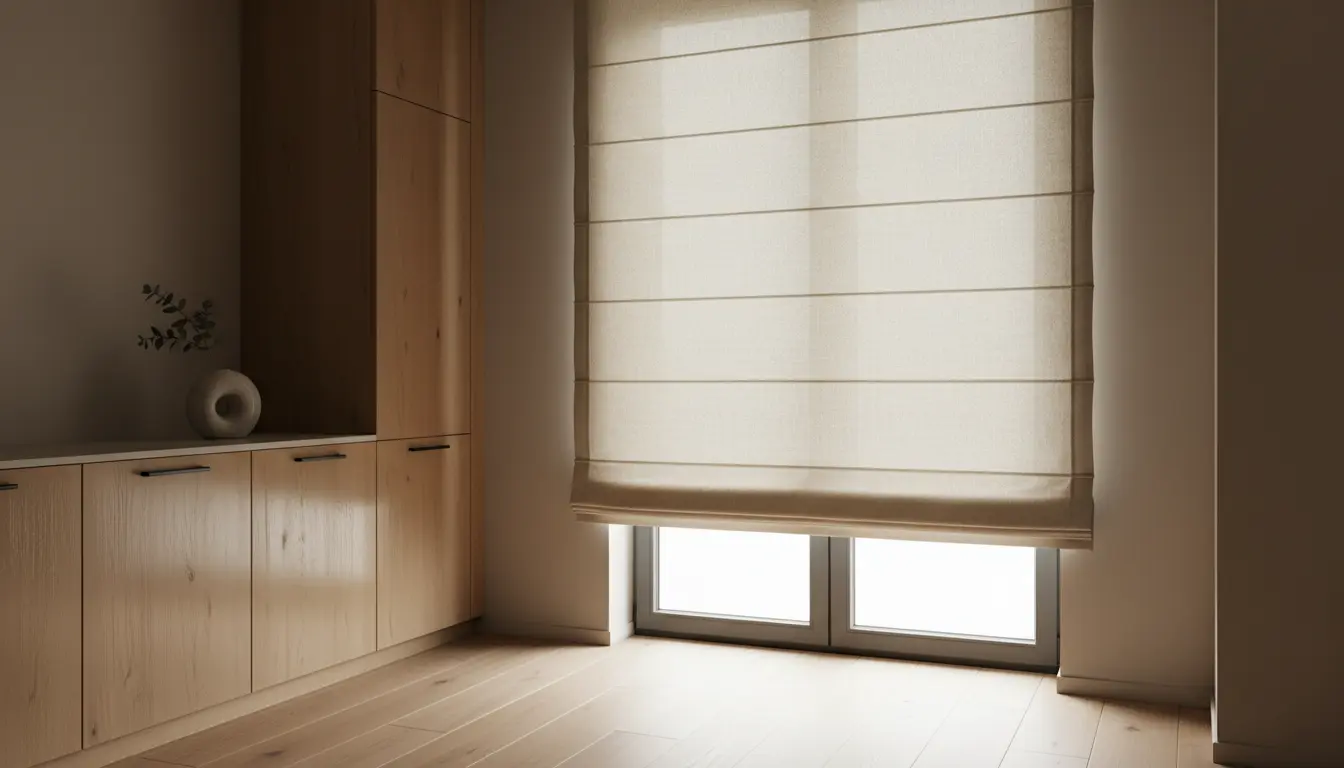
Why choose motorised roman blinds?
Comfort: raise and lower the blinds without leaving the sofa, and set opening and closing times to run automatically.
Safety for children: no cords or chains hang down, which is the safer construction for a child's room.
Smart home: they work with Alexa, Google Home, Apple HomeKit and other smart-home systems.
Automation: schedules, scenes that follow sunrise and sunset, and temperature sensors can all run the blinds without anyone touching them.
How are motorised roman blinds controlled?
Remote control: supplied with the blind. Simple, and needs no phone.
Phone app: iOS and Android apps, which work from anywhere in the world.
Voice commands: "Alexa, lower the blinds."
Wall switch: a physical control on the wall, for guests and for anyone who prefers not to use a phone.
Which smart-home systems do they work with?
Motorised roman blinds connect easily to the most common smart-home systems: Amazon Alexa, Google Home and Google Assistant, Apple HomeKit and Siri, Samsung SmartThings, IFTTT automation, and the Zigbee and Z-Wave protocols.
What can be automated?
Schedules: open automatically in the morning and close in the evening before bed, with different schedules for weekdays and weekends.
Scenes: a "film night" scene darkens every room, an "away" scene closes everything with one button, and blinds can follow sunrise and sunset.
What does fitting require?
A power socket beside the window or in the ceiling (recommended). The alternative is a battery motor, which needs no wiring. A Wi-Fi network, if you want to control the blinds from a phone. A wall or ceiling firm enough to carry the mechanism.
At the consultation the designer looks at the rooms and proposes a battery or a wired motor for each window.
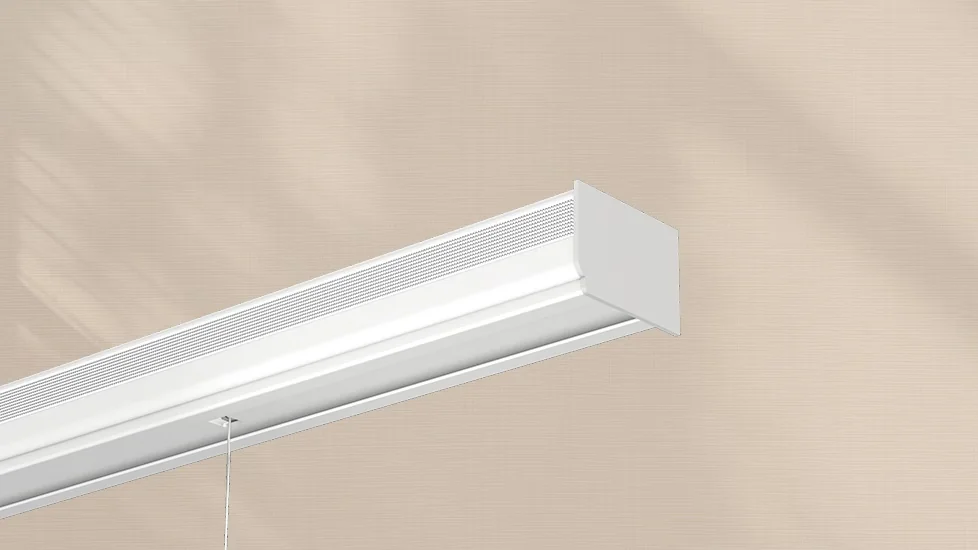
Battery or wired motor?
This is the first and most important technical decision.
Fitting: a battery motor (USB-C) is simple and needs no wiring; a wired motor (220 V) needs a power supply at the window. Suitability: a battery motor suits occasional use and light fabrics; a wired motor suits frequent use and heavier fabrics. Charging: a battery motor needs charging a few times a year; a wired motor needs none. Reliability: a battery motor depends on the state of the battery; a wired motor has a constant supply. Starting price: motorised roman blinds from €200; the exact sum with a battery or wired motor is in the quote (electrical work is separate).
The battery lasts 6–12 months, depending on how often the blind is used and how heavy the fabric is. A wired motor needs a power socket beside the window, which has to be planned in advance. At the consultation the designer advises which suits the room.
Questions
Do motorised roman blinds need electrical wiring?
No. Battery-powered motorised roman blinds need no wiring: they are charged through a USB-C connection and fitted without any electrical work. The wired 220 V version needs a power supply at the window, which is best planned during a renovation.
How often does the battery need charging?
A battery usually lasts 6–12 months, depending on how often the blind is used and how heavy the fabric is. It is charged through a USB-C connection, with no special tools. A heavier fabric or more frequent use can shorten this to 4–5 months.
Can a motorised roman blind be fitted in an older house without building work?
Yes. A battery model needs no building or electrical work. It is fixed to the window frame or the ceiling with standard screws and runs on its battery, which suits older houses where wiring to the windows would be difficult or costly.
What is the difference between battery and wired motorised roman blinds?
The power source. Battery models run on a rechargeable battery (USB-C); wired models connect to the 220 V mains. Wired models suit frequent use and heavier fabrics. Battery models are more flexible to fit, but need charging every 6–12 months.
How much do motorised roman blinds cost?
Motorised roman blinds cost from €200. The final price depends on the size of the window, the fabric, the type of motor (battery or wired) and the smart functions chosen, so the quote after measuring shows the motor, the fabric and the fitting as separate lines once the size of the window is known.
How loud is the motor?
It depends on the motor: better motors run quietly, cheaper ones are easier to hear. The maker states how loud each model is, so compare the figures before choosing. For a bedroom or a study, choose a quieter model even if it costs more.
Do motorised roman blinds work with a smart home?
Yes. They connect to Alexa, Google Home and Apple HomeKit, and the Somfy TaHoma system can put the blinds, the lighting and the heating into one scene. Before buying, check the protocol (Zigbee, Wi-Fi or Matter) against the platform you already have.
Do motorised roman blinds save energy?
A blind closed at the right time reduces heat loss through the glass in winter and heat gain in summer, and a motor on a schedule closes it at those times without anyone having to remember. How much energy this saves depends on the window and the room.
How long does the motor last?
A good motor lasts 10–20 years, depending on the maker and how often it is used. Choose makers with a CE mark and clear warranty terms; that lowers the risk of faults and keeps spare parts available. Our warranty covers sewing and tracks for 12 months, and mechanisms and motors, electric ones included, for 24 months.
Which fabrics can be used with motorised roman blinds?
Blackout for a bedroom, light-filtering fabrics for a living room, and moisture-resistant fabrics for a kitchen or bathroom. For heavier fabrics, especially blackout, choose a wired motor: a battery may run flat in less than 4 months.
Ideas for your home
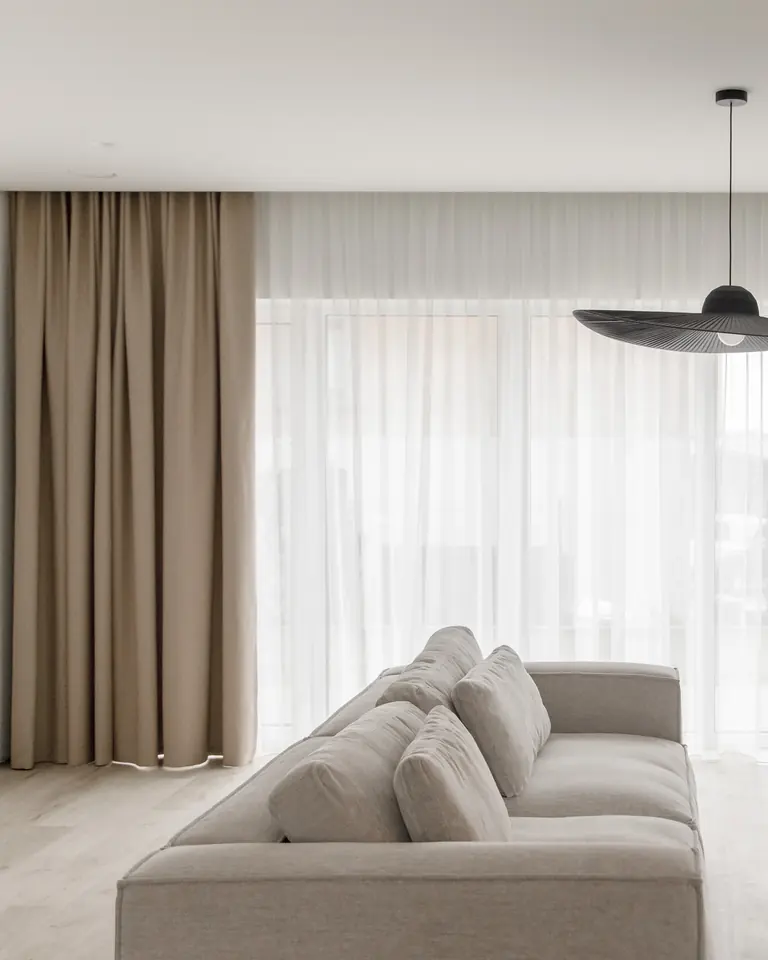
Flat, living room. A white sheer across the whole window wall and sand-coloured curtains from ceiling to floor. 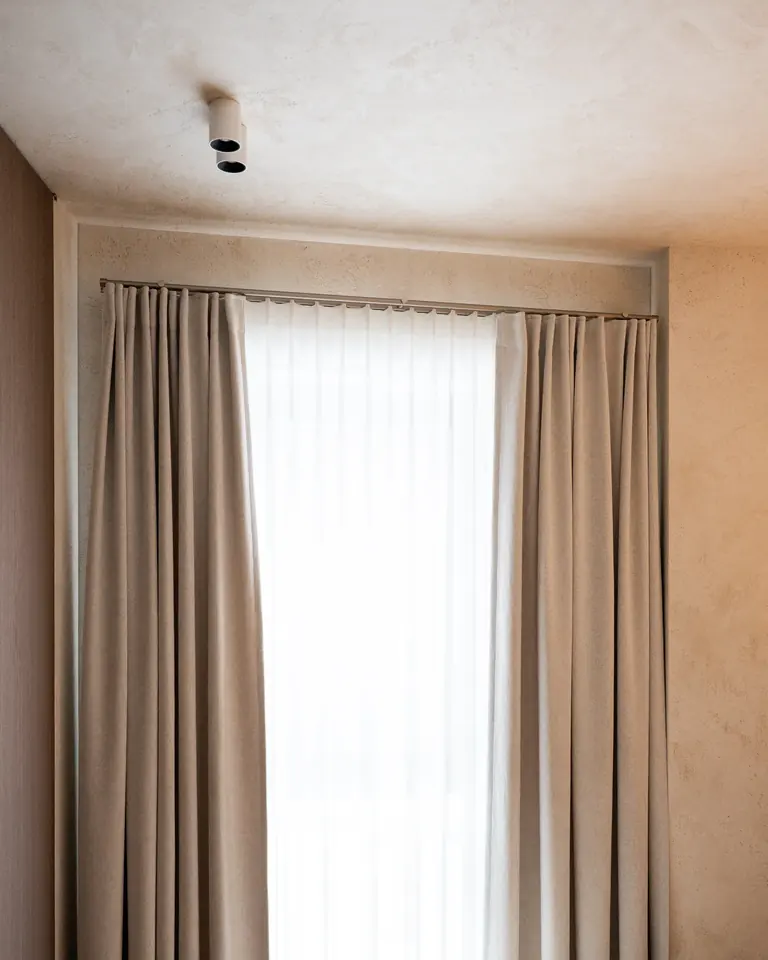
House, window recess. Sand-coloured curtains and a white sheer on a ceiling track. 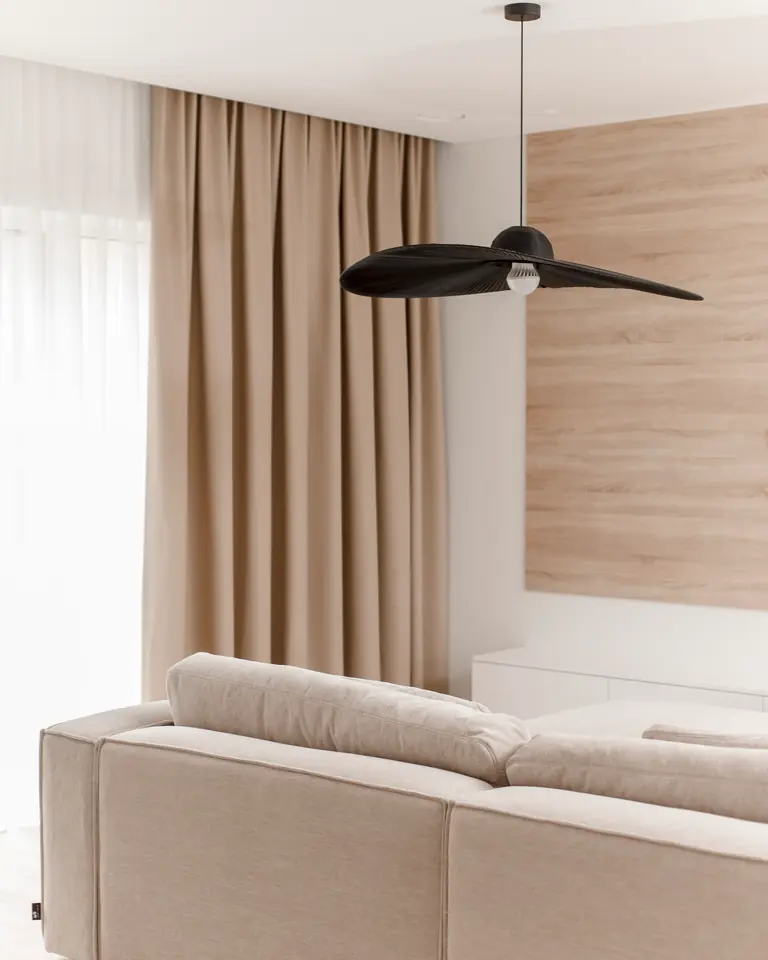
Flat, living room. Sand-coloured curtains and a white sheer from ceiling to floor. 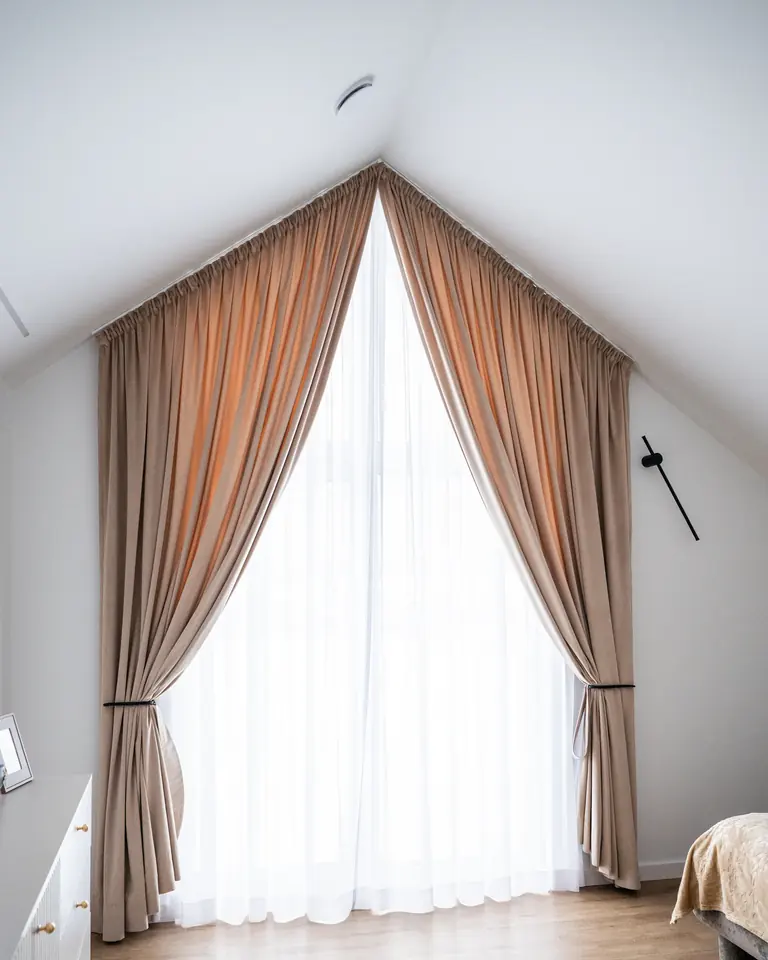
House, bedroom under a pitched roof. Peach curtains with tie-backs and a white sheer. 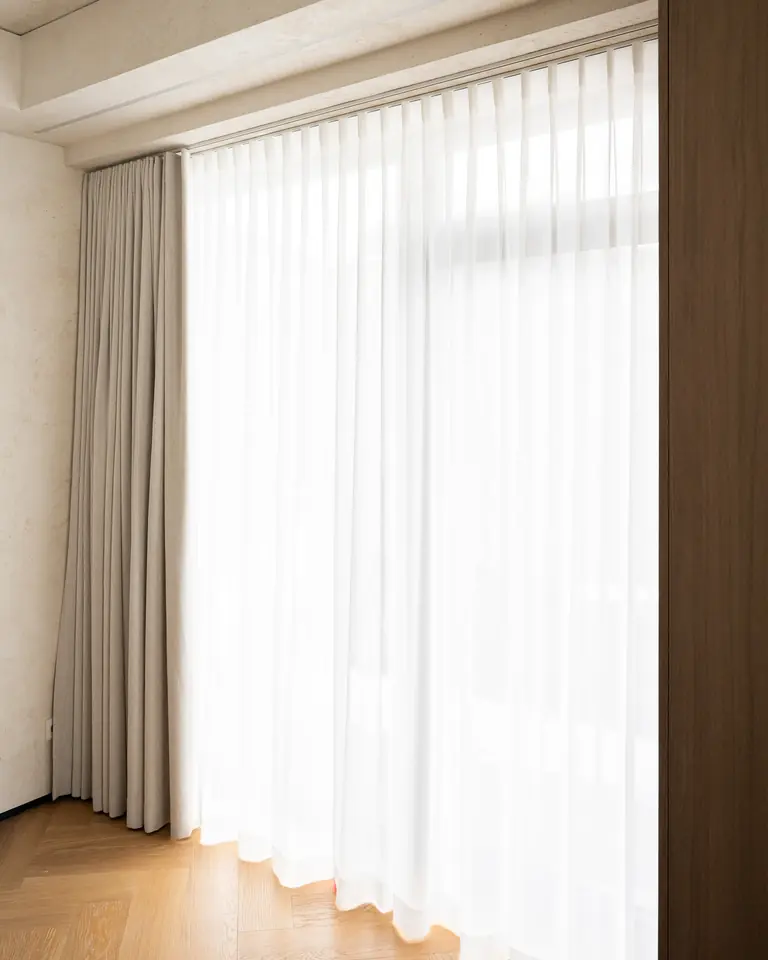
House, room with oak floors. A sheer in wave pleats and a pale curtain in a ceiling recess. 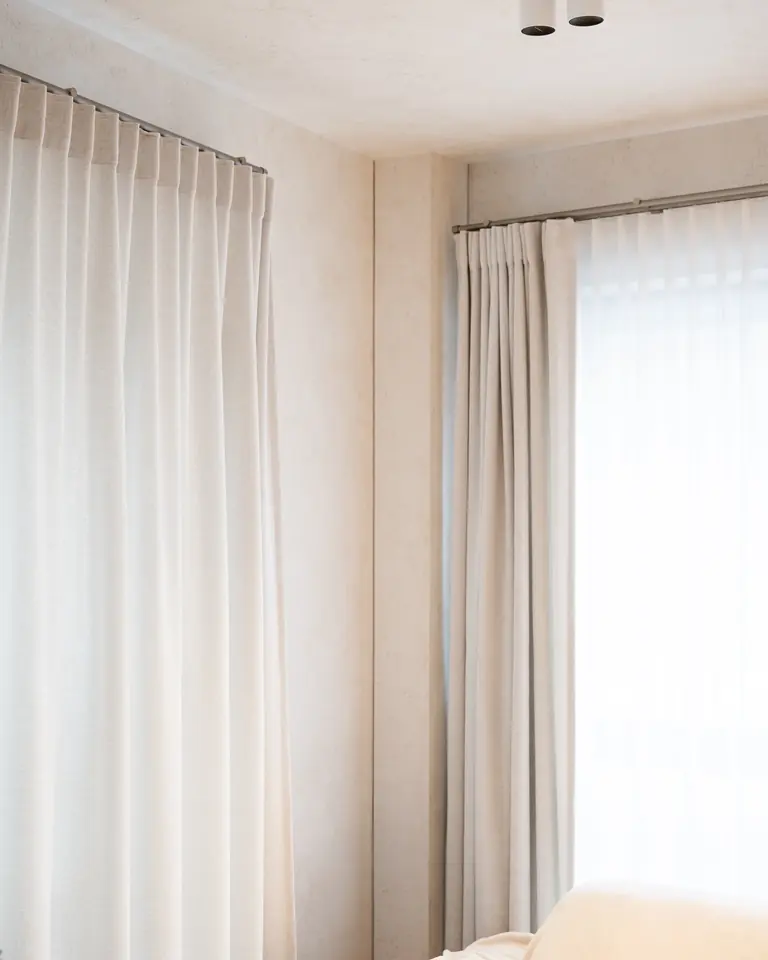
House, corner room. White sheers in wave pleats on ceiling tracks.