Blinds
Pleated blinds
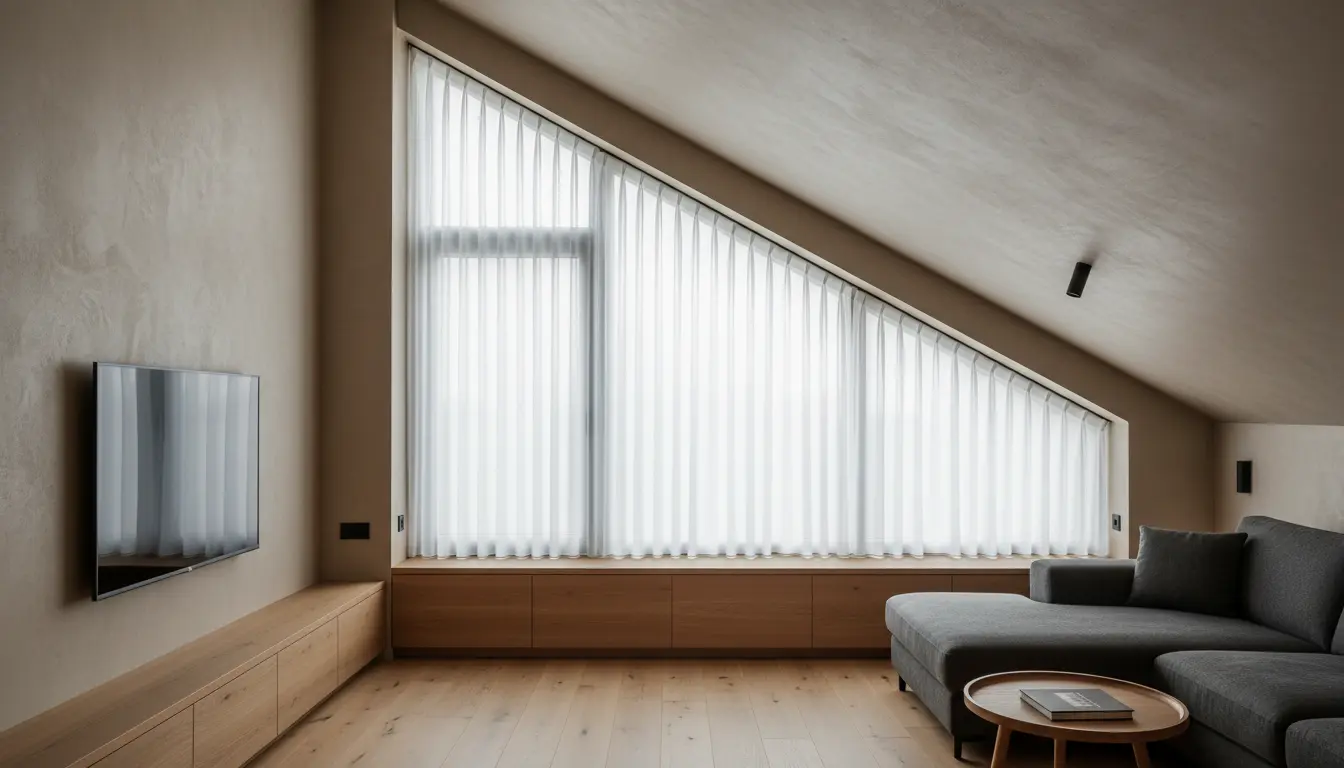
Pleated blinds for sloping and non-standard windows. A concertina-folded fabric for sloping windows, roof windows and arched windows, where traditional blinds do not fit.
What are pleated blinds?
A pleated blind is a fabric folded like a concertina into a compact stack. Unlike a roller blind, a pleated blind can be fixed at the top and the bottom, so it suits sloping windows.
Sloping windows: the blind is fixed at the top and the bottom, so it does not sag or come away, even on a slope. Roof windows: easy to operate, and they do not stop the window from opening. Arched windows: a pleated blind can be made to fit even the most complex window shapes.
Which fabrics are there?
Day fabrics: they let light through and give privacy. They suit a living room and a kitchen. Dim-out: darkens the room by 80–95%. It suits a bedroom where you still want a little light. Blackout: blocks the light through the fabric. It is the one for a sloping bedroom window.
What are the advantages?
They suit sloping and non-standard windows. They are fixed at the top and the bottom, so they do not sag. They fold into a compact stack. There are day, dim-out and blackout versions, in many colours, and the option of automation.
Measuring and fitting
Measuring a sloping window takes accuracy. Pleated blinds are measured and fitted anywhere in Lithuania. Measuring is free in Vilnius. In Kaunas and Klaipėda it is free on orders of €200 or more. Elsewhere in Lithuania the visit is paid, and the price is agreed beforehand.
How does the top-down / bottom-up mechanism work?
The main advantage of pleated blinds over traditional roller blinds is the top-down/bottom-up mechanism. Two independently moving profiles, one at the top and one at the bottom, let the fabric be held at any position, which gives many combinations of light and privacy within one window.
A ground-floor window facing the street: leave the upper third open, so that light comes in from the ceiling side while the lower part keeps passers-by from seeing in. A traditional roller blind gives no such option. A bathroom: the lower part is closed for privacy and the upper part open for natural light and ventilation. A damp-resistant, impregnated fabric is a must.
Cordless operation by a handle is the safest option for families with small children, because there are no hanging cords or chains. Motorised operation suits roof windows that are hard to reach.
Single or cellular (honeycomb) fabric?
This is the second technical decision. The two constructions differ in how they insulate as well as in price.
Thermal insulation: single fabric is the standard; cellular (honeycomb) is better, because an air gap holds the heat. Price: single is the more economical; cellular costs more because of its more complex structure. Suitability: single suits a living room, a bedroom and a child's room; cellular suits north-facing rooms and spaces that are hard to heat. Cleaning: single is simple; cellular is more sensitive to wrong cleaning. Light filtering: both range from voile to blackout.
Cellular fabric is worth the extra in north-facing rooms and where cutting heating use matters. Fitting the blind as close to the glass as possible strengthens the insulating effect further, because it reduces the air circulating between the glass and the blind.
Questions
How do I choose a fabric for pleated blinds?
Choose the fabric by what the room is for and how much light you need. Light-filtering fabrics suit living rooms, blackout suits bedrooms, and thermal fabrics with a reflective layer suit north-facing rooms, where holding in heat matters. A bathroom needs an impregnated, damp-resistant polyester fabric. In a child's room, choose a cordless mechanism with no hanging cords.
How do pleated blinds differ from roller blinds?
Pleated blinds let you control the light from the top, from the bottom, or cover only the middle of the window, while roller blinds move only from the top downwards. A raised pleated blind takes up only 2.5–5 cm, and a cassette roller blind up to 25 cm. Pleated blinds also suit non-standard windows (triangular ones, arches, roof windows), where roller blinds usually do not. A pleated blind for a standard window costs from €30.
Do pleated blinds suit non-standard windows?
Yes. Pleated blinds are one of the few blinds that suit triangular, trapezoid and arched windows, and roof windows. A tensioning system follows the shape exactly. Accurate measuring matters: an error of 5 mm can mean the blind does not fit. For windows of non-standard shape the price usually exceeds €100, because the blind is made to the shape.
How much do pleated blinds cost in Lithuania?
A pleated blind for a standard window costs €30–100 in Lithuania, depending on the size, the type of fabric and the operating mechanism. Blackout fabric usually costs a little more than day fabric. Cellular (honeycomb) fabric with its insulating function is the dearest category. For windows of non-standard shape the price can exceed €100, because the blind is made to the shape.
Do pleated blinds suit a bathroom?
Yes, if an impregnated, damp-resistant polyester fabric is chosen. Such a fabric does not take up steam and is easy to clean. The top-down/bottom-up mechanism is especially practical in a bathroom: the lower part stays closed for privacy, while the upper part lets in ventilation and natural light. Choose a fabric made for a bathroom: not every pleated blind fabric resists damp.
How do I clean pleated blinds?
Every 2–4 weeks, remove dust with a soft brush attachment or a dry cloth, moving along the pleats. Use damp cleaning with mild soap only for clear marks. After damp cleaning, dry the blind lying flat, not in the sun or by a radiator, which can damage the fabric and its UV-protection layer. Proper care largely decides how many years pleated blinds give good service.
Can pleated blinds be fitted without drilling?
Yes. The fitting is fixed directly to the sash of the window, without drilling, which suits tenants and anyone who wants to avoid damaging the window. Before fitting, check that the sash is strong enough to carry the weight of the blind. This way of fitting suits standard windows; non-standard shapes usually need a traditional fixing.
How long do pleated blinds last?
Well cared for, pleated blinds last many years. The life depends on the quality of the fabric, regular care and correct fitting. Keep the blind at least 10–15 cm from heat sources, so that the polyester fabric does not warp. Cellular fabric, with its more complex structure, can be more sensitive to wrong cleaning than single fabric.
How are pleated blinds operated?
By a handle, a cord or a cordless mechanism. The handle and the cordless mechanism are the safest options for families with small children, because nothing hangs down. Motorised operation is also available, and is especially convenient for roof windows and windows that are hard to reach. The standard top-down/bottom-up mechanism lets the fabric be held at any position.
Do pleated blinds suit roof windows?
Yes. Roof windows are one of the main uses for pleated blinds. A tensioning mechanism keeps the fabric from sagging even on a sloping window. A UV-resistant and damp-resistant polyester fabric keeps its shape as temperatures change. On roof windows, motorised operation often makes sense, because the fitting position is hard to reach.
Ideas for your home
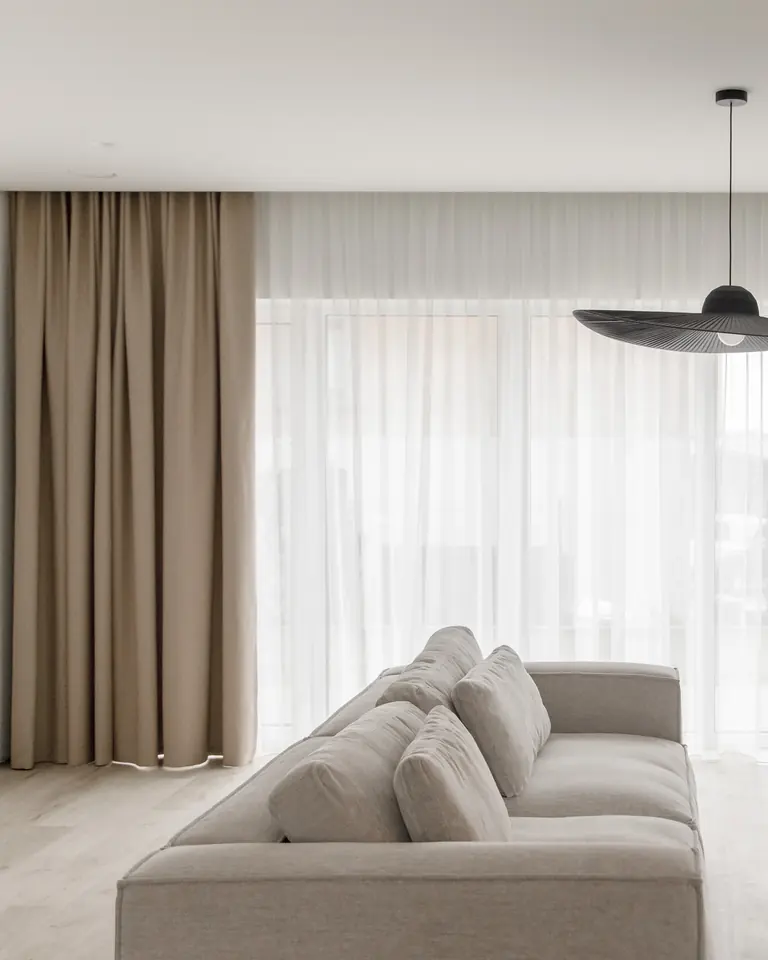
Flat, living room. A white sheer across the whole window wall and sand-coloured curtains from ceiling to floor. 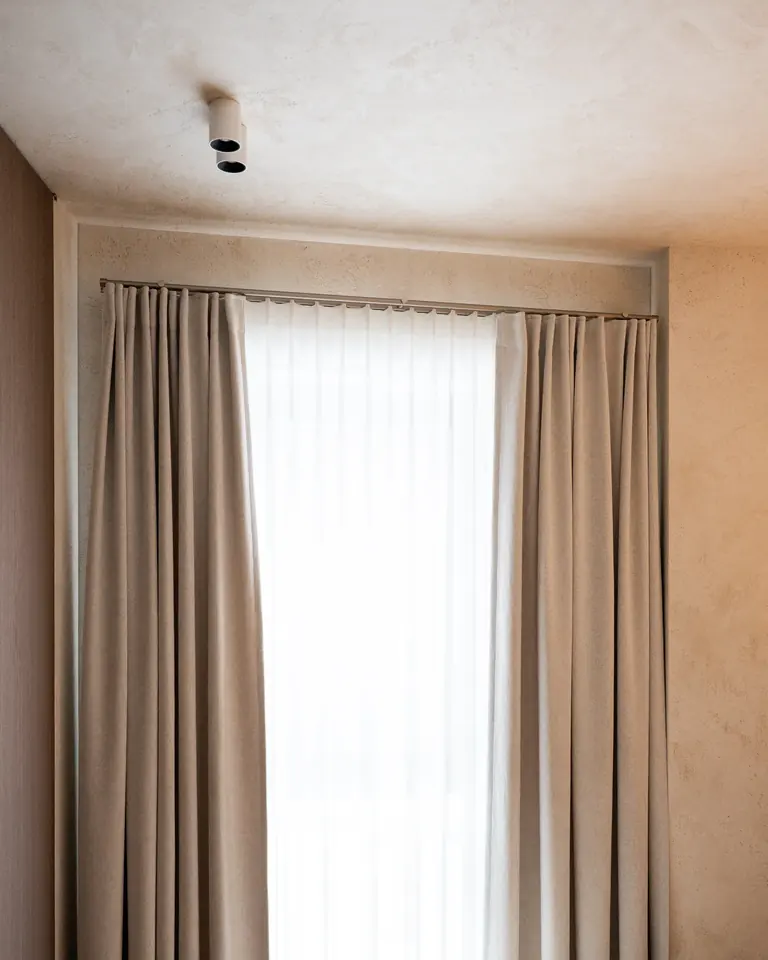
House, window recess. Sand-coloured curtains and a white sheer on a ceiling track. 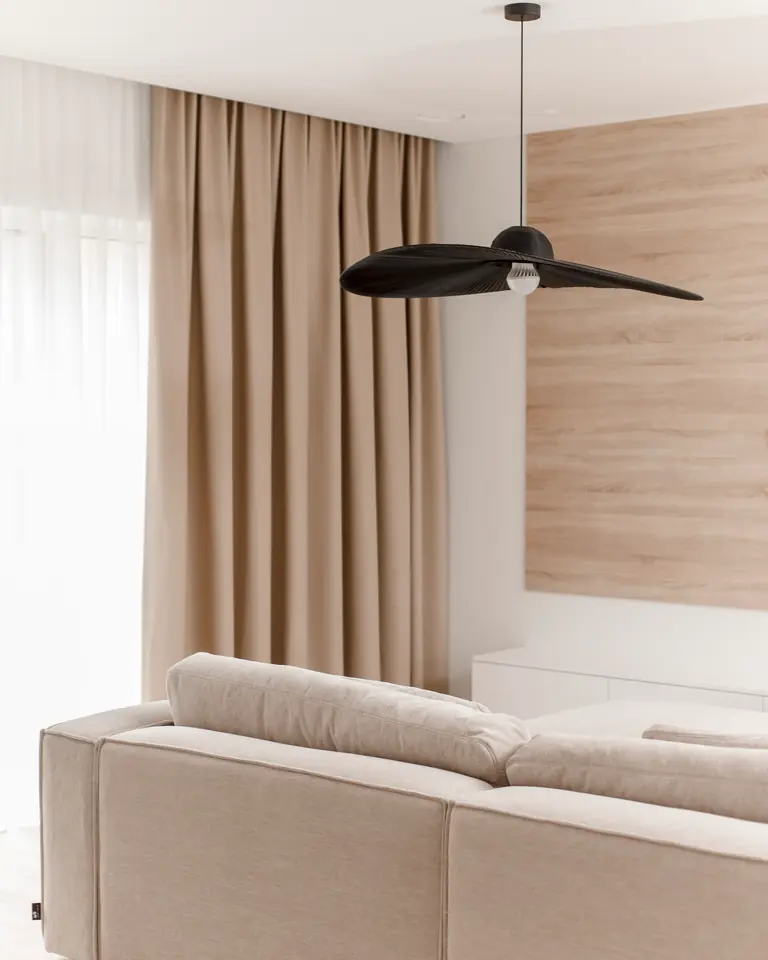
Flat, living room. Sand-coloured curtains and a white sheer from ceiling to floor. 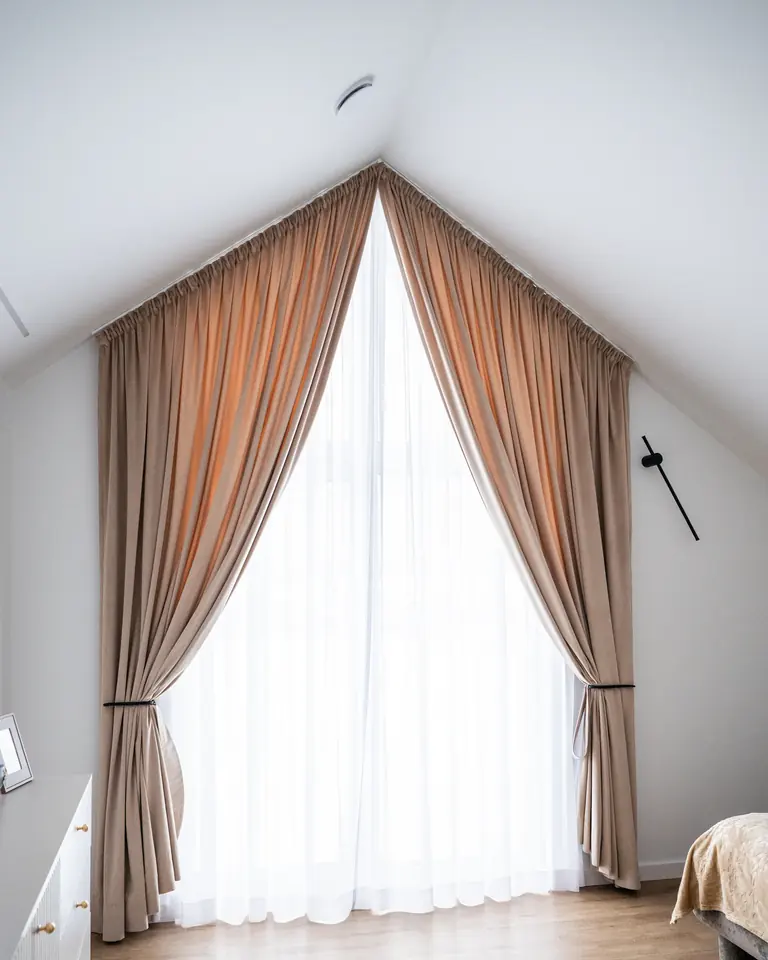
House, bedroom under a pitched roof. Peach curtains with tie-backs and a white sheer. 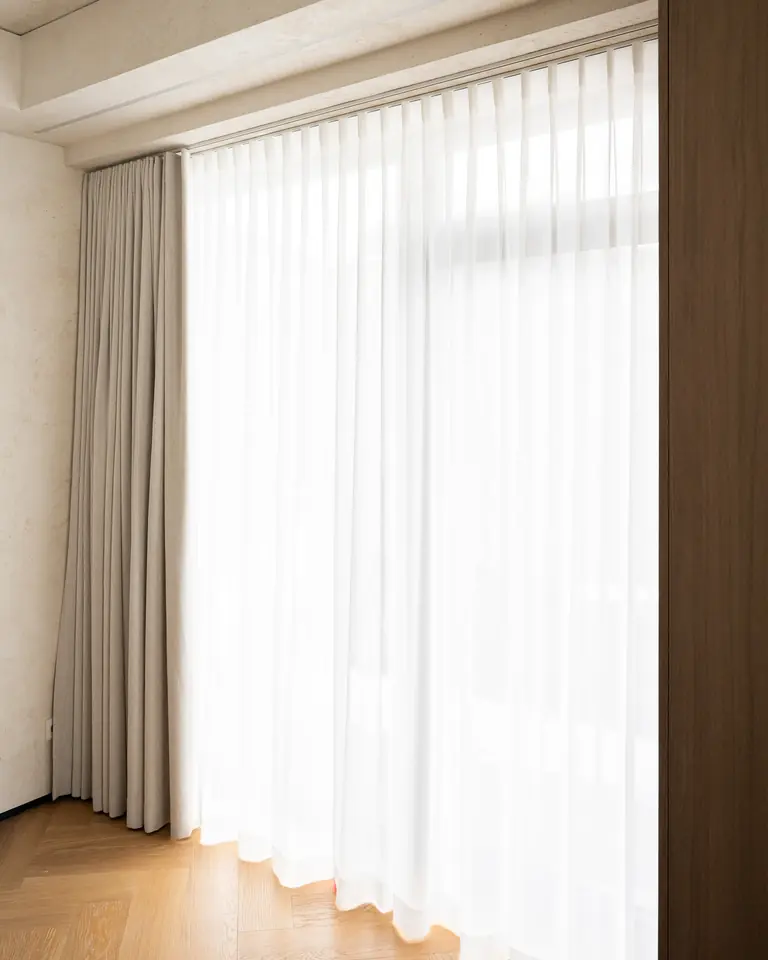
House, room with oak floors. A sheer in wave pleats and a pale curtain in a ceiling recess. 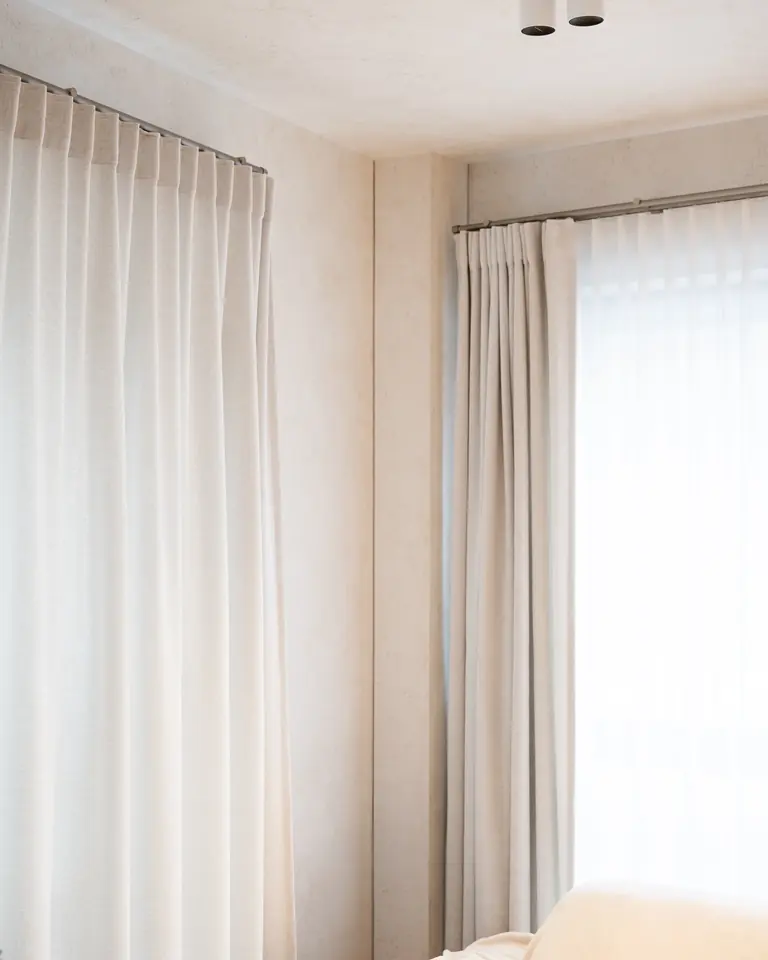
House, corner room. White sheers in wave pleats on ceiling tracks.