Fabrics
Tulle for curtains: what it is and how it differs from voile and organza
- Tulle is a light, see-through fabric for sheer curtains. In everyday speech it names any see-through curtain; strictly, tulle is an open net weave.
- Voile is smoother and softer, organza is stiff and glossy, and net sheer is the airiest and lets through the most light.
- See-through fabrics in our catalogue cost from €9.50 per metre and are usually washed at 30 °C.
Price from €9.50/m, as of October 2026
A see-through curtain is the first layer at a window: by day it scatters the sun and screens the view from the street, but leaves the room light. Below is how tulle, voile and organza differ, how much light they let through, what they cost and how to look after them.
See-through fabrics from €9.50/m · Roll width 300–330 cm · lets through 45–90% of the light
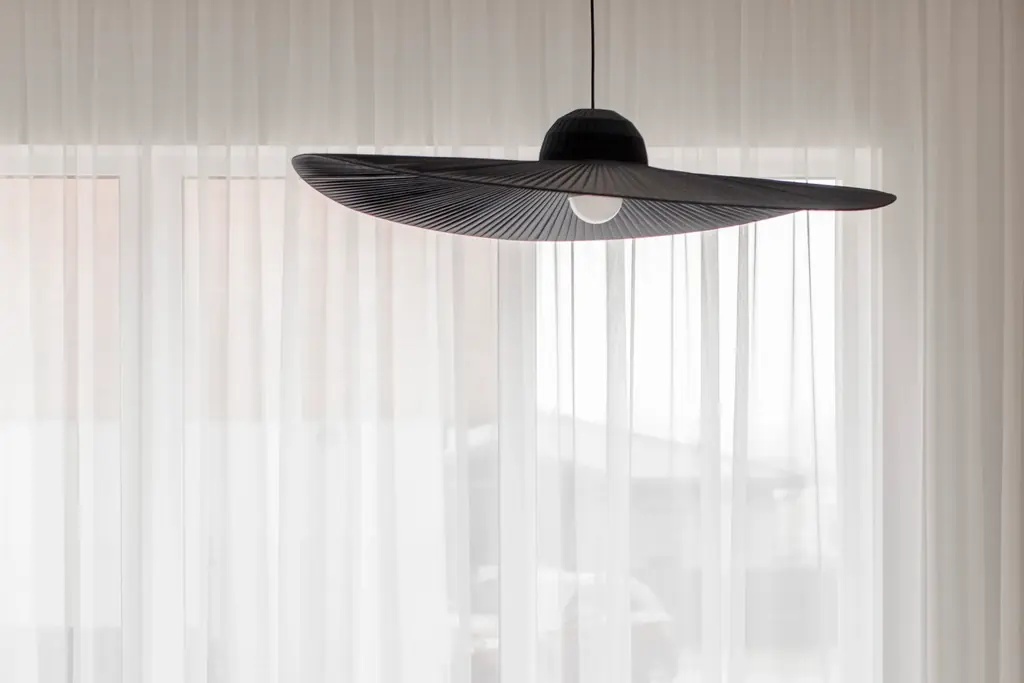
What is tulle?
Tulle is a thin, light and see-through fabric, usually polyester. In Lithuania the word usually names any see-through sheer curtain: a smooth voile, a net or a crepe. In the narrower sense of fabrics, tulle is an open net weave with small holes, which makes it the airiest and the one that lets through the most light.
A sheer curtain does three jobs: it scatters direct sun so that the light in the room is soft, it screens the view from the street by day, and it hides what is unattractive outside. It does not give full darkness or privacy in the evening, so in a bedroom or on the street side it is combined with a second, dense layer.
How does tulle differ from voile and organza?
All three fabrics are see-through, but they are woven differently, so they hang differently and behave differently in the light. Voile is woven in a plain weave from fine threads: it is soft, matt and falls in even folds. Net is open, with air visible between the threads; it is the lightest and dries fastest. Organza is stiff and slightly glossy, and its folds hold at an angle; it looks good in a classic interior, but cheaper organza creases easily and rustles.
If you want a soft look, choose voile or crepe. If light and air matter most, choose net. If you want more privacy by day, denser see-through fabrics that let through 45–60% of the light will do.
| Fabric | Weave and surface | Fall | Where it suits |
|---|---|---|---|
| Net sheer (tulle) | Open net, matt | Light, with air between the folds | Lofts, kitchens, south-facing rooms as a second layer |
| Voile | Smooth fine fabric, matt | Soft, even folds | Living room, bedroom, dining room |
| Crepe | Grained crepe texture | Heavier, fuller | Bedroom, lounge area |
| Organza | Stiff, slightly glossy | Angular folds | Classic interiors; it is not in our catalogue |
How much light does tulle let through, and which should I choose?
In the catalogue of see-through fabrics the light let through runs from 45% (Sevim) to 90% (Net sheer). The higher the number, the more light and the clearer the view out. North-facing rooms suit the more open fabrics; south-facing and ground-floor windows suit denser ones, which hold back more sun and more looks.
In the evening, when the light is on in the room and it is dark outside, any see-through fabric becomes almost transparent from the street. So in a bedroom, a ground-floor living room or on a street front, tulle is nearly always combined with a lined curtain on a double track.
Colour changes the light as well. A white fabric leaves a room cooler and brighter, sand or greyish warmer and slightly darker. Before ordering, look at a sample at your own window in daylight: in artificial light the colours of see-through fabrics look different.
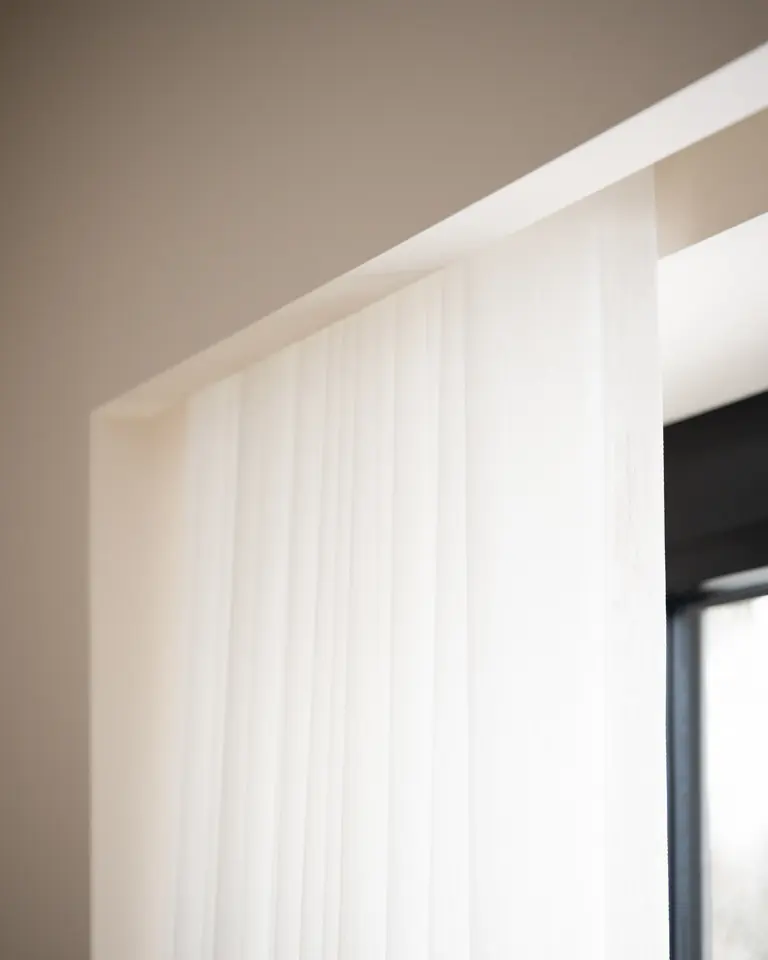
How much do tulle curtains cost?
See-through fabrics cost from €9.50 per metre (Voile) to €16.50 per metre (Nobel), and making is €8 per metre for a curtain up to 300 cm high. The fabric needed is the track length × 2.0 for wave pleats. For example, for a 3 m track: 3 × 2.0 + 0.3 = 6.3 m of fabric; Voile would cost €59.85, making €50.40, in total €110.25 without the track and the fitting.
Wide rolls (300–330 cm) let a see-through curtain up to 3 m high be made without horizontal seams, because the fabric is cut across the roll. For taller windows the fabric is turned and made from widths, and the seams are hidden in the folds.
| Fabric | Price | Light let through | Roll width |
|---|---|---|---|
| Voile | €9.50/m | 85% | 330 cm |
| Ramune | €16/m | 75% | 320 cm |
| Nobel | €16.50/m | 60% | 320 cm |
| Lietutis | €13/m | 80% | 320 cm |
| Net sheer | €12/m | 90% | 320 cm |
| Non-iron net sheer | €15/m | 85% | 300–320 cm |
| Crepe | €15/m | 70% | 300 cm |
| Soft voile | €15/m | 55% | 330 cm |
| Sevim | €14/m | 45% | 320 cm |
| Šilkas | €15/m | 65% | 320 cm |
| Lavina | €15/m | 60% | 320 cm |
Making is €8 per metre for a curtain up to 300 cm high. The track and the fitting are priced separately.
How is tulle made up and hung?
See-through curtains are usually made with wave pleats: the fabric needed is 2.0× the track length, and the curtain hangs from a ceiling track with gliders that keep the wave spacing even. A lead weight is sewn into the hem of a light fabric, so that it hangs straight and does not flap in a draught.
The length is 1–2 cm above the floor, or 10–20 cm onto the floor if you want a softer look. The track should extend 20–30 cm past the window on each side, so that the drawn-back curtain does not cover the glass. When lined curtains hang beside it, choose a double track: tulle nearer the window, the lined curtain on the room side.
How do I look after tulle?
Most see-through fabrics wash at 30 °C on a gentle cycle, without a hard spin. A washed curtain is best hung damp on the track: the folds straighten under their own weight. Net dries quickly, and Crepe and Šilkas should be ironed only on a low setting.
A white see-through fabric turns grey with dust and city air, so wash it once or twice a year and vacuum it in between with a textile attachment. Nobel is better dry cleaned, or washed on a delicate cycle.
Questions
Are tulle and voile the same thing?
In everyday speech tulle means any see-through curtain, so often yes. Strictly as fabrics, tulle is an open net, while voile is a smooth, denser and softer fabric. Both are made for sheer curtains.
Can people see through tulle in the evening?
Yes. When the lights are on in the room and it is dark outside, a see-through fabric becomes almost transparent from the street. For the evening you need a second, dense layer: lined curtains on a double track.
How wide is a tulle fabric?
Our sheer fabrics come on rolls 300–330 cm wide. The fabric is cut across the roll, so a curtain up to about 3 m high is made without horizontal seams.
Can tulle be washed in a washing machine?
Most can: sheer fabrics wash at 30 °C on a gentle cycle, without a hard spin, and are hung damp. Nobel is better dry cleaned, or washed on a delicate cycle.
How much do tulle curtains cost?
Sheer fabrics cost from €9.50 to €16.50 per metre, and making is €8 per metre. A 3 m track with wave pleats needs 6.3 m of fabric: with Voile and the making that comes to about €110, without the track and the fitting.
Ideas for your home

Flat, living room. A white sheer across the whole window wall and sand-coloured curtains from ceiling to floor. 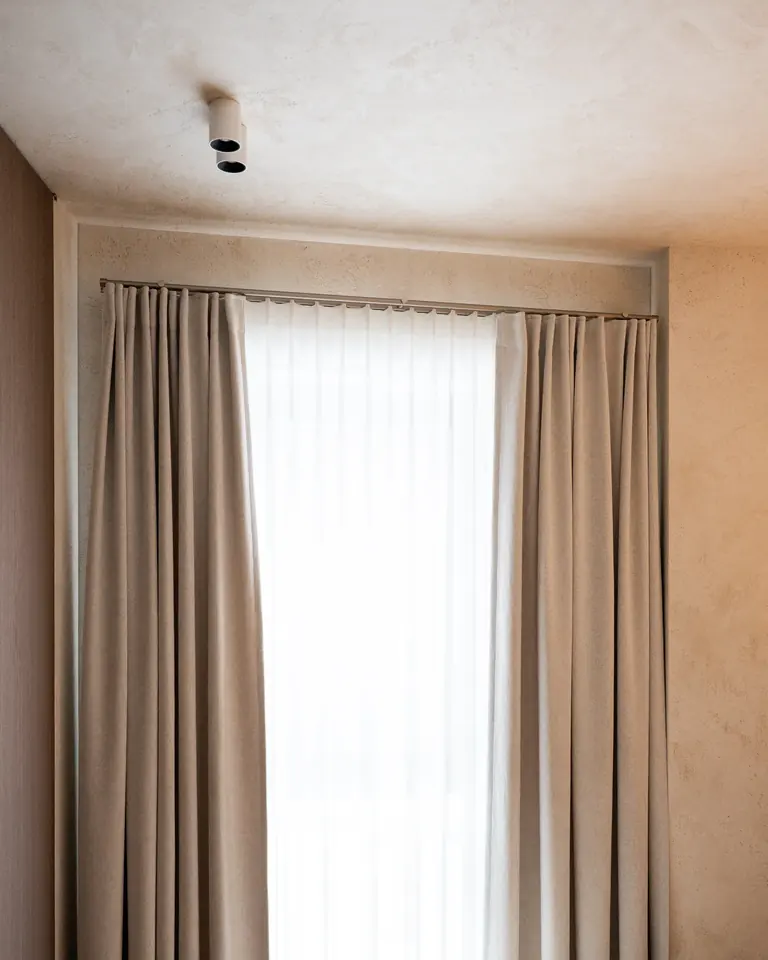
House, window recess. Sand-coloured curtains and a white sheer on a ceiling track. 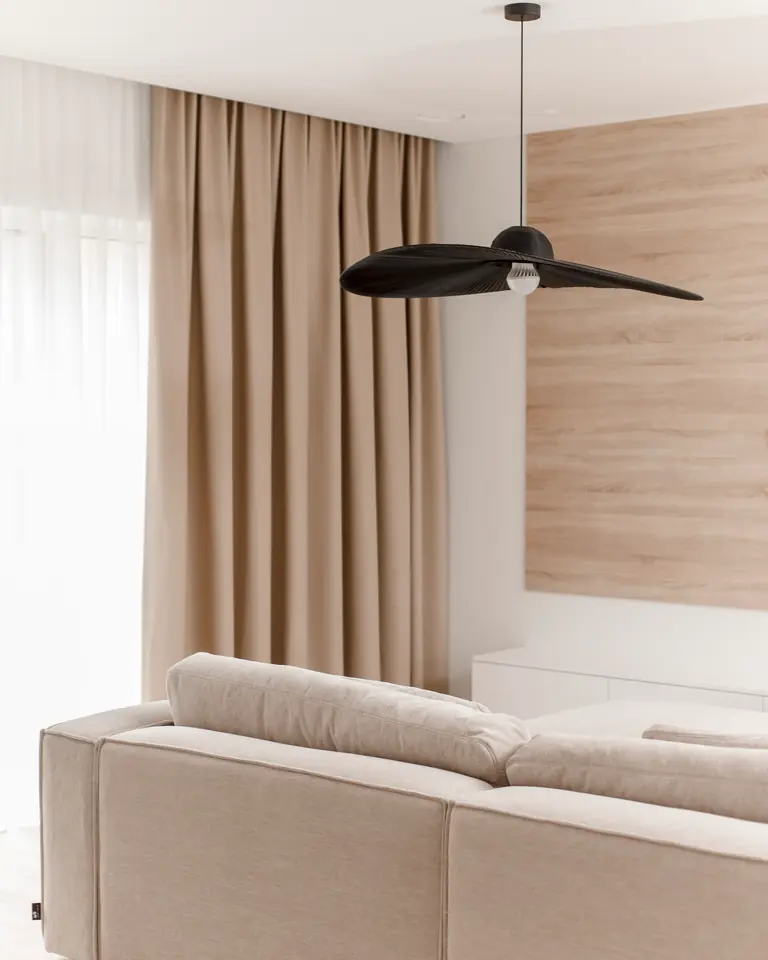
Flat, living room. Sand-coloured curtains and a white sheer from ceiling to floor. 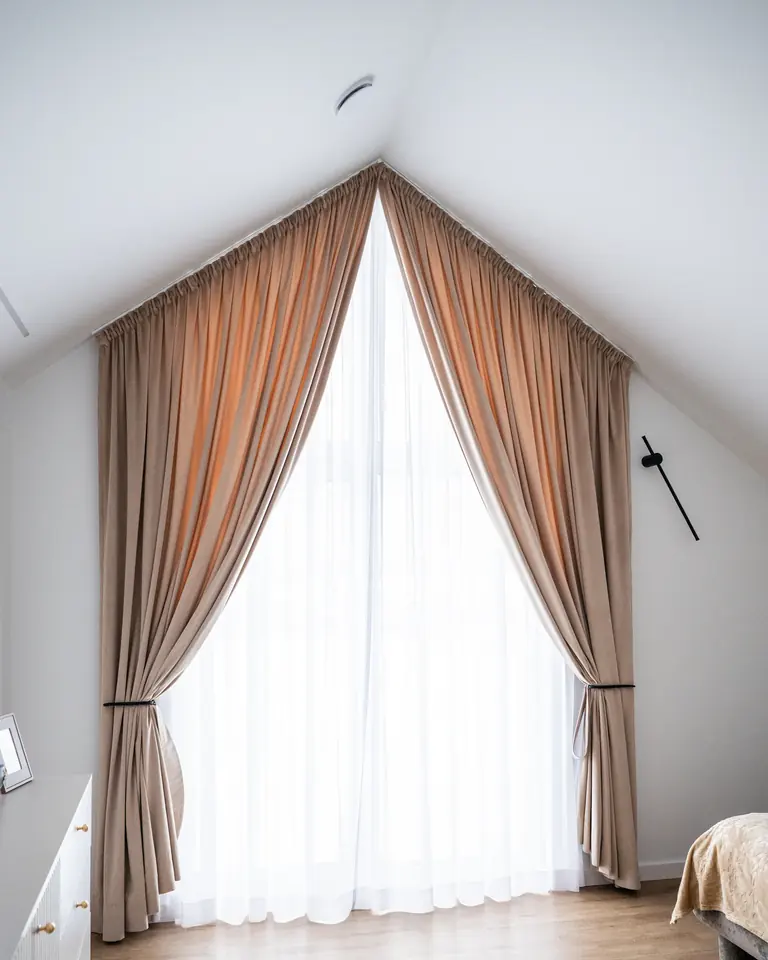
House, bedroom under a pitched roof. Peach curtains with tie-backs and a white sheer. 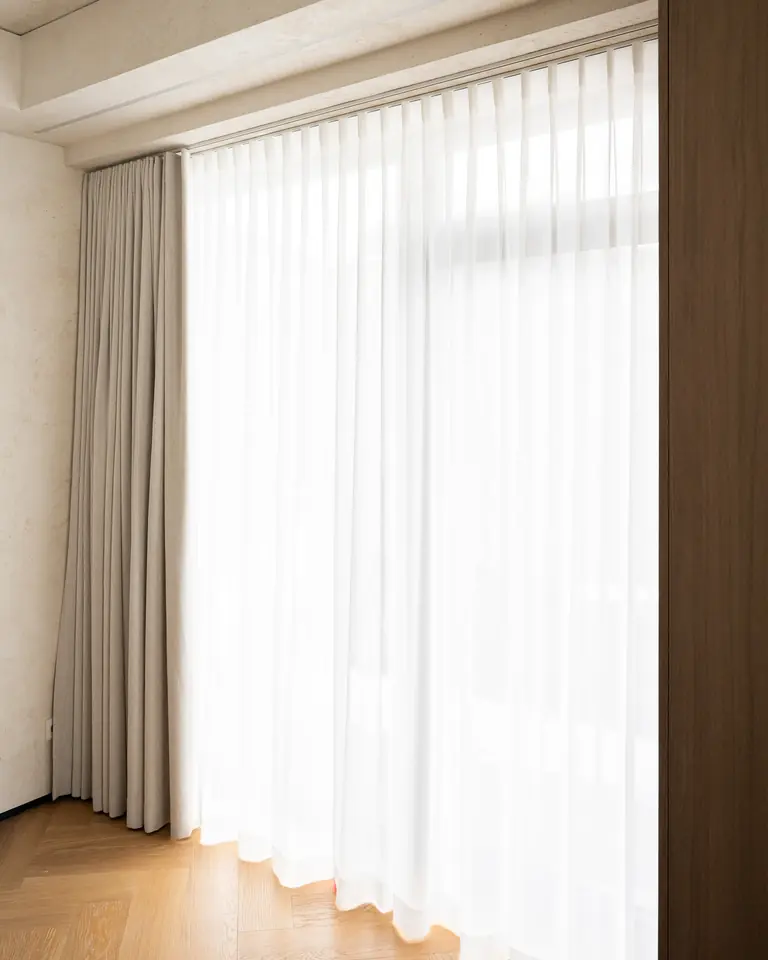
House, room with oak floors. A sheer in wave pleats and a pale curtain in a ceiling recess. 
House, corner room. White sheers in wave pleats on ceiling tracks.