Author: Jegor Janockin
Reviewed by: Curtain.lt editorial team
Last updated:
Curtains: how to choose, match and care for them at home
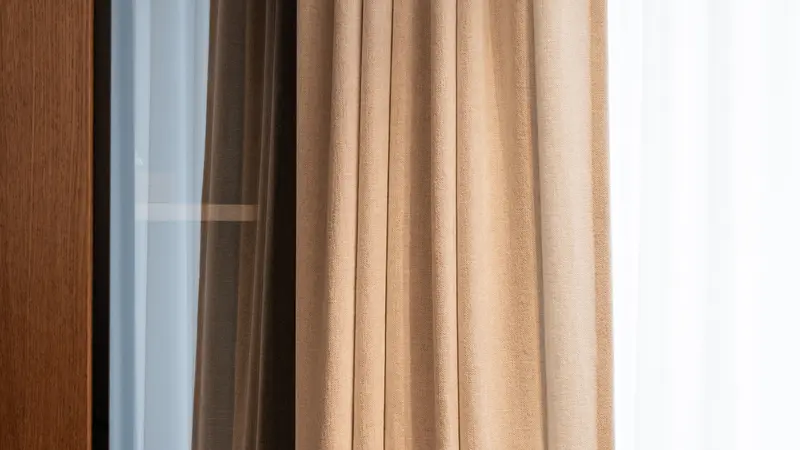
Curtains control light, give privacy and set the atmosphere of a room. In Lithuania a one-window project starts at €100, and an average project (fabric, track and fitting) costs €800–1,000. The fabric, heading and fitting depend on what the room is used for, the height of the ceiling and the style of the interior. Curtains made to measure pay off most on non-standard windows and in large rooms, where mass-produced curtains often fall short. This guide covers everything from choosing sheer curtains to how the making is done.
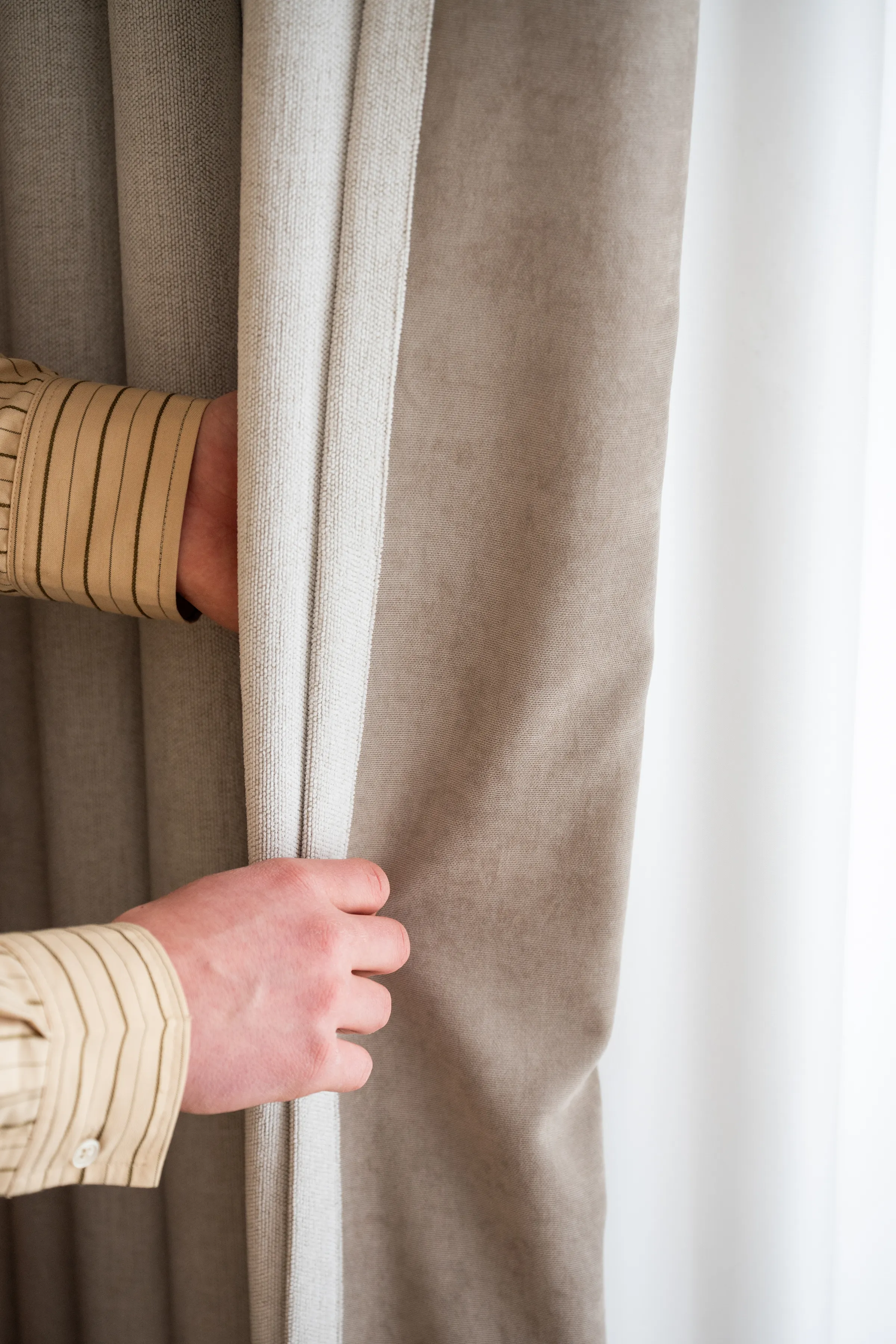
Made to measure or ready-made: which to choose?
The first question is whether to buy curtains ready-made or have them made to your own measurements. The answer depends on the shape and size of the window, what you want from the room and the budget.
Ready-made curtains are a quick, economical choice for windows of standard size. They suit a window of typical proportions (usually 140–280 cm wide and 250 cm high) in a room that asks for nothing out of the ordinary. Such curtains are often sold in pairs and can be hung the same day.
Curtains have to be made to measure when the window is too wide, too tall or an unusual shape: panoramic windows, attic recesses and historic buildings, where standard sizes do not exist. A measuring mistake on such a window often costs more than the measuring visit itself.
Made to measure, you choose the exact amount of fabric, the heading, the finish of the top and the track. The curtains look as if they were made for that window, because they were.
With a ceiling higher than 280 cm, standard curtains will not reach the floor, and only made-to-measure ones will. The same goes for windows wider than 300 cm, where ready-made curtains look like a garment a size too small.
Made-to-measure curtains cost more, and they are made for the window: the fabric, the heading and the length are chosen for it. Ordered with measuring and fitting, they are also fitted correctly from the start.
The difference between ready-made and made-to-measure curtains shows most at the edges of the window and at the floor line. Ready-made curtains often either stop short of the floor or pool on it in surplus fabric, and the sides do not always cover the window fully. Made-to-measure curtains follow the geometry of the window exactly: the folds are even, the bottom edge runs parallel to the floor, and the width of the fabric is balanced with the length of the track.
Do not know what your project will cost? The calculator gives a preliminary price in 2 minutes.
Work out the priceWhat is the difference between sheer, lined and blackout curtains?
Curtains fall into three groups by what they do: sheer, lined and blackout.
Sheers are light, often semi-transparent fabrics that let daylight through and keep the room private by day. Most are voile, net sheer or light linen. They suit living rooms and dining areas, where the view out matters but passers-by should not see in.
Lined curtains are thicker, denser and usually made of an opaque fabric. They give privacy in the evening and at night, when a lit room shows from outside. Lined curtains are often combined with sheers at the same window, in what is called layering.
Layered, the sheer and the lined curtains hang at one window on one track or on two separate tracks. By day the lined curtains are drawn back and the sheer stays across the glass; in the evening both are closed. It is the most flexible arrangement, and the one most often chosen for living rooms and bedrooms.
For a bedroom: blackout only
Blackout fabrics block light completely and are essential in bedrooms, where good sleep depends on complete darkness. In children's rooms and east-facing bedrooms they are a matter of sleep hygiene.
Kitchens and bathrooms need lighter, more damp-resistant fabrics. Blackout is not needed there; what matters is easy cleaning and resistance to condensation. Synthetic fabrics, or blends of cotton and synthetics, suit these spaces best.
Layering works like this: on a double ceiling track or two separate poles, a light sheer (voile or net sheer) hangs at the front, and behind it a denser lined or blackout curtain. By day the lined curtain is drawn to the sides, leaving only the sheer layer, which filters the light and gives privacy. In the evening both layers are closed: the sheer softens the light and the lined curtain darkens the room completely.
Sheer and lined curtains
See our collection of sheer and lined curtains: fabric samples, prices and fitting packages.
See all curtainsWhich fabrics and styles are in fashion now?
Curtain trends in 2025–2026 point one way: natural-looking fabrics with a strong texture, part of a wider move in interiors towards natural materials.
The linen look is the clearest example. Linen or linen-look fabrics give a room a warm, organic feel, and forest tones, deep green and warm earth colours go with them. It is a lasting choice, because natural colours do not go out of fashion.
Velvet is coming back, though not the heavy velvet of the old style: lighter, modern velvets with a matt texture. They form a deep vertical fold and give a room a dramatic but refined character. Velvet suits living rooms and bedrooms with high ceilings.
The wave heading suits modern interiors. Unlike traditional pleating, it makes even, regular folds with a clean, exact line, and on a ceiling track it looks minimal but full.
How to tell a fashion from a lasting choice
A simple test: if the colour or pattern of the fabric dominates its texture, it is probably a short-lived trend. If texture and naturalness dominate, it is a lasting choice. Neutral colours (grey, white, sand, cream) always stay relevant.
Jacquard stays the choice for classic interiors: its intricate patterns and dense weave give a space a sense of formality and tradition. Net sheer, by contrast, is a tool of modern minimalism: it lets air and light through but gives the space structure.
Traditional pleating forms deep, irregular folds that give a space a classic, rich look: the folds are of different depth and width, there is more fabric and the fall is more dramatic. A wave heading, by contrast, makes even, regular waves with regular gaps, and the result looks cleaner, more modern and more architectural. In the same window a wave heading makes the room look wider, while traditional pleating makes it look warmer.
How does the composition of a fabric change the way it falls?
The fall of a fabric is easy to overlook. Many buyers look at colour or pattern, but the fall decides how the curtains will look.
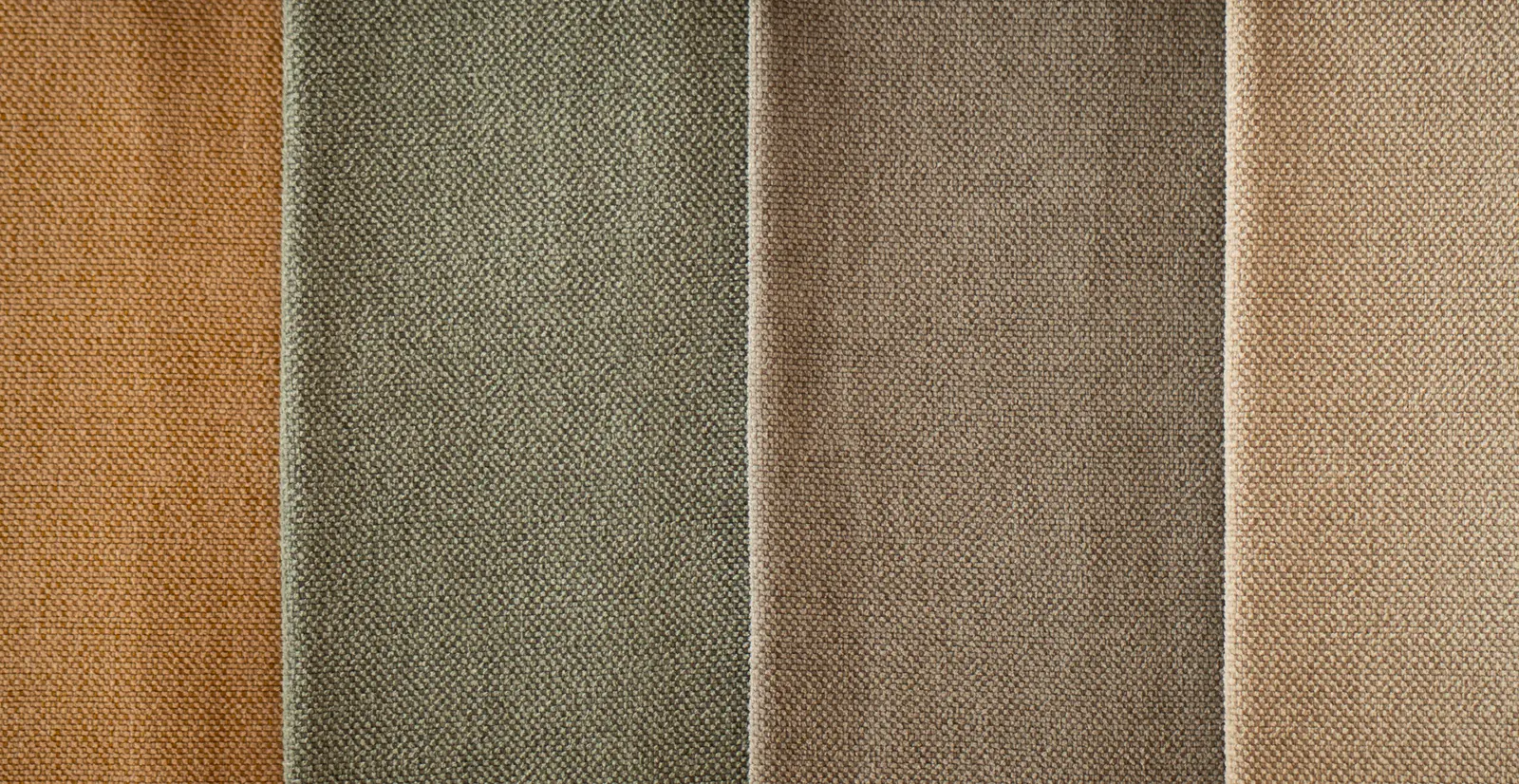
Linen falls more stiffly, in clear vertical folds with a slightly irregular texture that looks lived-in. It suits Scandinavian, boho and natural interiors. Linen does crease; that is part of its look, not a fault.
Polyester blends hold a steadier, smoother wave. They lack the loose fall of linen, but they keep their shape longer and need no ironing, which suits families with children and anyone who wants little upkeep. Synthetics also resist damp better, but they do not breathe and their looks age faster.
Velvet forms a deep, rich vertical fold, which is its greatest strength. A heavier velvet hangs more evenly, and a lighter one moves more easily. Both give a room a weight that lighter fabrics cannot.
The name of the fibre is only part of what decides the fall. The weight (grams per square metre), the type of weave and the lining matter just as much. The same linen fabric with a lining and without it will fall quite differently: the lining adds weight and stability, so the folds become smoother and deeper.
| Fabric | Fall | Care | Suitable for |
|---|---|---|---|
| Linen | Stiff, organic | Moderate (creases) | Living room, bedroom |
| Cotton | Soft, natural | Easy | Child's room, kitchen |
| Polyester | Steady, smooth | Very easy | Kitchen, bathroom |
| Velvet | Deep, vertical | Demanding | Living room, bedroom |
A wave heading and the weight of the fabric
If you want the effect of a wave heading, choose a medium-weight fabric (180–250 g/m²) with a little synthetic in it: it will hold the wave and not shrink after the first wash. Pure linen in a wave system can look too stiff and fail to form even waves.
On the same track, four fabrics will fall quite differently. Linen forms stiff, vertical folds with a slightly irregular texture, a natural, organic look. Cotton falls more softly and loosely, with lightly wavy edges. Polyester makes a smooth, steady wave with no creases: tidy, but a less lively look. Velvet falls in deep folds of dramatic depth with a matt texture, the heaviest and richest fall of the four.
How does an order run, from first consultation to the finished curtains?
Ordering curtains, from a supplier or online, runs in clear stages. Knowing them in advance helps you plan your time and avoid misunderstandings.
- 1The first consultation. A conversation about what the room is used for, the style of the interior and the budget. Prepare by knowing your colour palette, the ceiling height and the approximate width of the window. Photos from your phone help the designer understand the space more quickly.
- 2Measuring. It is done on site, or the customer supplies the dimensions from instructions. 20–30 cm is added to the width of the window on each side. The length to the floor is measured from the pole (from the ceiling for a ceiling track), less 1–2 cm. With high ceilings the curtains are hung from the ceiling itself.
- 3Choosing the fabric and the heading. The customer chooses the fabric from samples, the type of heading (traditional pleats, wave, pinch pleat) and the finish of the top. The track system is decided too: a ceiling track, a decorative pole or a metal track.
- 4Making. The fabric is made up to the exact dimensions and specifications. How long it takes depends on the fabric and the heading; see the next section.
- 5Fitting. The track is fixed straight and the curtains are hung evenly, which matters most with heavy fabrics and large windows.
Customers who order the full package (measuring, making and fitting) usually also get a warranty: if something does not match, it is put right. That is the main difference from buying on your own online.
The whole process from the first consultation to the final fitting usually consists of five clear stages: consultation (a discussion of the room and the budget), measuring (exact dimensions of the windows, on site or from instructions), choosing the fabric and the heading (from a catalogue of samples), making (preparing the fabric and making the curtains) and fitting (the track and the hanging of the curtains). Each stage takes from a few days to a few weeks, depending on how complicated the project is.
Find out your price
The calculator gives an indicative price for your window in 2 minutes.
Open the price calculatorHow long does making curtains take, and what does it depend on?
The wait from the order to the hanging depends on a few things, and it helps to know them in advance.
From order confirmation to installation, curtains, roman blinds and other blinds take 3–4 weeks, and tracks 1–2 weeks. The time depends on the fabric, the heading and how complicated the project is.
More complicated projects (a wave heading, two-layer systems, non-standard sizes or special fabrics) take longer. Making the tracks, or ordering special tracks, can lengthen the time too, especially if non-standard lengths or colours are needed.
The longest wait is usually for the supply of the fabric, not for the making itself. If the chosen fabric is not in stock and the supplier is abroad, the wait is longer.
Plan ahead
A good order of work: consultation and choice of fabric at the start of a renovation, measuring once the walls are finished and it is clear where the track will go, and fitting in the last week of the renovation or just after it. Agree the fitting date in advance, because fitters often have full schedules.
Start planning now
The designer suggests fabrics, headings and tracks to suit your windows and your budget.
Arrange a design consultationWhich curtains suit different rooms and interior styles?
Each room is used differently, so its curtains differ too. Here is how to match fabric, heading and fitting to the room.
In a living room the curtains are on show as well as in use. Richer fabrics suit it: velvet, jacquard or good linen. Layering (sheer + lined) gives the most flexibility, and a wave heading on a ceiling track gives a contemporary look. Colours: neutral (grey, sand, cream) or a strong accent (deep green, dark blue).
In a bedroom, function is the priority. Blackout fabrics are essential for anyone who sleeps by day or whose window faces east. Calm colours (blue, green-tinged, cream) suit a place to rest. Linen or cotton with a blackout lining is a sound compromise between looks and function.
In a child's room, easy cleaning and safety come first, so cotton or cotton-synthetic blends suit best. Colours can be brighter. Choose fabrics with an OEKO-TEX certificate, which shows the fabric has been tested for harmful substances. A blackout lining helps children sleep by day.
In a kitchen, damp and grease fumes are the main enemies. Light, easy-care fabrics, synthetic or cotton blends, suit best. Short sheers that stop at the sill are practical and look current. They do not get in the way of opening the windows and are easy to take down for washing.
A minimalist interior needs clean lines and neutral colours, and suits a wave heading on a slim metal track. A classic style allows more: traditional pleating, jacquard, decorative poles with finials. A boho style means linen, natural colours, irregular textures and a light, carefree fall.
What are the commonest mistakes when choosing curtains?
- Curtains hung too short. The space looks smaller. The fix: measure from the pole to the floor (from the ceiling for a ceiling track) and take off 1–2 cm; for high ceilings, hang from the ceiling itself.
- A fabric of the wrong weight for the room. In a bedroom a fabric that is too light does not give darkness. The fix: blackout for a bedroom (200–300 g/m²), lighter fabrics for a living room (100–180 g/m²).
- Mass-produced curtains for non-standard windows. The fabric is too short or too narrow. The fix: for non-standard windows always choose made-to-measure.
- The wrong colour for a small room. Dark colours shrink a space further. The fix: for small rooms choose light, semi-transparent curtains.
- Ignoring fabric certification. Fabrics without OEKO-TEX can contain harmful dyes. The fix: always check for the OEKO-TEX certificate, especially in children's rooms.
- Ignoring care. Dirty curtains collect dust and allergens. The fix: clean sheers at least twice a year and lined curtains once a year.
Room by room: for a living room, layering (sheer + lined) with a wave heading on a ceiling track; for a bedroom, a blackout fabric with a linen or cotton lining; for a child's room, a cotton blend with an OEKO-TEX certificate and a blackout lining; for a kitchen, light synthetic or cotton blends that reach only the sill; for a bathroom, damp-resistant synthetic fabrics. Colours: for a living room, neutral or accent; for a bedroom, calm; for a kitchen, light and practical.
Would you like professional help?
Write to us: the windows are measured, options suggested and the curtains fitted, and we are responsible for the whole job.
Get in touchIn short
With curtains every decision, from the composition of the fabric to the heading, shows in the result. Start from what the room is for: a bedroom needs blackout fabric, a living room the flexibility of layering, a kitchen materials that are easy to clean.
The fall of a fabric depends on its weight, weave and lining as well as on the fibre. Linen gives organic stiffness, polyester blends a steady wave, velvet a deep vertical fold. Knowing this avoids the disappointment of a fabric that looks quite different from what you expected.
Made-to-measure curtains, measured on site, pay off most on non-standard windows and in large rooms. Planning ahead gets them ready on time, especially when the fitting has to match the end of a renovation or a move.
See examples of curtains
Photographs of curtains in homes and offices, to help you find ideas for your own room.
See examplesFrequently asked questions
How do I order made-to-measure curtains?
The designer comes to you with fabric samples, measures the windows and helps you judge colour and texture in your own light. After the visit we prepare a quote with the price. Measuring is free in Vilnius. In Kaunas and Klaipėda it is free on orders of €200 or more. Elsewhere in Lithuania the visit is paid, and the price is agreed beforehand. Windows of non-standard size are safer made to measure.
How do I match curtains to different interior styles?
By style: in a classic interior, plain fabrics or classic patterns; in a modern one, neutral colours such as grey, white or sand, which bring out the clean lines. Light colours suit small rooms, calm blue tones bedrooms, and richer shades living rooms.
How do I care for curtains so they last?
Clean sheer curtains at least twice a year and lined curtains once a year. Before washing, check the fabric label and follow the maker's instructions, because natural fabrics such as linen can shrink. Regular dusting and proper drying also lengthen the life of curtains.
How do I prepare for a curtain consultation?
Before the consultation it helps to know what the room is used for, the style you want and a rough budget. Have the window measurements to hand, width and height, and know where you plan to fix the track. Photographs or pictures of interiors you like will help the designer understand what you expect. The more you give in advance, the more exact the quote will be.
Which fabrics suit bedroom curtains best?
Blackout fabrics: they darken the room completely for sleep. Natural fabrics such as linen or cotton also suit, because they breathe. Synthetic fabrics are better avoided in a bedroom, because they do not breathe and age faster. For colour, choose calm blue or neutral tones, which suit a place to rest.
What is the difference between voile, net sheer and jacquard?
Voile is a light, transparent fabric that lets light through well and gives a space lightness. Net sheer is a more modern option that lets air through well and suits contemporary interiors. Jacquard is a classic, denser fabric with woven patterns, most often used in formal rooms. The choice depends on the amount of light you want, the style and what the room is used for.
Which fabric is best for curtains?
The best fabric depends on what the room is used for and your own priorities: looks, function or sustainability. Natural fabrics such as linen and cotton are chosen because they are natural and durable. Linen falls more stiffly and gives a natural effect, while polyester blends hold a steadier wave. Signs of quality are natural fibres, a thread count above 200 TC and an OEKO-TEX certificate.
What decides the price of curtains and how long an order takes?
The price is decided by the type of fabric, the width and height of the curtains, the number of folds and extra services (fitting, tracks). Exact measuring is the essential step: mistakes can cost more than the curtains themselves. From order confirmation to installation, curtains, roman blinds and other blinds take 3–4 weeks, and tracks 1–2 weeks.
How do I measure a window for curtains before ordering?
Measure the window width and the drop from the fixing point of the track to the length you want: the floor, the sill or something in between. Curtains hung too short are one of the commonest mistakes, and the space looks smaller. If you want to bring out high ceilings, fix the track directly above the window frame or as close to the ceiling as possible. Have a window of non-standard shape measured on a visit, because a measuring mistake can cost more than the curtains themselves.
How much do curtains cost?
The price depends on the type of fabric, the dimensions, the number of folds and extra services. Natural fabrics such as linen usually cost more than synthetic ones, but they last longer and are more sustainable. Tracks, fitting and made-to-order making may be extra. The exact price is best found at a consultation, or with our price calculator.
How do I match curtains to the interior?
Match curtains to the colour palette of the room, the furniture and the shade of the floor. In a classic interior choose plain or patterned fabrics, and in a modern one neutral colours such as grey, white or sand. In small rooms light curtains make the space look wider, and high ceilings can be brought out with long curtains from ceiling to floor. Allow for the function of the room as well: calm tones suit a bedroom, and stronger or richer shades a living room.
What are the main criteria for choosing good curtains?
Natural fibres, a thread count above 200 TC and an OEKO-TEX certificate: these mark a well-made product. Natural fabrics such as linen and cotton are more durable, more sustainable and breathe better than synthetic ones. Judge too how the fabric falls, how colourfast it is and how well it is sewn, as that decides how the curtains will look after a few years.
Still have questions?
Write to us, in English if you like; we reply by e-mail and help you choose for your windows.
Write to us