Author: Jegor Janockin
Reviewed by: Curtain.lt editorial team
Last updated:
Curtain lining types: standard, blackout and thermal
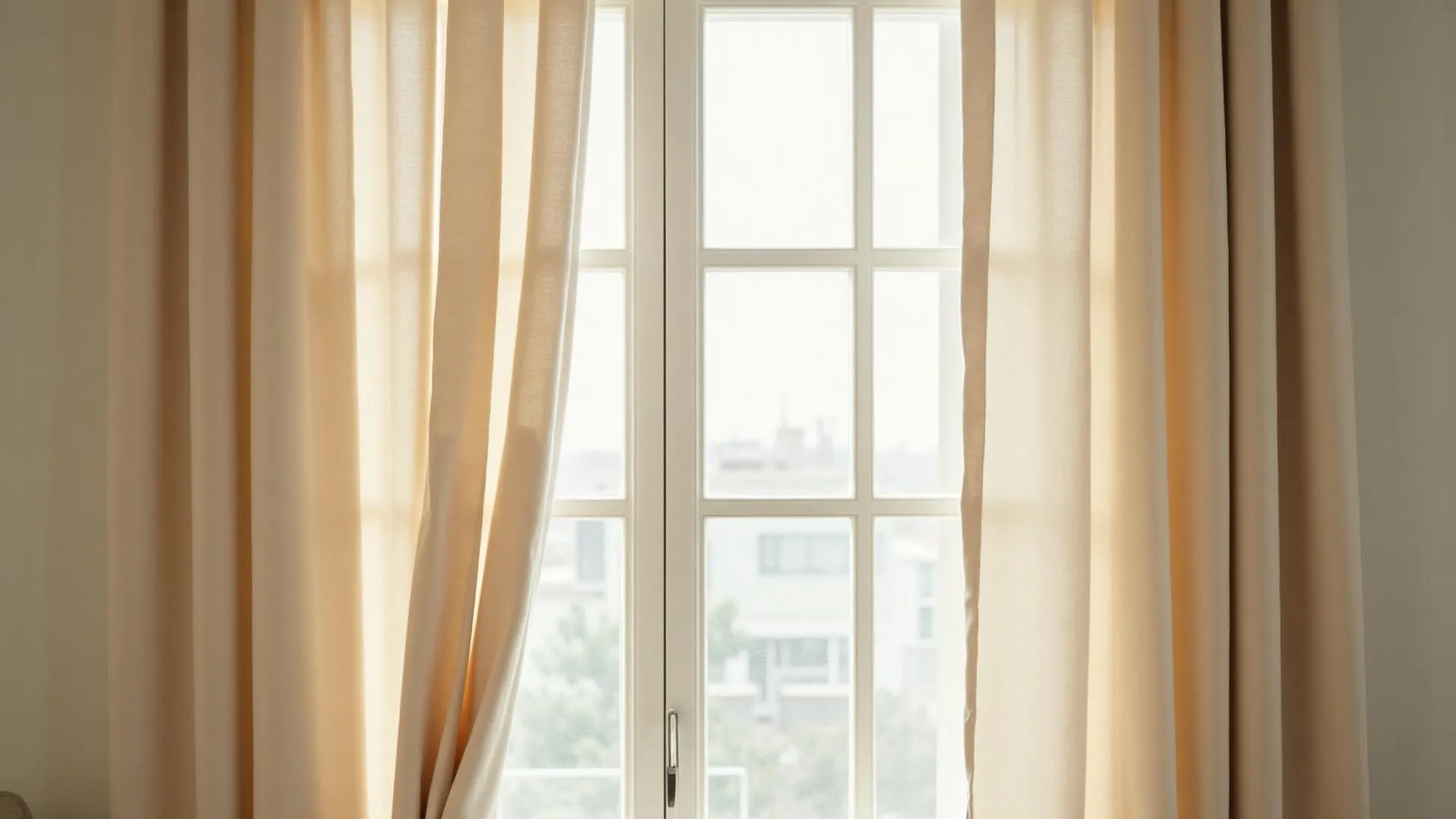
A lined curtain can give near-total light blocking, UV protection and thermal insulation. A lining is essential for silk, natural linen and bedrooms. In Lithuania a curtain lining costs from €11 per metre; which one to choose depends on what the room is used for, the type of fabric and the track.
What a lining does for a curtain
Many people planning curtains think only of the colour and texture of the fabric. The lining stays in the background until, after two years, the fabric has lost its colour and shape. Customers who went without a lining to save money come back after 2–3 years with a faded fabric that costs far more to replace than the lining would have cost at the start.
UV protection is the main reason. Curtains on south- and east-facing windows with no lining can lose a good deal of their colour in a single summer. A lining acts as a shield, absorbing UV rays and protecting the costly outer fabric. That matters most for dear fabrics such as silk, natural linen or suede, which can cost €50–80 per metre.
A lining gives the fabric weight and body, which lets it hang well. A light fabric with no lining "floats" when the air moves and does not make a sculpted shape. The effect is clearest with natural linen, which without extra weight looks untidy and thin.
Thermal insulation: a lining makes a cushion of air between the fabric and the window, which reduces heat loss in winter and helps keep the room cool in summer. Sound is an added benefit: a thick lining absorbs some of the sound, and the room becomes quieter. A lining pays for itself: a lining at €11 per metre protects a fabric at €50–80 per metre.

The main types of lining
Each type of lining does a different job, and the choice shows in the finished curtain.
| Type of lining | Light blocked | Lifespan | Price (€/m²) | Suits best |
|---|---|---|---|---|
| Standard (cotton / sateen) | 30–50% | 10+ years | 15–30 | Living room, dining room |
| Blackout (full darkening) | 90–100% | 5–8 years | 10–25 | Bedroom, child's room |
| Dim-out (partial darkening) | Partial (darkens the room) | 5–8 years | 10–25 | Living room, office |
| Thermal / fleece | 50–70% | 5–8 years | 15–30 | North-facing windows, cold rooms |
| Interlining (a middle layer) | An extra layer | 10+ years | 20–35 | Formal curtains, classic style |
A standard cotton lining (sateen) suits most rooms. It gives moderate light blocking (30–50%), protects the fabric from UV rays and gives the weight needed. Natural linings of linen or cotton breathe, are more sustainable and last 10+ years.
A blackout lining blocks 90–100% of the light. It is made of a special multi-layer fabric with a dark inner coating. Even so, a blackout fabric darkens the room only if the track lets no light in at the sides: the track matters as much as the fabric.
Dim-out darkens the room without full darkness: a compromise between full darkening and natural brightness. It suits living rooms and offices, where you want to cut glare but keep the feel of daylight. Interlining is an extra middle layer, sewn between the outer fabric and the lining. It changes the look of even a plain fabric dramatically: it gives a sculpted fall and a weight that looks substantial.

When a lining is essential
South- and east-facing windows: direct sun is the harshest, and curtains on south-facing windows with no UV protection lose their structure and colour within 2–3 summers. Silk is entirely unsuited to direct sun without a lining. A single summer can ruin a silk curtain outright, and the same goes for velvet, suede and fine linen.
Linen without a lining fades, and it also "floats" when the air moves. Linen is also semi-transparent, so without a lining it gives no privacy. A lining solves both: it gives weight and privacy. For bedrooms and children's rooms, a blackout lining is a matter of sleep quality.
For a blackout effect the right fabric alone is not enough. Even the best blackout fabric will be useless if the track lets light in at the sides. A ceiling track with wall returns is needed, which closes the gap between the track and the wall. A standard track fixed to the wall will always leave gaps for light at the sides.
- 1Judge what the room is used for. For a bedroom, blackout with a ceiling track; for a living room, a standard or dim-out lining.
- 2Choose the type of lining. Natural linings (linen, cotton) give durability and sustainability; synthetic ones give price and easy care; hybrid ones a balance.
- 3Settle the size. The lining is made to the size of the curtain, and the curtain should reach 20–30 cm past the window on each side, so that it covers fully.
- 4Choose the track. For a blackout effect you need a ceiling track with wall returns.
- 5Have the lining made up with the curtains. Made together with the main fabric, the two layers hang and fit as one.

A common problem
A blackout fabric on an ordinary wall-fixed track will not work: gaps for light will be left at the sides. A lining that is too narrow or too short also fails to do its job. A lined curtain should reach the floor and run 20–30 cm past the window on each side.
Arrange a consultation
Arrange a design consultationWork out the price
Open the price calculatorFrequently asked questions
How does a curtain lining protect the fabric from fading?
A curtain lining acts as a protective barrier: it holds back UV rays and stops them reaching the decorative fabric. Curtains on south-facing windows with no lining can lose a good deal of their colour in one summer. A lining keeps the outer fabric's original colour and structure for much longer.
How do I care for lined curtains?
The care of lined curtains depends on the composition of the main fabric. Because the lining is sewn to the decorative fabric, both layers are washed together, so you must follow the care requirements of the more delicate of the two fabrics. Ask whoever made the curtains about the right way and temperature of washing.
What is the difference between a blackout and a dim-out lining?
A blackout lining blocks 90–100% of the light and is meant to darken the room completely, while a dim-out lining lets some light through: it darkens the room without full darkness. Blackout is most often chosen for bedrooms and children's rooms, where full darkness matters. Dim-out suits living rooms and offices, where you want to cut glare but keep natural daylight.
How long do natural and synthetic linings last?
Natural linings of linen or cotton last 10 years or more, breathe and are sustainable, but cost more and can crease. Synthetic polyester linings are cheaper and resist damp, but last only 3–5 years. The choice depends on the budget, the use of the room and your priorities.
Can a lining be added to curtains that are already made?
Yes, a lining can be added to curtains that are already made, which turns any sheer curtain into a darkening one. The work is done to order, and the final price depends on the fabric, the type of lining and the size of the window. The colour of the lining is chosen to suit the main fabric: white suits pale fabrics, and dark grey gives maximum darkening.
What does a curtain lining cost in Lithuania?
In Lithuania a curtain lining costs from €11 per metre, and lined curtains with the lining already made in from €24 per metre. The final price depends on the type of lining chosen (standard, blackout or dim-out), the fabric and the amount of making work.
What types of curtain lining are there?
Curtain linings divide into blackout (90–100% light blocking), dim-out (partial dimming), standard cotton (30–50%) and interlining (a middle layer for looks and shape). By material they are natural (linen, cotton, lifespan 10+ years) or synthetic (polyester, 3–5 years).
Do linen curtains need a lining?
Yes. Without a lining, linen fades in UV light, loses its structure when the air moves, does not hold its shape and stays semi-transparent. A lining gives linen the weight and stability it needs and protects it from wearing too fast.
When must curtains have a lining?
A lining is essential in bedrooms and children's rooms, where full darkening is needed, and for curtains on south- and east-facing windows, where intense UV quickly damages fabrics. Natural fabrics, linen, silk and velvet, need a lining without exception, because without one they lose colour and structure within 2–3 summers. Add one too when you want better thermal insulation or less street noise.
Why does a blackout effect need a ceiling track?
For a full blackout effect a darkening lining alone is not enough: you need a ceiling track with wall returns, which closes the gap between the track and the wall. With an ordinary wall-fixed track, light gets in at the sides and the top, and strips of light are left in the room even with a blackout fabric. A ceiling track makes sure the curtain covers the whole window opening with no gaps.
What is interlining, and when should I choose it?
Interlining is an extra middle layer, sewn between the decorative fabric and the lining, which gives the curtain a full, thick body and better thermal insulation. It costs €20–35 per m², and it lifts the look of even a plainer fabric: the curtain looks heavier and hangs better. It suits formal rooms and classic interiors especially.
Does a lining change how the curtains look on the outside?
No. The lining stays entirely hidden from the room side and does not change the colour or texture of the decorative fabric. The only case where a lining can affect the look is when the colour of the lining is too light and shows through a thin, see-through outer fabric. In that case a darker lining colour is chosen to suit the density of the fabric.
Does a lining help to save on heating?
Yes. A lining makes a cushion of air between the fabric and the window, which reduces heat loss in winter and helps keep the room cool in summer. A thermal (fleece-type) lining strengthens that effect and suits curtains on north- and west-facing windows especially.