Blinds
Wooden blind prices in 2026
Wooden blind prices depend on three things: the wood (faux wood, basswood, bamboo, abachi), the slat width (25–65 mm) and the window size. Below are the full 2026 price list by wood, slat width and window size, the 10-year cost of ownership and worked prices for four window sizes.
From €48 per m² (PVC), wood from €56 per m²

What do wooden blinds cost by wood type and window size?
In short, for 2026: faux wood (PVC) €48 per m² with 35 mm slats and €63 per m² with 50 mm; natural basswood from €56 per m² (25 mm) to €85 per m² (65 mm); bamboo €70 per m² (35 and 50 mm); abachi and brushed basswood, the dearer woods, €75–80 per m². Fitting is €15 per blind, and an electric motor (50 and 65 mm) adds about €40.
Sixteen worked prices, four materials by four window sizes, with 35 mm slats and before fitting. Faux wood (PVC): small window (60 × 120 cm) €35, medium (90 × 140 cm) €60, large (120 × 140 cm) €81, wide (150 × 180 cm) €130. Bamboo: small €50, medium €88, large €118, wide €189. Basswood: small €45, medium €78, large €104, wide €167. Abachi: small €54, medium €95, large €126, wide €203.
Measuring is free in Vilnius. In Kaunas and Klaipėda it is free on orders of €200 or more. Elsewhere in Lithuania the visit is paid, and the price is agreed beforehand. Fitting is €15 per blind. An electric motor for 50 and 65 mm blinds adds about €40. A smart-home module is priced in the quote.
What is the 10-year cost of ownership?
Upkeep and replacement differ considerably from one wood to the next, so the purchase price is not the whole cost.
For an average 90 × 140 cm window: faux wood costs about €60, and a damp cloth is all the care it needs, so there is almost nothing more to pay. Bamboo costs about €88; in a dry room, renew the surface with impregnation now and then. Basswood costs about €78; keep it away from damp and dust it regularly. Abachi costs about €95 and needs the same care as basswood. Add €15 fitting to each price.
Over the years faux wood costs least, especially in a damp room. Natural wood makes sense where the look matters more than the cost.
What is included in the price, and what do the extras cost?
The written quote lists every charge.
The base price covers the blind made to your measurements with a standard cord control, and a consultation at home with samples. Mechanisms carry a 24-month warranty.
Extras, charged separately: fitting, €15 per blind; an electric motor for 50 and 65 mm blinds, about €40; decorative tapes, +€10–20; operation without loose cords for a child's room, priced in the quote. Other extras, such as a smart-home module, are priced in the quote too.
Sources and standards
EN 13120, internal blinds: the EU standard that applies to rooms used by children up to 42 months old.
Price list by slat width (25–65 mm)
Basswood: the price per m² and for a 90 × 140 cm window
from €56/m²
For windows up to 100 cm wide; the classic look. A 90 × 140 cm window: about €71.
from €62/m²
For windows 100–140 cm wide; the most versatile width. A 90 × 140 cm window: about €78.
from €72/m²
For windows 140–200 cm wide; a modern, minimal look. A 90 × 140 cm window: about €91.
from €85/m²
For windows over 200 cm wide, such as panoramic windows. A 90 × 140 cm window: about €107.
Questions
How much do wooden blinds cost in 2026?
Faux wood (PVC): €48 per m² (35 mm) and €63 per m² (50 mm). Basswood: from €56 per m² (25 mm) to €85 per m² (65 mm). Bamboo: €70 per m². Abachi and brushed basswood: €75–80 per m². For a 90 × 140 cm window, faux wood costs about €60 and basswood about €78. Fitting is €15 per blind.
Does the price include measuring?
Measuring is free in Vilnius. In Kaunas and Klaipėda it is free on orders of €200 or more. Elsewhere in Lithuania the visit is paid, and the price is agreed beforehand.
How much does electric operation cost?
An electric motor, available for 50 and 65 mm blinds, adds about €40 to the base price of the blind; PVC slats are made for manual operation only. A smart-home module and operation without loose cords are priced in the quote.
Which wood is the cheapest?
Faux wood (PVC with a wood effect), from €48 per m². Basswood comes next, from €56 per m² (25 mm) and €62 per m² (35 mm), then bamboo (€70 per m²); abachi and brushed basswood are the dearest (€75–80 per m²). Faux wood also suits damp rooms best.
Are there options cheaper than faux wood?
Yes, elsewhere on the Lithuanian market: 2D imitation blinds in cheap PVC that look like plastic even from 3 m away. We do not offer them, because the difference in quality matters more than a small saving. Our lowest price is €48 per m², for 35 mm faux wood slats; for a 60 × 120 cm window that is about €35.
What is the 10-year cost of ownership?
For an average 90 × 140 cm window: faux wood about €60, and a damp cloth is all it needs. Basswood about €78, kept away from damp. Bamboo about €88, with the surface renewed with impregnation now and then. Abachi about €95. Over the long run faux wood costs least, especially in a damp room.
How much do wooden blinds for a kitchen cost?
For a standard kitchen window (90 × 140 cm), with 35 mm slats and before fitting: faux wood about €60, basswood about €78, bamboo about €88. For a kitchen we usually suggest faux wood, because it resists damp; the wooden blinds for kitchens page goes into more detail.
Ideas for your home
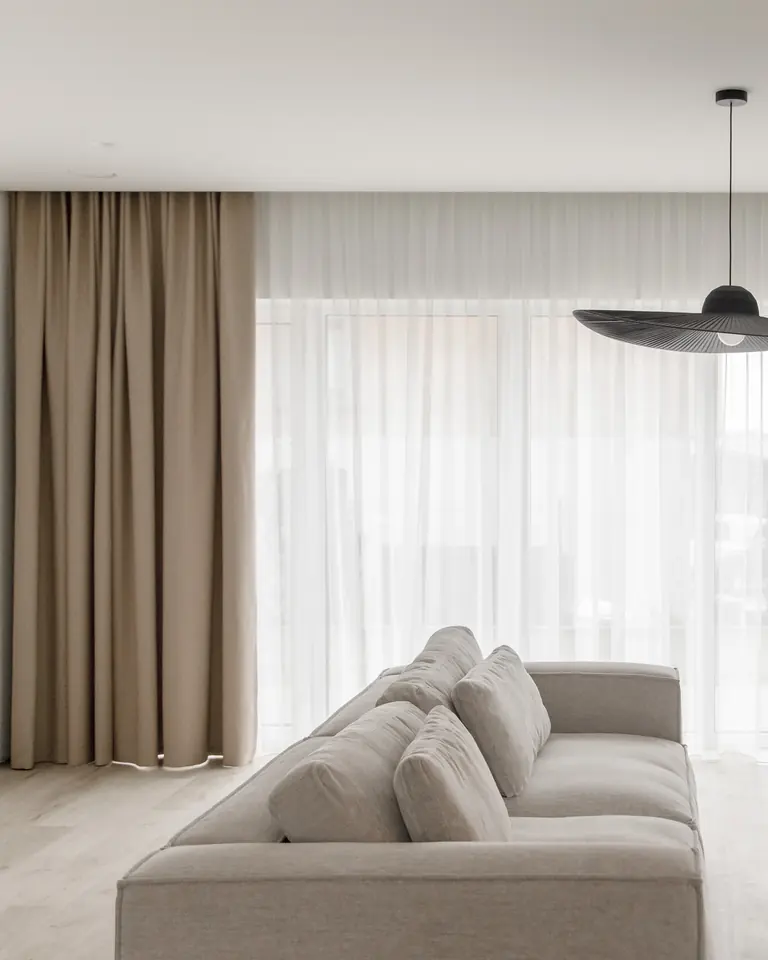
Flat, living room. A white sheer across the whole window wall and sand-coloured curtains from ceiling to floor. 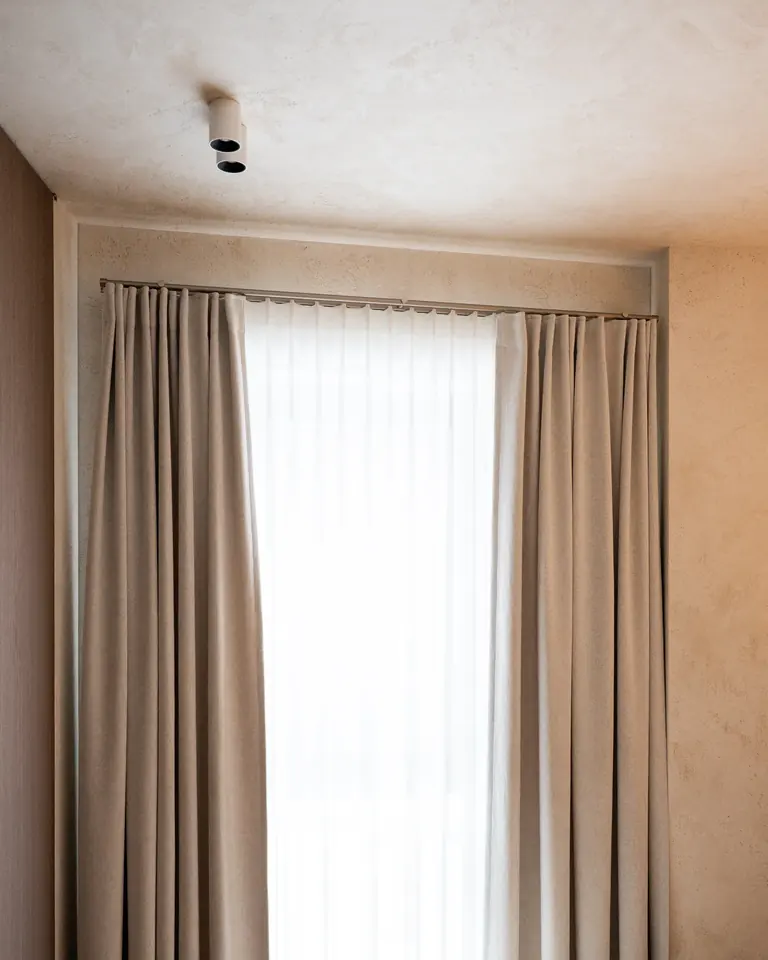
House, window recess. Sand-coloured curtains and a white sheer on a ceiling track. 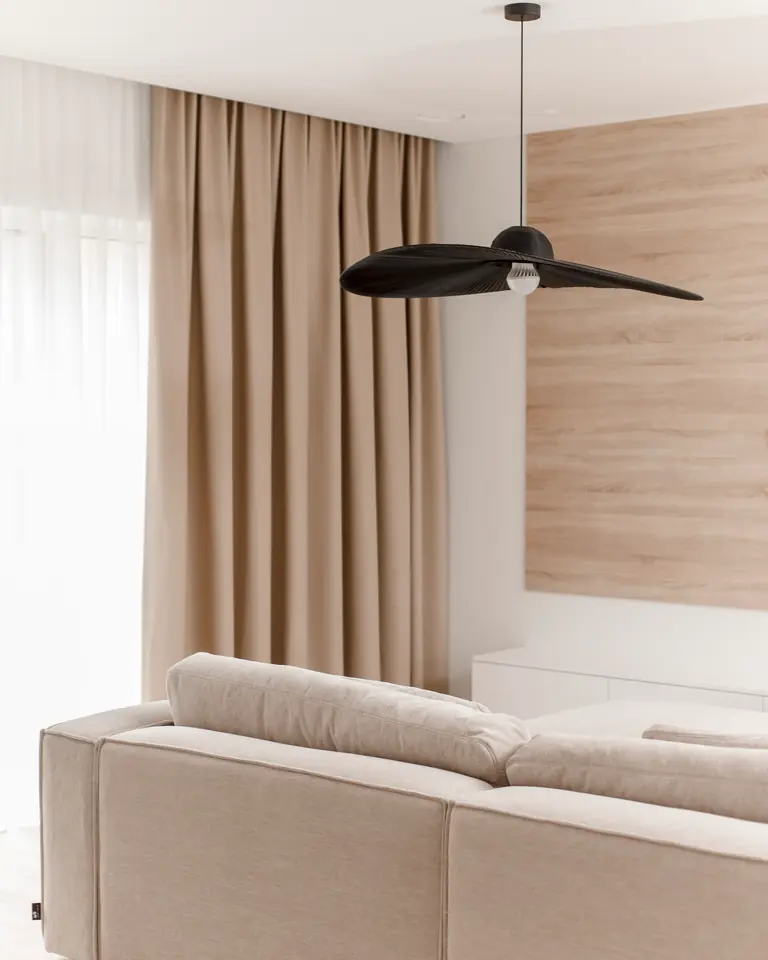
Flat, living room. Sand-coloured curtains and a white sheer from ceiling to floor. 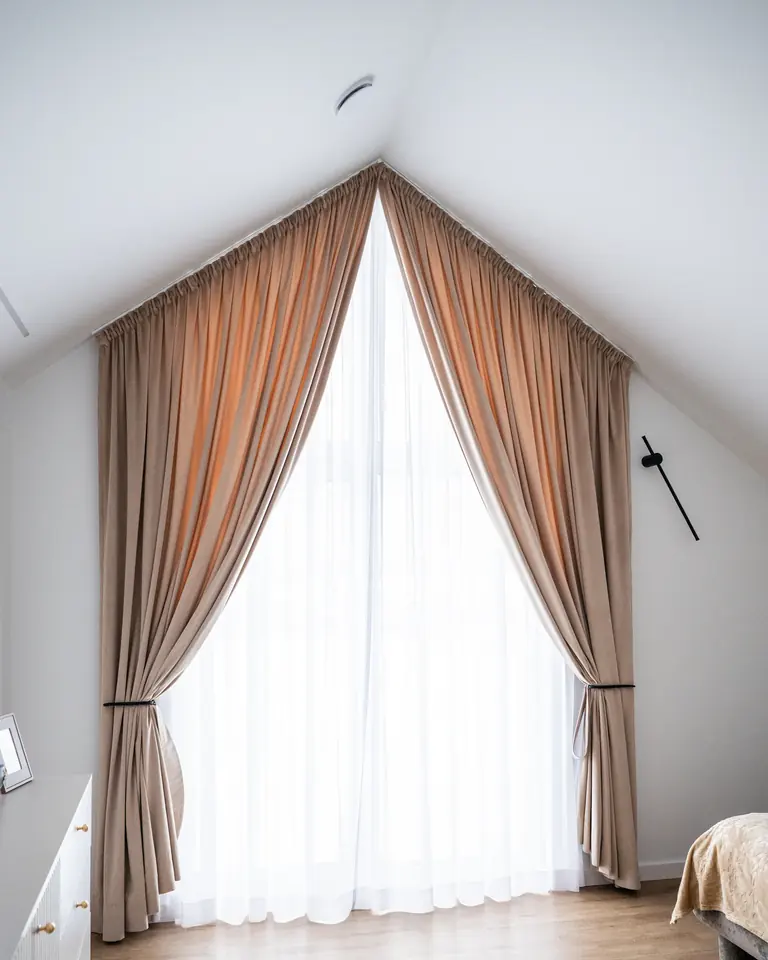
House, bedroom under a pitched roof. Peach curtains with tie-backs and a white sheer. 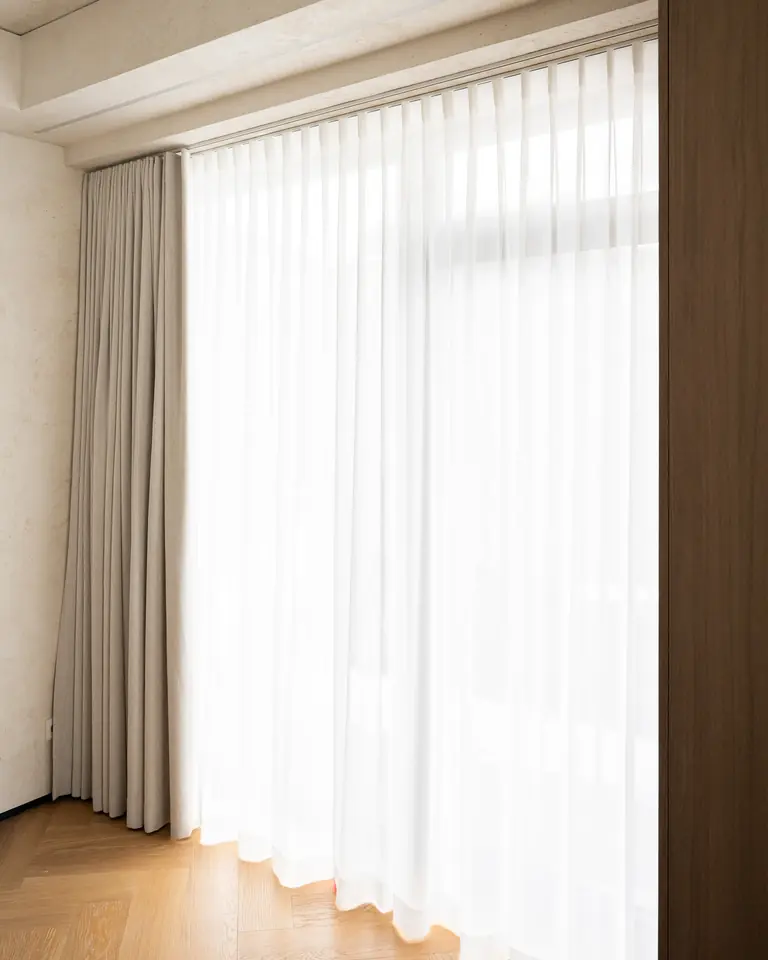
House, room with oak floors. A sheer in wave pleats and a pale curtain in a ceiling recess. 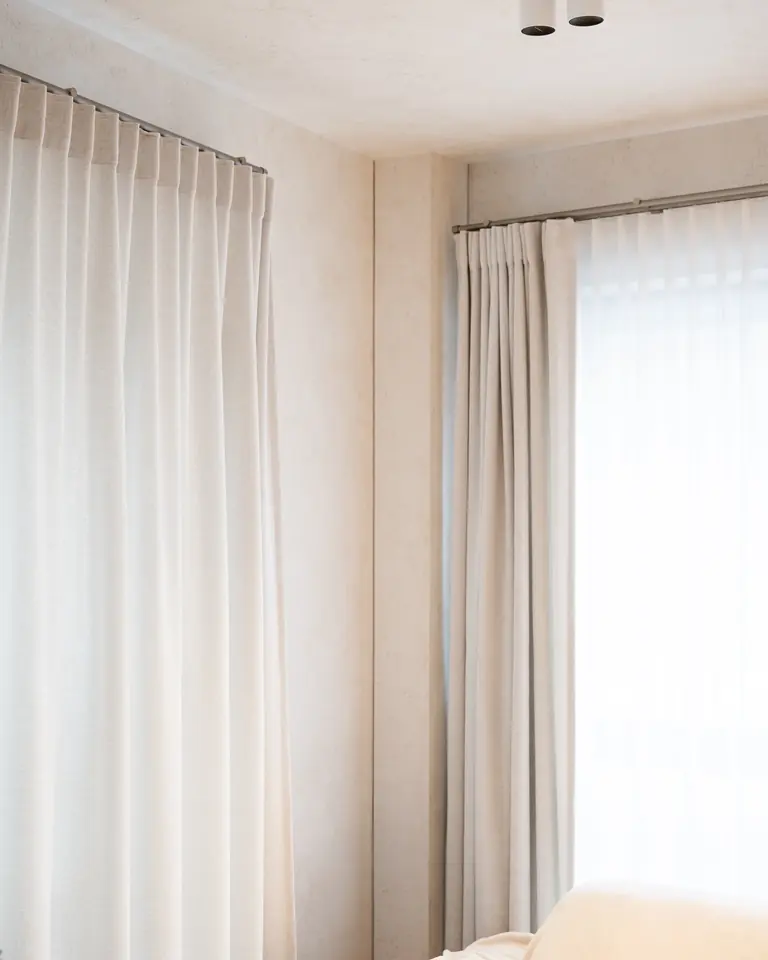
House, corner room. White sheers in wave pleats on ceiling tracks.